• Home
  • About The Herald
  • Local Agencies
  • Daily Email Update
  • Legal Notices
  • Classified Ads

Contra Costa Herald

News Of By and For The People of Contra Costa County, California

  • Arts & Entertainment
  • Business
  • Community
  • Crime
  • Dining
  • Education
  • Faith
  • Health
  • News
  • Politics & Elections
  • Real Estate

Pleasant Hill man charged with production and possession of child pornography

January 21, 2020 By Publisher 1 Comment

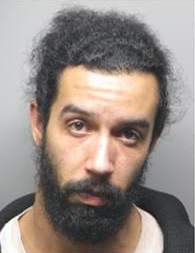
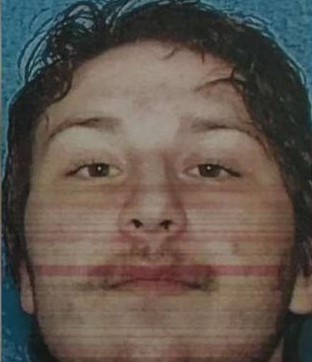
Daniel Joseph Feliciano. Photo by CCDA.

Defendant charged with creating video of sexual contact with nine-year old

OAKLAND – A federal grand jury indicted Daniel Joseph Feliciano charging him with producing and possessing child pornography, announced United States Attorney David L. Anderson and Homeland Security Investigations (HSI) San Francisco Special Agent in Charge Ryan L. Spradlin.

According to the indictment, Feliciano, 29, of Pleasant Hill, Calif., is alleged to have coerced a minor to engage in sexually explicit conduct in order to produce a visual depiction of the conduct.  Feliciano is also alleged to have knowingly possessed child pornography. (See related article).

According to a criminal complaint filed December 12, 2019, in connection with this case, this investigation began with a series of tips sent in October and December 2019 to the CyberTipline maintained by the National Center for Missing and Exploited Children (NCMEC).  The tips, referred to as CyberTips by the NCMEC, contained reports from internet service providers to NCMEC as well as the actual files from the accounts being reported.  Investigators from the Silicon Valley Internet Crimes Against Children Task Force traced the files, that included depictions of minors engaged in sexually explicit conduct, to an email account and an IP address in defendant’s name.

According to the complaint, the first CyberTip came from Dropbox in October 2019.  It contained a report and approximately 182 files, including three videos of prepubescent girls engaged in sexually explicit conduct.  Investigators discovered that the last IP address used to access the account could be traced to Feliciano.

In December 2019, several CyberTips alerted NCMEC regarding child pornography stored in a Google account.  The files included two videos of a 9- to 10-year-old child engaged in sexually explicit conduct.  Investigators traced the Google account and the videos to Feliciano.

The indictment charges Feliciano with one count of production of child pornography, in violation of 18 U.S.C. § 2251(a), and one count of possession of child pornography, in violation of 18 U.S.C. § 2251(a)(4)(B) and (b)(2).

Feliciano is next scheduled to appear on February 18, 2020, at 1 p.m. before the Hon. Jeffrey S. White, U.S. District Judge.

An indictment merely alleges that crimes have been committed, and all defendants are presumed innocent until proven guilty beyond a reasonable doubt.  If convicted on the production of child pornography charge, the defendant faces a maximum sentence of 30 years imprisonment, a minimum sentence of 15 years, five years to a life term supervised release, a fine of $250,000, a special assessment of $5,100, criminal forfeiture, and restitution.  If convicted on the possession of child pornography charge, the defendant faces a maximum sentence of 20 years imprisonment, five years to a life term supervised release, a fine of $250,000, a special assessment of $5,100, criminal forfeiture, and restitution.  However, any sentence following conviction would be imposed by the court after consideration of the U.S. Sentencing Guidelines and the federal statute governing the imposition of a sentence, 18 U.S.C. § 3553.

Suspected child sexual exploitation may be reported to the National Center for Missing & Exploited Children, via its toll-free 24-hour hotline, 1-800-843-5678.  Indeed, a NCMEC tip led to the investigation in this case.

Assistant U.S. Attorney Jonathan Lee is prosecuting the case with the assistance of Kay Konopaske and Kathleen Turner.  The prosecution is the result of an investigation by the HSI, the Silicon Valley Internet Crimes Against Children Task Force, and the Pleasant Hill Police Department.

Filed Under: Central County, Crime, News, U S Attorney

Discovery Bay pilot convicted of making false statements to FAA

January 21, 2020 By Publisher Leave a Comment

Nicholas King Beyer from his Facebook page.

Lied about medical condition

SAN FRANCISCO – Nicholas King Beyer was convicted in United States District Court today of making false statements to the Federal Aviation Administration (FAA) on pilot medical certification forms, announced United States Attorney David L. Anderson; U.S. Department of Veterans Affairs Office of Inspector General, Criminal Investigations Division, Special Agent in Charge James Wahleithner; and U.S. Department of Transportation Office of Inspector General Regional Acting Special Agent in Charge Susan Ocampo.  The verdict was handed down today following a half-day bench trial before the Honorable Charles R. Breyer, U.S. District Judge.

Judge Breyer found Beyer, 34, of Discovery Bay, Calif., guilty on two counts of making false statements to the FAA, in violation of 18 U.S.C. § 1001(a)(2), and two counts of falsifying, concealing, or covering up material facts by trick, scheme, or device, in violation of 18 U.S.C. § 1001(a)(1).

According to his Facebook page, Beyer is a flight instructor at SkyView Aviation, LLC, worked at USS Harry S. Truman, is a former ABH at United States Navy and former Navy firefighter at NALF Fentress, studies at ATP Flight School and at Embry-Riddle Aeronautical University, and attended Liberty High School in Brentwood, CA.

Evidence at trial showed that Beyer made false statements on applications for an airman medical certificate, FAA Form 8500-8, which he submitted to the FAA in 2016, and again in 2018.  The FAA’s airman medical certificate process is the mechanism by which the FAA evaluates whether pilots are mentally and physically fit to fly.  The evidence showed that Beyer falsely stated on both of his Form 8500-8s that he had never been diagnosed with, did not have, and had never had a mental disorder of any sort; when in fact Beyer had been diagnosed with Major Depressive Disorder by the Department of Veterans Affairs (VA) in 2016.  The evidence also showed that Beyer falsely stated on the forms that he was only receiving disability benefits for knee and back injuries from the VA, when he was also receiving disability benefits for Major Depressive Disorder.

A federal grand jury indicted Beyer on August 23, 2018, charging him with two counts of making false statements to the FAA, in violation of 18 U.S.C. § 1001(a)(2), and two counts of falsifying, concealing, or covering up material facts by trick, scheme, or device, in violation of 18 U.S.C. § 1001(a)(1).  Judge Breyer convicted Beyer on all four counts.

Judge Breyer scheduled the defendant’s sentencing hearing for April 22, 2020.

Beyer faces maximum statutory penalties of five (5) years imprisonment and a fine of $250,000, plus restitution for each violation of 18 U.S.C. § 1001(a)(2) and each violation of 18 U.S.C. § 1001(a)(1).  However, any sentence will be imposed by the court only after consideration of the U.S. Sentencing Guidelines and the federal statute governing the imposition of a sentence, 18 U.S.C. § 3553.

Special Assistant U.S. Attorney Alexandra Shepard and Assistant U.S. Attorney David Ward are prosecuting the case with the assistance of Hector Lopez.  The prosecution is the result of an investigation by the Department of Transportation Office of Inspector General and the Department of Veterans Affairs, Office of Inspector General.

Allen Payton contributed to this report.

Filed Under: Crime, East County, News, U S Attorney

Pittsburg man, associate charged with selling fake oxycodone pills laced with fentanyl

December 16, 2019 By Publisher 1 Comment

By U.S. Attorney’s Office, Northern District of California, Department of Justice

SAN FRANCISCO – Jose Ricardo Loza and Randy Lee Walker were charged in a criminal complaint with distributing fentanyl and heroin, announced United States Attorney David L. Anderson and Postal Inspector in Charge Rafael E. Nuñez, United States Postal Inspection Service.

An affidavit filed in the case by an agent of the United States Postal Inspection Service alleges that Loza sold blue counterfeit oxycodone pills that were laced with Fentanyl.  According to the affidavit, Loza sold to a third party 50 Fentanyl-laced pills on August 22, 2019, when at the auto body shop where he works in Pittsburg, Calif.  Loza allegedly did not initially have enough pills to sell, so he texted Walker, who arrived with more Fentanyl-laced pills.  The affidavit alleges that during the transaction, Loza warned the customer to be careful when taking these pills because he (Loza) gave the same pills to a mutual friend who overdosed and died.  According to the affidavit, a laboratory test verified that a sample of the pills Loza sold contained fentanyl.

In addition, the affidavit alleges that on November 22, 2019, Loza sold 500 more counterfeit pills to an undercover officer and then told the officer that he had 10,000 more of the same pills for sale.  Further, the affidavit alleges Loza sold two ounces of heroin on September 10, 2019.

Loza and Walker are charged with distribution of controlled substances, in violation of 21 U.S.C. §§ 841(a)(1) and (b)(1)(C).

Loza and Walker were arrested on December 12, 2019.  At the time of Loza’s arrest, law enforcement agents found more than 2,000 counterfeit oxycodone pills hidden in hollowed out compartments of his furniture.

Defendants Loza and Walker made their initial appearances Friday morning, Dec. 13 before U.S. Magistrate Judge Thomas S. Hixson.  Both defendants currently are in custody.  Walker’s next court appearance was scheduled for Monday, December 16, 2019, for appointment of counsel. Loza’s next court appearance is scheduled for Wednesday, December 18, 2019, for a hearing to address detention issues.

If convicted, the defendants face a maximum statutory penalty of up to 20 years in prison.  A term of supervised release, fines, forfeitures, and restitution also may be ordered, however, any sentence following conviction would be imposed by the court only after consideration of the U.S. Sentencing Guidelines and the federal statute governing the imposition of a sentence, 18 U.S.C. § 3553.

The complaint contains allegations only and all defendants are presumed innocent until proven guilty beyond a reasonable doubt.

Assistant U.S. Attorney Ross Weingarten is prosecuting the case with the assistance of Linda Love.  The prosecution is the result of an investigation by the United States Postal Inspection Service.

Filed Under: Crime, East County, News, U S Attorney

Martinez, San Ramon residents sentenced to prison for selling fraudulent financial instruments

December 11, 2019 By Publisher Leave a Comment

Defendants ordered to pay restitution to victims

By U.S. Attorney’s Office, Northern District of California, Department of Justice

OAKLAND – Sharon Ringgenberg was sentenced to 15 months in prison for her role in a scheme to commit wire fraud, announced United States Attorney David L. Anderson, Federal Bureau of Investigation Special Agent in Charge John F. Bennett, and Internal Revenue Service, Criminal Investigation, Special Agent in Charge Kareem Carter.  In addition to the prison term, Ringgenberg was ordered to pay restitution totaling $705,000 to victims of the scheme.  The sentence was handed down by the Hon. Jon S. Tigar, U.S. District Judge on December 6, 2019.

Ringgenberg, 70, of Martinez, Calif., pleaded guilty to the charge on August 10, 2018. According to her plea agreement, Ringgenberg conspired with codefendants Craig Scott, 53, of Oakland, and Kenneth Taylor, 57, of San Ramon, to commit wire fraud.  In her plea agreement, Ringgenberg admitted that from November 2008 through May 2012, she and Taylor sold fraudulent standby letters of credit and proof of funds statements to clients of a company called Success Bullion USA, LLC (“Success Bullion”).  These financial instruments were fraudulent because they reported false client creditworthiness and client balances that exceeded Success Bullion’s assets.  Success Bullion falsely purported to be a subsidiary of a large Hong Kong financial institution.  Ringgenberg acted as an officer of Success Bullion and signed and provided false documents on behalf of the company.  Success Bullion used brokers, including co-defendant Scott, to find clients.

A federal grand jury indicted Taylor, Ringgenberg, and Scott on April 13, 2017, charging them with one count of conspiracy to commit wire fraud, in violation of 18 U.S.C. § 1349, two counts of wire fraud, in violation of 18 U.S.C. § 1343, and two counts of subscribing to a false tax return, in violation of 26 U.S.C. § 7206(1).

In addition to the prison term and restitution, Judge Tigar ordered Ringgenberg to serve a three-year period of supervised release and forfeit $295,000 in additional proceeds that she received from the scheme.

Scott pleaded guilty to his part in the scheme on August 12, 2018.  In his plea agreement, Scott admitted that from 2009 to May 2012, he was a broker for Success Bullion.  Scott solicited customers and acted as a broker for fraudulent standby letters of credit and proof of funds statements sold by Success Bullion. Judge Tigar sentenced him on December 6, 2019, to five years of probation with a year of home confinement and ordered him to pay restitution of $527,575 to victims of the scheme, to forfeit $20,000 in additional proceeds he received from the scheme, and not to sell securities as part of his term of probation.

Similarly, Taylor, pleaded guilty to his part in the scheme on March 1, 2019.  Judge Tigar sentenced him on October 18, 2019, to 36 months of prison, three years of supervised release, and ordered to him to forfeit $3,436,002 and to pay $1,100,774 to the Internal Revenue Service and $90,000 to a victim of the fraud scheme.  Before handing down the three-year sentence against Taylor, Judge Jon S. Tigar found that “Mr. Taylor enriched himself greatly, and he did so out of greed [. . . t]hat’s all,” and that “[t]his was a sophisticated, day-in-day-out fraud scheme that lasted for many years.”

Assistant United States Attorney Colin Sampson and Tax Division Trial Attorney Charles A. O’Reilly are prosecuting the case.  This case is the result of an investigation by the FBI and IRS-Criminal Investigation.

Filed Under: Crime, News, U S Attorney

Concord man charged by U.S. Attorney with making false statements to gain admittance into military

November 23, 2019 By Publisher Leave a Comment

Suspect Ross Farca. Herald file photo.

Defendant identified after posting racist messages, identifying himself as a neo-Nazi, and discussing mass shootings of synagogues on an online video game website

SAN FRANCISCO – Ross Anthony Farca was charged in a criminal complaint with making a false statement to a government agency, announced United States Attorney David L. Anderson and Federal Bureau of Investigation Special Agent in Charge John F Bennett.

He had been previously charged for threats to commit mass shooting at synagogue, shoot cops and possession of an illegal assault-style rifle. (See related article).

In a complaint filed November 19, 2019, a redacted version of which was unsealed today, Farca, 23, of Concord, was charged with making a false statement on an online background check application in his bid to join the U.S. Army.  According to the complaint, on June 22, 2017, Farca traveled to a U.S. Army Recruitment Center in Mountain View, Calif., where he completed and submitted the background check application, also known as an SF-86.  The SF-86 contains language specifically warning that falsifying or concealing a material fact on the application is a felony which may result in fines or imprisonment.  In this case, the criminal complaint alleges that Farca nevertheless knowingly made false statements about his mental health when completing the form.  Specifically, he affirmatively stated that he had not received mental health treatment, which the complaint alleges was not true.

According to the complaint, Farca had been in regular contact with a psychiatrist since 2011.  In addition, Farca allegedly had received prescriptions for various medications and had received treatments to manage his mental disorders.  Further, according to the complaint, Farca understood that because of his diagnosis, he needed a letter of clearance from a mental health professional before he would be qualified to enlist in the army.

The complaint alleges that Farca requested a letter of clearance from both his psychiatrist and a caseworker familiar with his condition; both mental health professionals, however, denied Farca’s request for a clearance letter.  The complaint further alleges that when Farca completed the SF-86, rather than admit he had been seeing a psychiatrist and that he was unable to obtain a letter clearing him for duty, Farca instead denied he had ever had counseling for his psychological or emotional health.

According to the complaint, Farca reported to basic training on August 28, 2017, and was discharged October 3, 2017.  The discharge paperwork cited “failed medical, physical, procurement standards” and noted, “erroneous enlistment; medical condition disqualifying for military service, with no medical waiver approved.”

The complaint suggests that evidence of Farca’s false statements on the SF-86 was obtained during the June 10, 2019, search of his home.  Officers from the Concord Police Department executed warrants to arrest Farca and to search his home while investigating messages Farca posted on an online video game website.  The complaint describes several messages Farca allegedly posted using his online name “Adolf Hitler (((6 MILLION)))” about carrying out a mass shooting of synagogues and praising terrorists who have perpetrated recent mass shootings at houses of worship.  During the search of Farca’s home, paperwork relating to his psychiatric condition and his military service discharge were found.

The complaint charges Farca with knowingly making false statements to a government agency, in violation of 18 U.S.C. § 1001(a)(2).  The charges contained in the criminal complaint are mere allegations. As in any criminal case, the defendant is presumed innocent unless and until proven guilty in a court of law.

Farca currently is in federal custody pending a continued detention hearing currently scheduled before U.S. Magistrate Judge Sallie Kim on Tuesday, November 26, 2019 at 10:30.  If convicted, Farca faces a maximum statutory penalty maximum sentence of five years imprisonment and a fine of $250,000, plus restitution, for each violation of 18 U.S.C. § 1001(a)(2).  However, any sentence following conviction would be imposed by the court after consideration of the U.S. Sentencing Guidelines and the federal statute governing the imposition of a sentence, 18 U.S.C. § 3553.

The case is being prosecuted by the Special Prosecutions and National Security Unit of the U.S. Attorney’s Office in San Francisco and investigated by the FBI and the Concord Police Department.

Filed Under: Central County, Concord, Crime, News, U S Attorney

Attorney General Barr announces launch of Project Guardian – nationwide strategic plan to reduce gun violence

November 13, 2019 By Publisher Leave a Comment

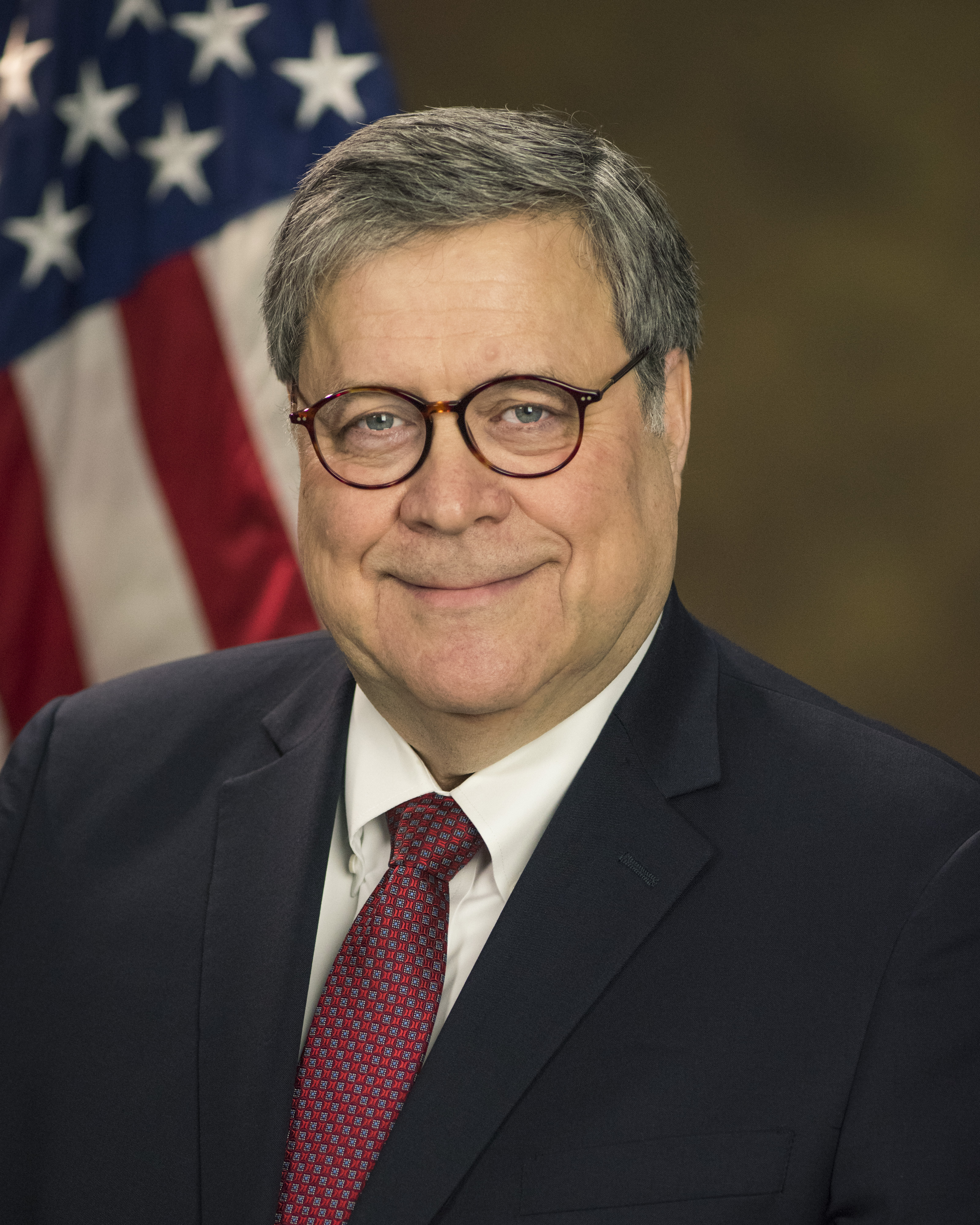
U.S. Attorney General William Barr. Official portrait by DOJ.

Initiative emphasizes enforcing gun prohibitions based on domestic violence convictions and mental health denials

On Wednesday, Attorney General William P. Barr announced the launch of Project Guardian, a new initiative designed to reduce gun violence and enforce federal firearms laws across the country. Specifically, Project Guardian focuses on investigating, prosecuting, and preventing gun crimes.

Reducing gun violence and enforcing federal firearms laws have always been among the Department’s highest priorities. In order to develop a new and robust effort to promote and ensure public safety, the Department reviewed and adapted some of the successes of past strategies to curb gun violence. Project Guardian draws on the Department’s earlier achievements, such as the “Triggerlock” program, and it serves as a complementary effort to the success of Project Safe Neighborhoods (PSN). In addition, the initiative emphasizes the importance of using all modern technologies available to law enforcement to promote gun crime intelligence.

“Gun crime remains a pervasive problem in too many communities across America. Today, the Department of Justice is redoubling its commitment to tackling this issue through the launch of Project Guardian,” said Attorney General William P. Barr. “Building on the success of past programs like Triggerlock, Project Guardian will strengthen our efforts to reduce gun violence by allowing the federal government and our state and local partners to better target offenders who use guns in crimes and those who try to buy guns illegally.”

“I have long believed that the first duty of government is to protect the safety of our citizens,” he continued. “When I was last Attorney General in 1991, the country had experienced an explosion of violent crime. Crime rates had tripled over the previous decades. Violent crime was at its peak.

“At that time, the federal government dramatically increased its focus on combatting violent crime. We launched a series of initiatives focused on drug organizations, gangs, and gun offenders.

“We also expanded our close collaboration and joint operations with our state and local partners.

“A key initiative that was launched was Project Triggerlock, which targeted for federal prosecution violent felons who illegally possessed guns. It used our very strong federal gun laws to put those people away for a long period of time, a resolution that we couldn’t get from many of the state systems. Working cooperatively with district attorneys’ offices and the police in various cities, we were able to have these cases referred to us and able to use our strong federal laws to address them.

“When I left office, we were charging approximately 1,000 offenders a month for gun violations.

“Over the next 25 years, violent crime was cut in half.

“Unfortunately, during the last two years of the Obama Administration, it started increasing again.

“But this Administration put a stop to that and reversed that trend.

“Once again, working with our state and local partners, we pushed crime rates down in 2017 and 2018.

“In 2018, violent crime went down nearly 4% nationwide. Unfortunately, crime remains too high in many of our cities and rural areas,” Barr added.

“Neighborhoods throughout the United States are becoming increasingly aware of the deep scars being left upon victims of gun violence,” said David L. Anderson has served as the U.S. Attorney for the Northern District of California. “The Northern District of California is no exception.  Project Guardian, announced today by Attorney General Barr, provides critical tools that this office will use to keep guns out of the hands of those who are not entitled to them and to coordinate with our federal, state, local, and tribal partners prosecutions of those who violate our gun laws.”

“ATF has a long history of strong partnerships in the law enforcement community,” said Acting Director Regina Lombardo. “Make no mistake, the women and men of ATF remain steadfast to our core mission of getting crime guns off of our streets. ATF and U.S. Attorneys nationwide will leverage these partnerships even further through enhanced community outreach initiatives and coordination with local, state, and tribal law enforcement and prosecutors to cut the pipeline of crime guns from those violent individuals who seek to terrorize our communities. Project Guardian will enhance ATF’s Crime Gun Intelligence, to include identifying, investigating and prosecuting those involved in the straw purchases of firearms, lying on federal firearms transaction forms, and those subject to the mental health prohibition of possessing firearms.”

Project Guardian’s implementation is based on five principles:

  1. Coordinated Prosecution. Federal prosecutors and law enforcement will coordinate with state, local, and tribal law enforcement and prosecutors to consider potential federal prosecution for new cases involving a defendant who: a) was arrested in possession of a firearm; b) is believed to have used a firearm in committing a crime of violence or drug trafficking crime prosecutable in federal court; or c) is suspected of actively committing violent crime(s) in the community on behalf of a criminal organization.
  2. Enforcing the Background Check System. United States Attorneys, in consultation with the Special Agent in Charge of the Bureau of Alcohol, Tobacco, Firearms and Explosives (ATF) in their district, will create new, or review existing, guidelines for intake and prosecution of federal cases involving false statements (including lie-and-try, lie-and-buy, and straw purchasers) made during the acquisition or attempted acquisition of firearms from Federal Firearms Licensees. Particular emphasis is placed on individuals convicted of violent felonies or misdemeanor crimes of domestic violence, individuals subject to protective orders, and individuals who are fugitives where the underlying offense is a felony or misdemeanor crime of domestic violence; individuals suspected of involvement in criminal organizations or of providing firearms to criminal organizations; and individuals involved in repeat denials.
  3. Improved Information Sharing. On a regular basis, and as often as practicable given current technical limitations, ATF will provide to state law enforcement fusion centers a report listing individuals for whom the National Instant Criminal Background Check System (NICS) has issued denials, including the basis for the denial, so that state and local law enforcement can take appropriate steps under their laws.
  4. Coordinated Response to Mental Health Denials. Each United States Attorney will ensure that whenever there is federal case information regarding individuals who are prohibited from possessing a firearm under the mental health prohibition, such information continues to be entered timely and accurately into the United States Attorneys’ Offices’ case-management system for prompt submission to NICS. ATF should engage in additional outreach to state and local law enforcement on how to use this denial information to better assure public safety. Additionally, United States Attorneys will consult with relevant district stakeholders to assess feasibility of adopting disruption of early engagement programs to address mental-health-prohibited individuals who attempt to acquire a firearm. United States Attorneys should consider, when appropriate, recommending court-ordered mental health treatment for any sentences issued to individuals prohibited based on mental health.
  5. Crime Gun Intelligence Coordination. Federal, state, local, and tribal prosecutors and law enforcement will work together to ensure effective use of the ATF’s Crime Gun Intelligence Centers (CGICs), and all related resources, to maximize the use of modern intelligence tools and technology. These tools can greatly enhance the speed and effectiveness in identifying trigger-pullers and finding their guns, but the success depends in large part on state, local, and tribal law enforcement partners sharing ballistic evidence and firearm recovery data with the ATF.

Federal law enforcement represents only about 15% of all law enforcement resources nationwide. Therefore, partnerships with state, local, and tribal law enforcement and the communities they serve are critical to addressing gun crime. The Department recognizes that sharing information with our state, local, and tribal law enforcement partners at every level will enhance public safety and provide a greater depth of resources available to address gun crime on a national level.

For more information on Project Guardian, see the Attorney General’s memorandum at: https://www.justice.gov/ag/project-guardian-memo-2019/download.

(Read Barr’s complete remarks, here).

Filed Under: Crime, News, U S Attorney

Richmond man sentenced to seven years in prison for possessing loaded gun

November 13, 2019 By Publisher Leave a Comment

OAKLAND – Saul Espinoza was sentenced on Tuesday to seven years in prison for being a felon in possession of a firearm and ammunition, announced United States Attorney David L. Anderson and Federal Bureau of Investigation Special Agent in Charge John F. Bennett.  The sentence was handed down by the Honorable Jeffrey S. White, U.S. District Judge.

Espinoza, 32, of Richmond, pleaded guilty to the charge on August 20, 2019.  According to his plea agreement, Espinoza admitted he was driving a Toyota 4Runner in Richmond, Calif., on October 4, 2018, when he turned at a high rate of speed and flipped his vehicle on its driver’s side.  Espinoza’s car came to a rest after colliding with an unoccupied van parked along the curb.  He remained in the car while officers approached and found him in possession of a Springfield XD-40 0.40 caliber semi-automatic pistol, with a fully loaded 16 round magazine.  Espinoza admitted that at the time of these events he was a convicted felon and therefore was not eligible to possess a firearm.

A federal grand jury indicted Espinoza on February 28, 2019, charging him with being a felon in possession of a firearm and ammunition, in violation of 18 U.S.C. § 922(g)(1).

In addition to the prison term, Judge White sentenced the defendant to a three-year term of supervised release. The defendant will begin serving the sentence immediately.

Assistant U.S. Attorney Jonathan U. Lee is prosecuting the case with the assistance of Jessica Rodriguez and Kathleen Turner.  The prosecution is the result of an investigation by the Federal Bureau of Investigation and Richmond Police Department.

Filed Under: Crime, News, U S Attorney, West County

Martinez woman gets three years in prison for embezzling over $200,000 from her employer

October 4, 2019 By Publisher Leave a Comment

Second employer she admitted to embezzling from

By U.S. Attorney’s Office, Northern District of California, Department of Justice

SAN FRANCISCO – Karen Posey was sentenced today to 36 months in prison, and ordered to pay restitution for stealing more than $200,000 from her former employer, announced United States Attorney David L. Anderson and FBI Special Agent in Charge John F. Bennett.

Posey pleaded guilty on December 11, 2018 to four counts of wire fraud, one count of bank fraud, and one count of access device fraud.  According to the plea agreement, Posey worked from July 2016-December 2017 as the business manager at a San Francisco-based architecture firm that designs schools and other public spaces nationwide with a focus on making them accessible to the disabled.  While employed there, Posey stole approximately $235,000 from the company.  She did so using various methods, including by writing unauthorized company checks to herself and then depositing them into her personal bank account, by using a corporate credit card to pay for personal expenses, and by using a corporate ATM card to withdraw large sums of cash.  In addition, as part of her plea agreement Posey admitted that, prior to working at the architecture firm, she worked at another San Francisco-based conservation company, where she embezzled more than $48,000 using similar means.

Posey, 58 of Martinez, CA, was indicted by a federal grand jury on August 30, 2018.  The seven count Indictment charged her with four counts of Wire Fraud, in violation of 18 U.S.C. § 1343 (Counts One through Four), one count of Aggravated Identity Theft, in violation of 18 U.S.C. § 1028A; one count of Bank Fraud, in violation of 18 U.S.C. § 1344(2) (Count Six); and one count of Fraudulent Use of Unauthorized Access Devices, in violation of 18 U.S.C. § 1029(a)(2) (Count Seven).

The sentence was handed down by the Honorable Charles R. Breyer, U.S. District Court Judge.  Judge Breyer also sentenced the defendant to a three-year period of supervised release to begin at the completion of the prison term and ordered her to pay restitution to the two companies from which she stole money.  The defendant will begin serving the sentence on October 4, 2019.

Ross Weingarten is the Assistant U.S. Attorney who is prosecuting the case with the assistance of Marina Ponomarchuk.  The prosecution is the result of an investigation by the Federal Bureau of Investigation.


Filed Under: Central County, Crime, News, U S Attorney

Walnut Creek woman sentenced to 28 months in prison for mail theft conspiracy with boyfriend targeting S.F. apartment complex

October 4, 2019 By Publisher Leave a Comment

Tyler Goforth and Jesslyn Felix in a photo posted on his Facebook page Oct. 3, 2017.

Boyfriend, also of Walnut Creek, sentenced in August to 27 months in prison

By U.S. Attorney’s Office, Northern District of California, Department of Justice

SAN FRANCISCO/SAN JOSE/OAKLAND – Jesslyn Felix was sentenced today to 28 months in prison, and ordered to pay restitution for her role in a conspiracy to commit wire fraud stemming from a mail theft scheme, announced United States Attorney David L. Anderson and United States Postal Inspection Service Inspector in Charge Rafael Nuñez.  The Honorable Maxine M. Chesney, U.S. District Judge, handed down the sentence. (See related article).

Felix, 35, of Walnut Creek, Calif., pleaded guilty to the charge on May 29, 2019.  According to her plea agreement, Felix admitted that she and her co-defendant, Tyler Goforth, 35, also of Walnut Creek, traveled repeatedly to the Beacon Apartment Complex, a large apartment building in San Francisco, to steal mail from Beacon residents.  The defendants visited the Beacon more than a dozen times between August 2017 and February 2018.  Felix and Goforth would enter one of the mailrooms at the Beacon, force open mailboxes, and then steal mail.  They then used personal information and documents found in the stolen mail to steal money from Beacon residents, which they spent for personal gain.  Specifically, Felix and Goforth activated credit and debit cards in the victims’ names, stole checks and gift cards, accessed bank accounts belonging to Beacon residents, and stole photo identifications which they then used to carry out their scheme to steal money.  In total, Felix and Goforth stole mail from more than 80 residents of the Beacon and stole more than $40,000 from them.

Mr. Goforth was sentenced for his role in the conspiracy on August 14, 2019, to 27 months in prison, to be followed by a three-year period of supervised release, and ordered to pay restitution.

A federal grand jury indicted Felix and Goforth on January 15, 2019.  The 14-count indictment charged each defendant with one count of conspiracy to commit wire fraud, in violation of 18 U.S.C. § 1349; five counts of wire fraud, in violation of 18 U.S.C. §1343; six counts of theft of mail, in violation of 18 U.S.C. §1708; one count of aggravated identity theft, in violation of 18 U.S.C. §1028A; and one count of possession with intent to use or transfer five or more documents or authentication features, in violation of 18 U.S.C. §1028(a)(3).  Felix and Goforth both pleaded guilty to the conspiracy charge on May 29, 2019.

In addition to the prison term, Judge Chesney ordered Felix to serve a three-year period of supervised release to begin at the completion of the prison term.  Felix has been in custody since May 1, 2019.

Assistant U.S. Attorney Ross Weingarten is prosecuting the case with the assistance of Marina Ponomarchuk.  The prosecution is the result of an investigation by the United States Postal Inspection Service.

Filed Under: Central County, Crime, News, U S Attorney

  • « Previous Page
  • 1
  • …
  • 5
  • 6
  • 7
Monicas-11-25
Deer-Valley-Chiro-06-22

Copyright © 2026 · Contra Costa Herald · Site by Clifton Creative Web