






Source: Recall District Attorney Diana Becton
Organizers hope Diana Becton’s luck has run out; have 160 days to gather signatures of 73,000 voters; election may not happen until next March
By Allen D. Payton
With less than two years left in her term and over a year after posting about their effort on social media, organizers announced on Monday, March 17, 2025, Contra Costa District Attorney Diana Becton was served with recall papers. They cite a “persistent cycle of unaddressed criminal activity” and “empty promises to victims and their families.”

Source: Recall District Attorney Diana Becton (Redacted by organizers)
In an announcement on their website on Tuesday, organizers wrote, “District Attorney Diana Becton has been served with the Notice of Intent to recall her from office on March 17, 2025. This recall notice was delivered in person, as shown in a video recording, while she was entering the back entrance of the DA’s office. Furthermore, the notice of intention was filed with the Contra Costa County Elections office today. Out of the 121 signatures collected, 103 were validated, exceeding the recall group’s requirement of 100 valid signatures for the initiative to proceed. Diana Becton now has seven days to respond to the Notice of Intention.
The petition declares, ‘We, the victims of crime, their families, local business owners and employees, as well as residents of Contra Costa County, have reached our limit and are initiating the recall of District Attorney Diana Becton. We are increasingly concerned about the persistent cycle of unaddressed criminal activity. We are frustrated by her continuous empty promises to victims and their families that justice will prevail while she permits criminals to roam free. Her lack of transparency regarding crime in this county and her attempts to keep offenders out of jail have left us disheartened. We stand for the residents of Contra Costa County because everyone deserves to live in a safe environment. We advocate for all crime victims who feel ignored, exasperated, and hopeless in their pursuit of justice for themselves or their loved ones. We support the business owners who endure constant thefts and burglaries from repeat offenders while Becton turns a blind eye. District Attorney Diana Becton is compromising the safety of our community and failing to address the needs of victims. We are committed to restoring justice, starting with the urgent recall of District Attorney Diana Becton.’
The organizers of the recall will be arranging a press conference soon. For any questions or inquiries, please reach out via email to recalldianabecton@gmail.com or info@recalldianabecton.org.”
The brief video on the website shows Becton being served with the recall papers as she walked into a building.

Source: Recall District Attorney Diana Becton
In addition, the website reveals a photo and list of the 10 recall organizers as promised to the Herald in an email dated Sept. 6, 2024, as well as the victims they represent. They include:
Top Row
1. Zelma Johnson – Grandmother of Damond Lazenby Jr.
2. Stephen Arellano – Father of Thomas Arellano
3. Gwyn Gabe – Father of Alexis Gabe
4. Kelly Melton – Aunt of Allie Sweitzer
5. Monte’ Corley – Brother of Stacy Dewayne Corley Jr.
6. Emileigh Faulkner – Cousin of Allie Sweitzer
Bottom Row
7. Carol Ann Sherman – Granddaughter of Carmen Vasquez
8. Erica Esperanza Cano – Ex-Wife of Anthony Hernandez
9. Jessica Frances Gabe Zuasola – Cousin of Alexis Gabe
10. Christopher Rodriguez – Stepfather of Allie Sweitzer
According to a December 2024 report by Richmondside, “Contra Costa County’s Registrar of Voters told Richmondside there are about 729,500 registered voters in the county, so the recall team will need to gather, at minimum, about 73,000 signatures,” or 10 percent as required in local jurisdictions with 100,000 or more registered voters.
According to the California Secretary of State’s Procedures for Recalling State and Local Officials, the organizers will have 160 days to accomplish that requirement.
In addition, the procedures require, “If there are more than 500 signatures to verify, the elections department has 60 days to determine if there are enough valid signatures, and the elections department can use random sampling techniques. However, if the elections department determines that a 60-day window “could cause the recall election to be ineligible for consolidation with the next regularly scheduled election,” the process must be finished in 30 days instead of 60.
“The relevant governing body (Board of Supervisors) must call for an election within 14 days after the meeting at which the certificate of sufficiency for the recall petition was presented. If the governing body fails to issue the order within 14 days, the county elections official, within 5 days, shall set the date for holding the election.
“The election shall be held not less than 88 nor more than 125 days after the issuance of the order. However, the election may be conducted within 180 days after the issuance of the order so that the election may be consolidated with a regularly scheduled election.” The latest the recall election could occur is next March.
CORRECTION: A previous version of this report claimed Becton was up for re-election in 2026. However, a state law passed in 2022, AB-759 aligns elections for county district attorneys and sheriffs with the presidential election, and all those who were elected that year had their terms extended by two years until 2028.
Due to new state laws passed by the legislature and signed by Newsom in 2022, local recalls no longer include a simultaneous replacement election. Instead, should Becton be recalled, then her position will remain vacant until the Board of Supervisors appoints her replacement or holds another election. If appointed or elected, that person would fill the remainder of Becton’s term until December 2028.
Read More

Photo: Granicus LLC
With Granicus, LLC developed notification program
By Dawn Kruger, Community and Media Relations Coordinator, Contra Costa County Clerk-Recorder’s Office
Martinez, CA-The Contra Costa County Clerk-Recorder’s Office is pleased to announce the launch of a new online tool that property owners can use to add an extra layer of security for recordings. The opt-in tool allows those with recorded documents to be notified of any new recording activity related to property. Property owners who go online to our Real Estate Recording Notification Alert page https://www.contracostavote.gov/recorder/fraud-protection/real-estate-recording-notification-program/ can sign up to receive an email notification anytime a document related to the property address, parcel number, or name associated with the property is indexed after recording.
As part of the department’s commitment to transparency, the Contra Costa Clerk-Recorder Division staff worked closely with Granicus, LLC, a longtime vendor, to develop a real estate recording notification program to help customers stay informed about any activity related to their property recordings. The notification program is optional, and property owners can sign up on the Clerk-Recorder website.
“Our office is always looking for ways to offer as much security as possible to property owners,” said Kristin B. Connelly, Clerk-Recorder for Contra Costa County. “This real estate recording notification program, along with our partnership with the District Attorney’s office to protect homeowners from fraudulent transfers of ownership, offers an important layer of security to Contra Costa County property owners.”
The launch of the real estate recording notification program is just one of the many ways that the Contra Costa County Clerk-Recorder works tirelessly to ensure our residents are informed and protected from fraud.
Read More
Faces up to 10 years in prison, $250,000 fine; detention hearing on St. Patrick’s Day
By U.S. Attorney – Northern District of California
OAKLAND – A Brentwood man has been charged with unlawful possession of a machine gun conversion device. Noah Kanaye Bauer, 21 (born 12/13/2003), was arrested yesterday and made his initial appearance in federal district court in Oakland this morning.
According to the criminal complaint and court documents unsealed on Wednesday, March 12, 2025, on Sept. 6, 2024, officers with the Brentwood Police Department (BPD) responded to a call regarding an individual with a firearm at a grocery store in Brentwood and found Bauer with a 3D printed Glock style firearm. Officers allegedly removed the firearm from the front of Bauer’s waistband and saw that there was no serial number on it. In a search of Bauer’s home after his arrest for carrying a concealed weapon, BPD officers found a 3D printing machine, three 3D printed pistol frames, and a 3D printed machine gun conversion device in Bauer’s room.
The complaint describes that machine gun conversion devices, also known as “switches” or “auto sears,” are designed and created for the purpose of converting a semi-automatic Glock type pistol into a fully automatic machine gun. When BPD officers questioned Bauer on what the conversion devices were used for, Bauer allegedly stated, “to make it shoot faster.”
Bauer is next scheduled to appear in court on March 17, 2025, for a detention hearing before U.S. Magistrate Judge Kandis A. Westmore.
Acting United States Attorney Patrick D. Robbins and FBI Special Agent in Charge Sanjay Virmani made the announcement.
Bauer is charged with one count of 18 U.S.C. § 922(o). A complaint merely alleges that crimes have been committed, and all defendants are presumed innocent until proven guilty beyond a reasonable doubt. If convicted, the defendant faces a maximum sentence of 10 years in prison and a fine of $250,000. Any sentence following conviction would be imposed by the court after consideration of the U.S. Sentencing Guidelines and the federal statute governing the imposition of a sentence, 18 U.S.C. § 3553.
The National Security and Special Prosecutions Section of the U.S. Attorney’s Office is prosecuting this case. The prosecution is the result of an investigation by the FBI with assistance from the BPD and the Bureau of Alcohol, Tobacco, Firearms, and Explosives.
According to a report by crimevoice.com, the incident occurred at the Raley’s grocery store on
Sand Creek Road. Bauer’s arrest in September 2024 prompted an FBI investigation of him conducted
by the domestic terrorism squad of the San Francisco field office.
According to the Contra Costa County Sheriff’s Office, the five-foot, nine-inch tall, 145-pound Bauer is Hispanic and being held on no bail in the West County Detention Facility.
Allen D. Payton contributed to this report.
Read More
By Contra Costa CHP
ORINDA, Calif. – A two-vehicle crash early this morning has resulted in fatal injuries to one driver.
On March 14, 2025, at approximately 8:20 a.m., officers assigned to the California Highway Patrol’s (CHP) Contra Costa Area office responded to a two-vehicle crash which occurred on Hwy 24 eastbound at Wilder Road in Orinda.
Our preliminary investigation indicates a blue Ford Flex, solely occupied by an adult male driver, was traveling eastbound on SR-24 at Wilder Road, when, for reasons still under investigation, it crashed into the rear of a red Toyota Corolla traveling in the same direction.
The adult male driver and sole occupant of the Toyota was uninjured. The driver of the Ford, who was not wearing a seatbelt, was ejected from the vehicle and was tragically pronounced deceased at the scene. It is still under investigation whether DUI was a factor in this crash.
All lanes of SR-24 eastbound were closed at approximately 8:44 a.m., for on-scene investigation, and were re-opened at approximately 11:34 a.m.
According to Officer Dan Gilmore, CHP-Contra Costa PIO, the deceased was 32 years old.
This crash remains under investigation. If anyone witnessed the incident or the events leading up to it, please contact the Contra Costa Area office in Martinez at (925) 646-4980 or email your contact information to 320Investigations@chp.ca.gov to be contacted by the investigating officer.
The Mission of the California Highway Patrol is to provide the highest level of Safety, Service, and Security.
Allen D. Payton contributed to this report.
Read More
Video screenshots of the Contra Costa Sheriff’s Office Helicopter STARR3 water rescue in Hercules on Saturday, March 1, 2025. Source: CCCSheriff
Contra Costa Sheriff’s Office Helicopter STARR3 water rescue
By Contra Costa County Sheriff’s Office
On Saturday, March 1, 2025, at about 3 PM, Sheriff’s Office Marine Services Unit deputy sheriffs were dispatched to the Hercules shoreline for an overturned boat with a victim in the water. Sheriff’s Office helicopter STARR3 also responded to assist.
STARR3 arrived on scene and located a capsized boat about 200 feet off the shoreline with one person who was in distress. The helicopter landed nearby and set up for a water rescue. A STARR3 crew member was short-hauled to the victim where he performed a water rescue and brought the victim to paramedics waiting nearby.
STARR3 located another victim about 2 feet underwater. The STARR3 crew member performed a short-haul rescue of the second victim who was taken to paramedics.
Both victims were transported to nearby hospitals, where one was later pronounced deceased.
The Sheriff’s Office Marine Services Unit is investigating this incident. Anyone with any information is asked to call (925) 754-0718.
See video.
Read More
Burglary suspect Lacy William Ball was arrested on March 7, 2025. Photos: Pleasant Hill PD
Arrested again on March 12 for first-degree burglary by Concord PD
45-year-old Lacy Ball has some ‘splaining’ to do!
By Pleasant Hill Police Department
Great investigation by our Patrol Officers!
This past Friday night (March 7, 2025), our officers responded to a residential burglary in the Pleasant Valley neighborhood. Thanks to quick action and surveillance footage, they were able to identify the suspect as 45-year-old Lacy William Ball (born 8/1/79) of Pleasant Hill.
Ball was located in Pleasant Hill and arrested for burglary in the 1400 block of Contra Costa Blvd. Officers also recovered stolen property, which was returned to the victim.
A big thank you to our Patrol Officers and the watchful neighbors who helped bring this case to a swift resolution!
According to the Pleasant Hill PD website, the five-feet, 10-inch tall, 205-pound Ball is White with blonde hair and blue eyes and is unemployed.
According to the Contra Costa Sheriff’s Office, he is Hispanic, five-feet, nine inches tall, 170 pounds with blue eyes and grey hair, was arrested again by Concord Police on March 12 at 9:42 AM and is being held in the West County Detention Facility on no bail. Ball faces two counts of first-degree burglary and his next court date is scheduled for 8:30 AM on April 17, 2025, in Superior Court in Martinez.
According to localcrimenews.com, Ball was also arrested four previous times, twice for burglary in 2023 by Concord Police and Contra Costa Sheriff’s Deputies.
Allen D. Payton contributed to this report.
Read More
These awards from the Northern California Chapter of the American Public Works Association (APWA) highlight the City of San Pablo’s extraordinary vision and dedication that are transforming San Pablo into a safer, greener, and more sustainable community. Source: City of San Pablo
By Carl Dameron, Vice President of Public Relations, Strategy Research Institute
The City of San Pablo took home three major awards at the 2025 APWA Project Awards Ceremony, hosted by the Northern California Chapter of the American Public Works Association, on February 20, 2025.
The Rumrill Blvd. Complete Streets Project won both the Small Cities Transportation Project of the Year award and the prestigious Project of the Year awards.

Rendering of improvements to Rumrill Blvd. between Costa Avenue and Market Avenue. Source: City of San Pablo
Additionally, the San Pablo Public Works Department received the Exceptional Performance in Sustainable Practices award, recognizing the City’s commitment to innovative, sustainable projects that benefit both the community and the environment.

Rendering of improvements to Rumrill Blvd. between Market Avenue and San Pablo Avenue. Source: City of San Pablo
“This is an acknowledgement of the City’s commitment to making San Pablo a wonderful community where to reside,” said Allan Panganiban, Public Works Director/City Engineer.
Read More
Following the crash of the suspects’ car, Orey Douglas was arrested car and a gun was recovered on August 4, 2024. Photos: Brentwood PD
Orey Douglas has history of over 20 arrests since 2014 including for murder, multiple gun and sex crimes
By Brentwood Police Department
Around 1:00 AM Sunday morning August 4th, 2024, Brentwood officers responded to an armed robbery at 50 Sand Creek Road. While officers were interviewing the victim, Oakley PD spotted the suspects’ vehicle in their jurisdiction and attempted a traffic stop. The driver fled at a high rate of speed, leading to a pursuit. The suspect vehicle eventually crashed into an embankment off Highway 160.
Brentwood officers arrived at the crash scene and confirmed that the vehicle matched the description of the suspects’ car. Both occupants were detained, and a loaded handgun, along with the stolen property from the victim, was found in the vehicle. The suspect, 28-year-old Orey Azniam Douglas of Antioch, was positively identified and placed under arrest. Douglas was transported to the Martinez Detention Facility for booking.
This quick and coordinated response not only led to the arrest of the suspect but also likely prevented further crimes.
According to a report by crimevoice.com, they robbed Los Mexicanos Market and the second suspect Sam Donte Gray, 38 (born 11-10-85), of Concord, remained at large until he was arrested on August 8. Douglas was charged with second-degree robbery and three firearms-related charges and was held in the West County Detention Facility on $160,000 bail pending his Oct. 7th court hearing.
On March 3rd, 2025, the suspects, Douglas and Gray, were found guilty of armed robbery and assault with a deadly weapon, along with numerous firearm charges and enhancements.
This case highlights the collective efforts of everyone involved, including patrol officers from both Brentwood PD and Oakley PD, along with our Detectives. Their dedication and teamwork played a critical role in this successful conviction while also ensuring the safety of our community.
According to localcrimenews.com, the six-feet, three-inch tall, 215-pound Douglas is Black and has a history of arrests dating back to 2014 by multiple agencies including police departments in Antioch, Hayward, Fremont, BART, Oakland, San Jose, Vacaville, as well as Sheriff’s Departments in Contra Costa, Alameda and Solano counties, and Contra Costa CHP. Charges include murder, inflicting corporal injury on a spouse or cohabitant, assault with any means of force likely to produce great bodily injury, multiple gun crimes, sex with a minor and unlawfully causing a minor to engage in a commercial sex act by force, carjacking, vehicle theft, receiving stolen property, false imprisonment, threatening a witness, evading police and resisting arrest.
According to the Contra Costa Sheriff’s Department, the five-feet, nine-inch tall, 217-pound Gray is Black and being held in the Martinez Detention Facility on $140,0000 bail. His next court appearance is scheduled for May 9, 2025, at 8:30 AM in Superior Court in Martinez.
According to localcrimenews.com, he was arrested for conspiracy to commit a crime, robbery, assault with a firearm on a person, felony parole violation and addict in possession of a firearm. Gray was previously arrested on Sept. 8, 2023, by the Alameda County Sheriff’s Department on order for a person’s removal from prison to appear in court.
Allen D. Payton contributed to this report.
Read More
Gun and bullets seized during arrest on Friday morning, March 14, 2025. Graphic & photo: Pleasant Hill PD
19-year-old, two 18-year-olds including one from Pittsburg with Dec. 2024 gun arrest; two held on $150,000 bail
Loaded firearm seized, stolen items recovered
By Pleasant Hill Police Department
A solid late-night arrest leads to a firearm recovery and three suspects in jail!
Early this morning officers were dispatched to a possible auto burglary in progress in the Camelback neighborhood. Immediately upon arriving to the area, they located a suspicious vehicle matching the description fleeing the area. Following a traffic stop, three suspects were detained and a large amount of suspected stolen items were recovered. During the contact, a loaded firearm was recovered from the vehicle as well.
Through this investigation, we were able to assist surrounding agencies with their investigations into similar auto burglaries, and property belonging to their victims was returned.
All three suspects were booked into Martinez Detention Facility for numerous charges including burglary and firearms charges. These cases will be sent to the District Attorney for filings.
Great work by our weekday night teams!!
According to the Pleasant Hill PD website, the suspects are 19-year-old Shawndell Torrybreon Hines who is Black, six-feet, one-inch tall and 184 pounds; 18-year-old Jabari Cleon James McKinney who is Black, five-feet, eight inches tall and 190 pounds; and Enrique Dexter Lafrades, who is also 18 years old and Black, is five-feet, 11-inches tall and 180 pounds.
According to the Contra Costa Sheriff’s Office, Hines was born 8/27/2005, and is being held on $150,000 bail.
According to the Contra Costa Sheriff’s Office, McKinney was still in custody as of 8:18 AM Friday morning.
According to localcrimenews.com, Lafrades is from Pittsburg and was also arrested on Dec. 17, 2024, by Pittsburg Police for carrying a loaded firearm on a person or in a vehicle while in a public place. According to the Contra Costa Sheriff’s Office, he was born 6/25/2006, and is being held on $150,000 bail.
No additional information about Hines or McKinney could be found in online searches.
Case #25-00764
Allen D. Payton contributed to this report.
Read More
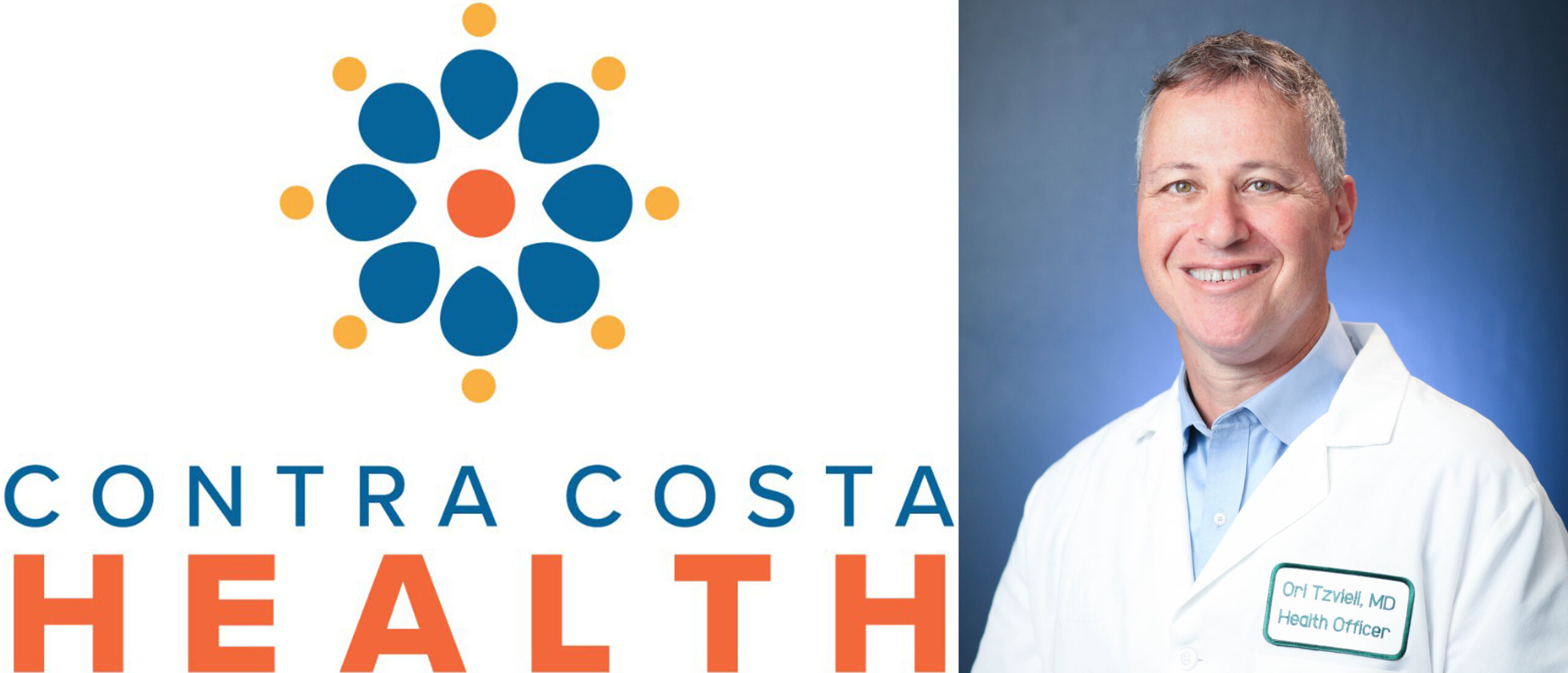
Dr. Ori Tzvieli. Photo: CCCounty
Plan open recruitment process soon to fill permanent position
By Kristi Jourdan, PIO & Director Office of Communications & Media, Contra Costa County
(Martinez, CA) – On Tuesday, March 11, 2025, the Contra Costa County Board of Supervisors appointed Dr. Ori Tzvieli as interim director of health services while the County launches a search for a permanent Chief Executive Officer and Health Director for Contra Costa Health (CCH).
The appointment ensures continuity in the County’s health services and continued progress on key health initiatives.
Tzvieli joined CCH as a family medicine resident at Contra Costa Regional Medical Center in 2000, launching a career in the county’s healthcare delivery system that has led to several leadership roles, including Medical Staff President, Ambulatory Care Medical Director and, most recently, Public Health Director and Health Officer for the county. Tzvieli received his medical degree from the University of California, San Francisco, and a Master of Health Science from the University of California at Berkeley School of Public Health. Dr. Tzvieli will remain the county’s Health Officer while serving as interim CEO and Health Director for Contra Costa Health.
During his time with CCH, Tzvieli has championed collaborative efforts to address opioid addiction, has helped to lead the county’s emergency response to the COVID-19 pandemic, oversaw testing, vaccination, case investigation and contact tracing, laboratory functions, nursing and clinical services, communicable disease surveillance and prevention programs, and an array of work to improve community wellness, from senior nutrition programs to services supporting family, maternal and child health.
He replaces longtime CCH CEO and Health Director Anna M. Roth, who retired in February.
“Anna has been a transformative leader for Contra Costa Health, and while we will deeply miss her visionary leadership, we are confident in and excited about Ori’s expertise and dedication to continue the County’s mission,” said Board Chair and District 2 Supervisor Candace Andersen. “This transition marks an important moment for the County, and we are committed to supporting a seamless leadership change while continuing to prioritize the well-being of our residents.”
During her tenure, Roth oversaw the growth of a $3 billion integrated health system serving more than one million residents. Under her guidance, the County expanded its safety-net services, strengthened behavioral and physical health integration, and launched innovative programs to address homelessness, environmental health, and emergency medical services.
The Board of Supervisors plans to conduct an open recruitment process soon to fill the position permanently.
Read More










Source: Recall District Attorney Diana Becton
Organizers hope Diana Becton’s luck has run out; have 160 days to gather signatures of 73,000 voters; election may not happen until next March
By Allen D. Payton
With less than two years left in her term and over a year after posting about their effort on social media, organizers announced on Monday, March 17, 2025, Contra Costa District Attorney Diana Becton was served with recall papers. They cite a “persistent cycle of unaddressed criminal activity” and “empty promises to victims and their families.”
Source: Recall District Attorney Diana Becton (Redacted by organizers)
In an announcement on their website on Tuesday, organizers wrote, “District Attorney Diana Becton has been served with the Notice of Intent to recall her from office on March 17, 2025. This recall notice was delivered in person, as shown in a video recording, while she was entering the back entrance of the DA’s office. Furthermore, the notice of intention was filed with the Contra Costa County Elections office today. Out of the 121 signatures collected, 103 were validated, exceeding the recall group’s requirement of 100 valid signatures for the initiative to proceed. Diana Becton now has seven days to respond to the Notice of Intention.
The petition declares, ‘We, the victims of crime, their families, local business owners and employees, as well as residents of Contra Costa County, have reached our limit and are initiating the recall of District Attorney Diana Becton. We are increasingly concerned about the persistent cycle of unaddressed criminal activity. We are frustrated by her continuous empty promises to victims and their families that justice will prevail while she permits criminals to roam free. Her lack of transparency regarding crime in this county and her attempts to keep offenders out of jail have left us disheartened. We stand for the residents of Contra Costa County because everyone deserves to live in a safe environment. We advocate for all crime victims who feel ignored, exasperated, and hopeless in their pursuit of justice for themselves or their loved ones. We support the business owners who endure constant thefts and burglaries from repeat offenders while Becton turns a blind eye. District Attorney Diana Becton is compromising the safety of our community and failing to address the needs of victims. We are committed to restoring justice, starting with the urgent recall of District Attorney Diana Becton.’
The organizers of the recall will be arranging a press conference soon. For any questions or inquiries, please reach out via email to recalldianabecton@gmail.com or info@recalldianabecton.org.”
The brief video on the website shows Becton being served with the recall papers as she walked into a building.
Source: Recall District Attorney Diana Becton
In addition, the website reveals a photo and list of the 10 recall organizers as promised to the Herald in an email dated Sept. 6, 2024, as well as the victims they represent. They include:
Top Row
1. Zelma Johnson – Grandmother of Damond Lazenby Jr.
2. Stephen Arellano – Father of Thomas Arellano
3. Gwyn Gabe – Father of Alexis Gabe
4. Kelly Melton – Aunt of Allie Sweitzer
5. Monte’ Corley – Brother of Stacy Dewayne Corley Jr.
6. Emileigh Faulkner – Cousin of Allie Sweitzer
Bottom Row
7. Carol Ann Sherman – Granddaughter of Carmen Vasquez
8. Erica Esperanza Cano – Ex-Wife of Anthony Hernandez
9. Jessica Frances Gabe Zuasola – Cousin of Alexis Gabe
10. Christopher Rodriguez – Stepfather of Allie Sweitzer
According to a December 2024 report by Richmondside, “Contra Costa County’s Registrar of Voters told Richmondside there are about 729,500 registered voters in the county, so the recall team will need to gather, at minimum, about 73,000 signatures,” or 10 percent as required in local jurisdictions with 100,000 or more registered voters.
According to the California Secretary of State’s Procedures for Recalling State and Local Officials, the organizers will have 160 days to accomplish that requirement.
In addition, the procedures require, “If there are more than 500 signatures to verify, the elections department has 60 days to determine if there are enough valid signatures, and the elections department can use random sampling techniques. However, if the elections department determines that a 60-day window “could cause the recall election to be ineligible for consolidation with the next regularly scheduled election,” the process must be finished in 30 days instead of 60.
“The relevant governing body (Board of Supervisors) must call for an election within 14 days after the meeting at which the certificate of sufficiency for the recall petition was presented. If the governing body fails to issue the order within 14 days, the county elections official, within 5 days, shall set the date for holding the election.
“The election shall be held not less than 88 nor more than 125 days after the issuance of the order. However, the election may be conducted within 180 days after the issuance of the order so that the election may be consolidated with a regularly scheduled election.” The latest the recall election could occur is next March.
CORRECTION: A previous version of this report claimed Becton was up for re-election in 2026. However, a state law passed in 2022, AB-759 aligns elections for county district attorneys and sheriffs with the presidential election, and all those who were elected that year had their terms extended by two years until 2028.
Due to new state laws passed by the legislature and signed by Newsom in 2022, local recalls no longer include a simultaneous replacement election. Instead, should Becton be recalled, then her position will remain vacant until the Board of Supervisors appoints her replacement or holds another election. If appointed or elected, that person would fill the remainder of Becton’s term until December 2028.
Read More
Photo: Granicus LLC
With Granicus, LLC developed notification program
By Dawn Kruger, Community and Media Relations Coordinator, Contra Costa County Clerk-Recorder’s Office
Martinez, CA-The Contra Costa County Clerk-Recorder’s Office is pleased to announce the launch of a new online tool that property owners can use to add an extra layer of security for recordings. The opt-in tool allows those with recorded documents to be notified of any new recording activity related to property. Property owners who go online to our Real Estate Recording Notification Alert page https://www.contracostavote.gov/recorder/fraud-protection/real-estate-recording-notification-program/ can sign up to receive an email notification anytime a document related to the property address, parcel number, or name associated with the property is indexed after recording.
As part of the department’s commitment to transparency, the Contra Costa Clerk-Recorder Division staff worked closely with Granicus, LLC, a longtime vendor, to develop a real estate recording notification program to help customers stay informed about any activity related to their property recordings. The notification program is optional, and property owners can sign up on the Clerk-Recorder website.
“Our office is always looking for ways to offer as much security as possible to property owners,” said Kristin B. Connelly, Clerk-Recorder for Contra Costa County. “This real estate recording notification program, along with our partnership with the District Attorney’s office to protect homeowners from fraudulent transfers of ownership, offers an important layer of security to Contra Costa County property owners.”
The launch of the real estate recording notification program is just one of the many ways that the Contra Costa County Clerk-Recorder works tirelessly to ensure our residents are informed and protected from fraud.
Read MoreFaces up to 10 years in prison, $250,000 fine; detention hearing on St. Patrick’s Day
By U.S. Attorney – Northern District of California
OAKLAND – A Brentwood man has been charged with unlawful possession of a machine gun conversion device. Noah Kanaye Bauer, 21 (born 12/13/2003), was arrested yesterday and made his initial appearance in federal district court in Oakland this morning.
According to the criminal complaint and court documents unsealed on Wednesday, March 12, 2025, on Sept. 6, 2024, officers with the Brentwood Police Department (BPD) responded to a call regarding an individual with a firearm at a grocery store in Brentwood and found Bauer with a 3D printed Glock style firearm. Officers allegedly removed the firearm from the front of Bauer’s waistband and saw that there was no serial number on it. In a search of Bauer’s home after his arrest for carrying a concealed weapon, BPD officers found a 3D printing machine, three 3D printed pistol frames, and a 3D printed machine gun conversion device in Bauer’s room.
The complaint describes that machine gun conversion devices, also known as “switches” or “auto sears,” are designed and created for the purpose of converting a semi-automatic Glock type pistol into a fully automatic machine gun. When BPD officers questioned Bauer on what the conversion devices were used for, Bauer allegedly stated, “to make it shoot faster.”
Bauer is next scheduled to appear in court on March 17, 2025, for a detention hearing before U.S. Magistrate Judge Kandis A. Westmore.
Acting United States Attorney Patrick D. Robbins and FBI Special Agent in Charge Sanjay Virmani made the announcement.
Bauer is charged with one count of 18 U.S.C. § 922(o). A complaint merely alleges that crimes have been committed, and all defendants are presumed innocent until proven guilty beyond a reasonable doubt. If convicted, the defendant faces a maximum sentence of 10 years in prison and a fine of $250,000. Any sentence following conviction would be imposed by the court after consideration of the U.S. Sentencing Guidelines and the federal statute governing the imposition of a sentence, 18 U.S.C. § 3553.
The National Security and Special Prosecutions Section of the U.S. Attorney’s Office is prosecuting this case. The prosecution is the result of an investigation by the FBI with assistance from the BPD and the Bureau of Alcohol, Tobacco, Firearms, and Explosives.
According to a report by crimevoice.com, the incident occurred at the Raley’s grocery store on
Sand Creek Road. Bauer’s arrest in September 2024 prompted an FBI investigation of him conducted
by the domestic terrorism squad of the San Francisco field office.
According to the Contra Costa County Sheriff’s Office, the five-foot, nine-inch tall, 145-pound Bauer is Hispanic and being held on no bail in the West County Detention Facility.
Allen D. Payton contributed to this report.
Read More
By Contra Costa CHP
ORINDA, Calif. – A two-vehicle crash early this morning has resulted in fatal injuries to one driver.
On March 14, 2025, at approximately 8:20 a.m., officers assigned to the California Highway Patrol’s (CHP) Contra Costa Area office responded to a two-vehicle crash which occurred on Hwy 24 eastbound at Wilder Road in Orinda.
Our preliminary investigation indicates a blue Ford Flex, solely occupied by an adult male driver, was traveling eastbound on SR-24 at Wilder Road, when, for reasons still under investigation, it crashed into the rear of a red Toyota Corolla traveling in the same direction.
The adult male driver and sole occupant of the Toyota was uninjured. The driver of the Ford, who was not wearing a seatbelt, was ejected from the vehicle and was tragically pronounced deceased at the scene. It is still under investigation whether DUI was a factor in this crash.
All lanes of SR-24 eastbound were closed at approximately 8:44 a.m., for on-scene investigation, and were re-opened at approximately 11:34 a.m.
According to Officer Dan Gilmore, CHP-Contra Costa PIO, the deceased was 32 years old.
This crash remains under investigation. If anyone witnessed the incident or the events leading up to it, please contact the Contra Costa Area office in Martinez at (925) 646-4980 or email your contact information to 320Investigations@chp.ca.gov to be contacted by the investigating officer.
The Mission of the California Highway Patrol is to provide the highest level of Safety, Service, and Security.
Allen D. Payton contributed to this report.
Read MoreVideo screenshots of the Contra Costa Sheriff’s Office Helicopter STARR3 water rescue in Hercules on Saturday, March 1, 2025. Source: CCCSheriff
Contra Costa Sheriff’s Office Helicopter STARR3 water rescue
By Contra Costa County Sheriff’s Office
On Saturday, March 1, 2025, at about 3 PM, Sheriff’s Office Marine Services Unit deputy sheriffs were dispatched to the Hercules shoreline for an overturned boat with a victim in the water. Sheriff’s Office helicopter STARR3 also responded to assist.
STARR3 arrived on scene and located a capsized boat about 200 feet off the shoreline with one person who was in distress. The helicopter landed nearby and set up for a water rescue. A STARR3 crew member was short-hauled to the victim where he performed a water rescue and brought the victim to paramedics waiting nearby.
STARR3 located another victim about 2 feet underwater. The STARR3 crew member performed a short-haul rescue of the second victim who was taken to paramedics.
Both victims were transported to nearby hospitals, where one was later pronounced deceased.
The Sheriff’s Office Marine Services Unit is investigating this incident. Anyone with any information is asked to call (925) 754-0718.
See video.
Read MoreBurglary suspect Lacy William Ball was arrested on March 7, 2025. Photos: Pleasant Hill PD
Arrested again on March 12 for first-degree burglary by Concord PD
45-year-old Lacy Ball has some ‘splaining’ to do!
By Pleasant Hill Police Department
Great investigation by our Patrol Officers!
This past Friday night (March 7, 2025), our officers responded to a residential burglary in the Pleasant Valley neighborhood. Thanks to quick action and surveillance footage, they were able to identify the suspect as 45-year-old Lacy William Ball (born 8/1/79) of Pleasant Hill.
Ball was located in Pleasant Hill and arrested for burglary in the 1400 block of Contra Costa Blvd. Officers also recovered stolen property, which was returned to the victim.
A big thank you to our Patrol Officers and the watchful neighbors who helped bring this case to a swift resolution!
According to the Pleasant Hill PD website, the five-feet, 10-inch tall, 205-pound Ball is White with blonde hair and blue eyes and is unemployed.
According to the Contra Costa Sheriff’s Office, he is Hispanic, five-feet, nine inches tall, 170 pounds with blue eyes and grey hair, was arrested again by Concord Police on March 12 at 9:42 AM and is being held in the West County Detention Facility on no bail. Ball faces two counts of first-degree burglary and his next court date is scheduled for 8:30 AM on April 17, 2025, in Superior Court in Martinez.
According to localcrimenews.com, Ball was also arrested four previous times, twice for burglary in 2023 by Concord Police and Contra Costa Sheriff’s Deputies.
Allen D. Payton contributed to this report.
Read MoreThese awards from the Northern California Chapter of the American Public Works Association (APWA) highlight the City of San Pablo’s extraordinary vision and dedication that are transforming San Pablo into a safer, greener, and more sustainable community. Source: City of San Pablo
By Carl Dameron, Vice President of Public Relations, Strategy Research Institute
The City of San Pablo took home three major awards at the 2025 APWA Project Awards Ceremony, hosted by the Northern California Chapter of the American Public Works Association, on February 20, 2025.
The Rumrill Blvd. Complete Streets Project won both the Small Cities Transportation Project of the Year award and the prestigious Project of the Year awards.
Rendering of improvements to Rumrill Blvd. between Costa Avenue and Market Avenue. Source: City of San Pablo
Additionally, the San Pablo Public Works Department received the Exceptional Performance in Sustainable Practices award, recognizing the City’s commitment to innovative, sustainable projects that benefit both the community and the environment.
Rendering of improvements to Rumrill Blvd. between Market Avenue and San Pablo Avenue. Source: City of San Pablo
“This is an acknowledgement of the City’s commitment to making San Pablo a wonderful community where to reside,” said Allan Panganiban, Public Works Director/City Engineer.
Read MoreFollowing the crash of the suspects’ car, Orey Douglas was arrested car and a gun was recovered on August 4, 2024. Photos: Brentwood PD
Orey Douglas has history of over 20 arrests since 2014 including for murder, multiple gun and sex crimes
By Brentwood Police Department
Around 1:00 AM Sunday morning August 4th, 2024, Brentwood officers responded to an armed robbery at 50 Sand Creek Road. While officers were interviewing the victim, Oakley PD spotted the suspects’ vehicle in their jurisdiction and attempted a traffic stop. The driver fled at a high rate of speed, leading to a pursuit. The suspect vehicle eventually crashed into an embankment off Highway 160.
Brentwood officers arrived at the crash scene and confirmed that the vehicle matched the description of the suspects’ car. Both occupants were detained, and a loaded handgun, along with the stolen property from the victim, was found in the vehicle. The suspect, 28-year-old Orey Azniam Douglas of Antioch, was positively identified and placed under arrest. Douglas was transported to the Martinez Detention Facility for booking.
This quick and coordinated response not only led to the arrest of the suspect but also likely prevented further crimes.
According to a report by crimevoice.com, they robbed Los Mexicanos Market and the second suspect Sam Donte Gray, 38 (born 11-10-85), of Concord, remained at large until he was arrested on August 8. Douglas was charged with second-degree robbery and three firearms-related charges and was held in the West County Detention Facility on $160,000 bail pending his Oct. 7th court hearing.
On March 3rd, 2025, the suspects, Douglas and Gray, were found guilty of armed robbery and assault with a deadly weapon, along with numerous firearm charges and enhancements.
This case highlights the collective efforts of everyone involved, including patrol officers from both Brentwood PD and Oakley PD, along with our Detectives. Their dedication and teamwork played a critical role in this successful conviction while also ensuring the safety of our community.
According to localcrimenews.com, the six-feet, three-inch tall, 215-pound Douglas is Black and has a history of arrests dating back to 2014 by multiple agencies including police departments in Antioch, Hayward, Fremont, BART, Oakland, San Jose, Vacaville, as well as Sheriff’s Departments in Contra Costa, Alameda and Solano counties, and Contra Costa CHP. Charges include murder, inflicting corporal injury on a spouse or cohabitant, assault with any means of force likely to produce great bodily injury, multiple gun crimes, sex with a minor and unlawfully causing a minor to engage in a commercial sex act by force, carjacking, vehicle theft, receiving stolen property, false imprisonment, threatening a witness, evading police and resisting arrest.
According to the Contra Costa Sheriff’s Department, the five-feet, nine-inch tall, 217-pound Gray is Black and being held in the Martinez Detention Facility on $140,0000 bail. His next court appearance is scheduled for May 9, 2025, at 8:30 AM in Superior Court in Martinez.
According to localcrimenews.com, he was arrested for conspiracy to commit a crime, robbery, assault with a firearm on a person, felony parole violation and addict in possession of a firearm. Gray was previously arrested on Sept. 8, 2023, by the Alameda County Sheriff’s Department on order for a person’s removal from prison to appear in court.
Allen D. Payton contributed to this report.
Read MoreGun and bullets seized during arrest on Friday morning, March 14, 2025. Graphic & photo: Pleasant Hill PD
19-year-old, two 18-year-olds including one from Pittsburg with Dec. 2024 gun arrest; two held on $150,000 bail
Loaded firearm seized, stolen items recovered
By Pleasant Hill Police Department
A solid late-night arrest leads to a firearm recovery and three suspects in jail!
Early this morning officers were dispatched to a possible auto burglary in progress in the Camelback neighborhood. Immediately upon arriving to the area, they located a suspicious vehicle matching the description fleeing the area. Following a traffic stop, three suspects were detained and a large amount of suspected stolen items were recovered. During the contact, a loaded firearm was recovered from the vehicle as well.
Through this investigation, we were able to assist surrounding agencies with their investigations into similar auto burglaries, and property belonging to their victims was returned.
All three suspects were booked into Martinez Detention Facility for numerous charges including burglary and firearms charges. These cases will be sent to the District Attorney for filings.
Great work by our weekday night teams!!
According to the Pleasant Hill PD website, the suspects are 19-year-old Shawndell Torrybreon Hines who is Black, six-feet, one-inch tall and 184 pounds; 18-year-old Jabari Cleon James McKinney who is Black, five-feet, eight inches tall and 190 pounds; and Enrique Dexter Lafrades, who is also 18 years old and Black, is five-feet, 11-inches tall and 180 pounds.
According to the Contra Costa Sheriff’s Office, Hines was born 8/27/2005, and is being held on $150,000 bail.
According to the Contra Costa Sheriff’s Office, McKinney was still in custody as of 8:18 AM Friday morning.
According to localcrimenews.com, Lafrades is from Pittsburg and was also arrested on Dec. 17, 2024, by Pittsburg Police for carrying a loaded firearm on a person or in a vehicle while in a public place. According to the Contra Costa Sheriff’s Office, he was born 6/25/2006, and is being held on $150,000 bail.
No additional information about Hines or McKinney could be found in online searches.
Case #25-00764
Allen D. Payton contributed to this report.
Read More
Dr. Ori Tzvieli. Photo: CCCounty
Plan open recruitment process soon to fill permanent position
By Kristi Jourdan, PIO & Director Office of Communications & Media, Contra Costa County
(Martinez, CA) – On Tuesday, March 11, 2025, the Contra Costa County Board of Supervisors appointed Dr. Ori Tzvieli as interim director of health services while the County launches a search for a permanent Chief Executive Officer and Health Director for Contra Costa Health (CCH).
The appointment ensures continuity in the County’s health services and continued progress on key health initiatives.
Tzvieli joined CCH as a family medicine resident at Contra Costa Regional Medical Center in 2000, launching a career in the county’s healthcare delivery system that has led to several leadership roles, including Medical Staff President, Ambulatory Care Medical Director and, most recently, Public Health Director and Health Officer for the county. Tzvieli received his medical degree from the University of California, San Francisco, and a Master of Health Science from the University of California at Berkeley School of Public Health. Dr. Tzvieli will remain the county’s Health Officer while serving as interim CEO and Health Director for Contra Costa Health.
During his time with CCH, Tzvieli has championed collaborative efforts to address opioid addiction, has helped to lead the county’s emergency response to the COVID-19 pandemic, oversaw testing, vaccination, case investigation and contact tracing, laboratory functions, nursing and clinical services, communicable disease surveillance and prevention programs, and an array of work to improve community wellness, from senior nutrition programs to services supporting family, maternal and child health.
He replaces longtime CCH CEO and Health Director Anna M. Roth, who retired in February.
“Anna has been a transformative leader for Contra Costa Health, and while we will deeply miss her visionary leadership, we are confident in and excited about Ori’s expertise and dedication to continue the County’s mission,” said Board Chair and District 2 Supervisor Candace Andersen. “This transition marks an important moment for the County, and we are committed to supporting a seamless leadership change while continuing to prioritize the well-being of our residents.”
During her tenure, Roth oversaw the growth of a $3 billion integrated health system serving more than one million residents. Under her guidance, the County expanded its safety-net services, strengthened behavioral and physical health integration, and launched innovative programs to address homelessness, environmental health, and emergency medical services.
The Board of Supervisors plans to conduct an open recruitment process soon to fill the position permanently.
Read More