






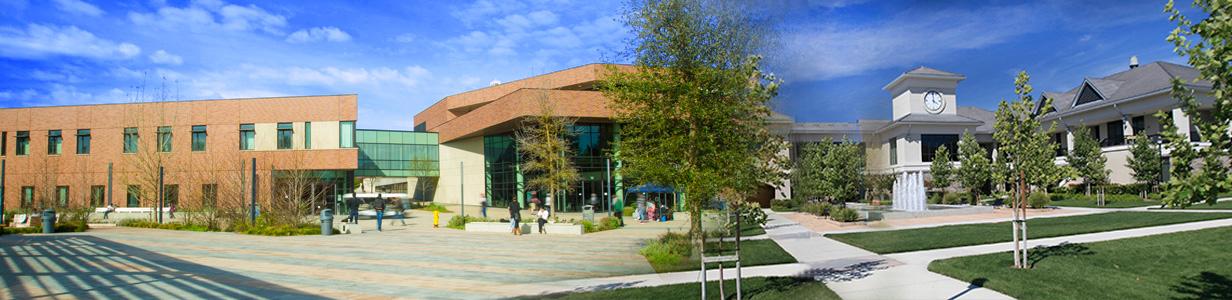
The Diablo Valley College-Pleasant Hill Campus will reopen and resume all scheduled classes, student services, and activities on Friday, March 23, 2018. The San Ramon Campus will resume its regular schedule of Friday closure.
As a precaution, all classes and college activities at the Diablo Valley College (DVC)-Pleasant Hill Campus were cancelled today, March 22, 2018, due to a potentially serious threat made against the campus.
The college found graffiti threatening the use of a firearm on the DVC-Pleasant Hill Campus. The situation is under investigation and so we are unable to share any further details at this time. DVC staff and students have been notified of this decision. All classes at the Diablo Valley College-San Ramon Campus, Contra Costa College, and Los Medanos College, are continuing as scheduled.
The safety of our students, faculty and staff is our top priority. Additional information will be placed on the college website at www.dvc.edu as it becomes available and so we are unable to share any further details at this time. DVC staff and students have been notified of this decision. All classes at the Diablo Valley College-San Ramon Campus, Contra Costa College, and Los Medanos College, are continuing as scheduled.
The safety of our students, faculty and staff is our top priority. Additional information will be placed on the college website at www.dvc.edu as it becomes available.
Read More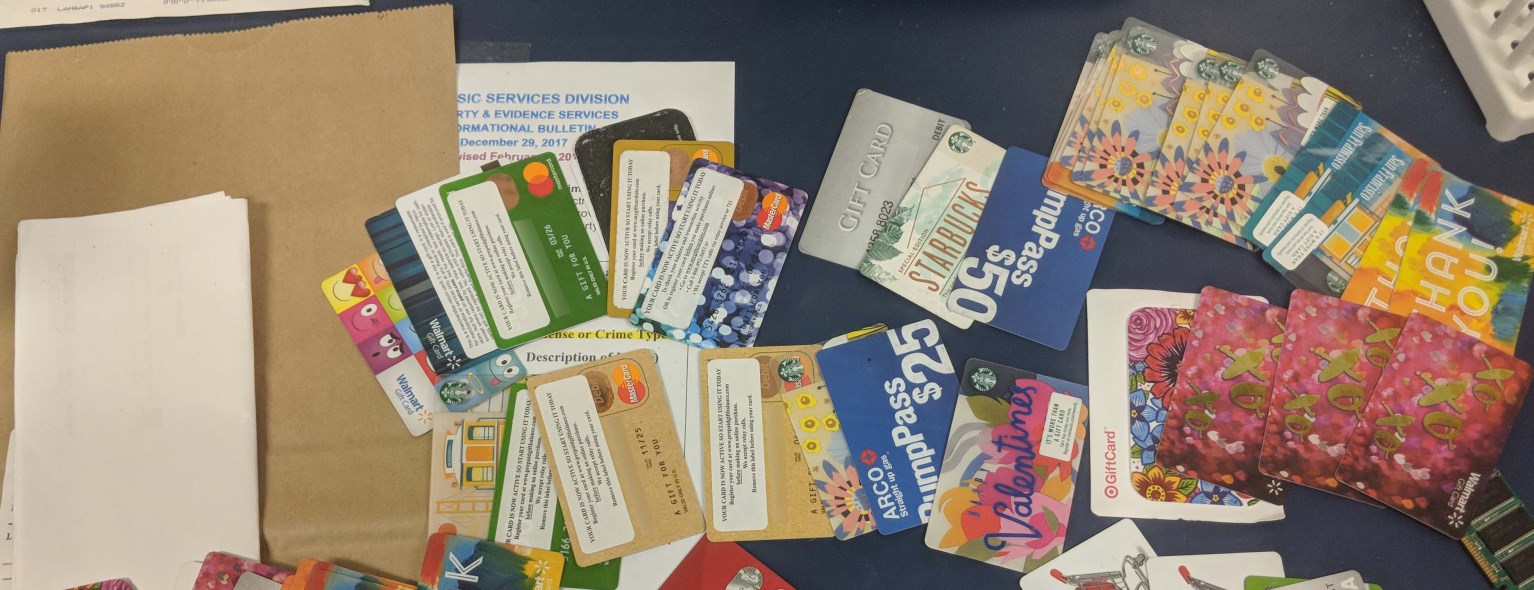
Credit cards and more found with the woman arrested for ID theft, Tuesday, March 20, 2018.
Woman had warrant out of Alameda County
By Jimmy Lee, Director of Public Affairs, Contra Costa County Office of the Sheriff
In the early morning hours of Tuesday, March 20, 2018, a Deputy Sheriff patrolling Discovery Bay conducted a traffic enforcement stop on the 4000 block of Regatta Drive. The Deputy contacted the female driver and determined she had a $220,000 arrest warrant for identity theft out of Alameda County.
A subsequent search of her vehicle yielded what appeared to be stolen mail, altered checks, numerous suspected stolen gift cards, a stolen laptop, and some official documents that included tax forms and IRS vouchers.
The suspect was booked into the Martinez Detention Facility on forgery and receiving stolen property charges, as well as the arrest warrant. She is identified as 41-year-old Sarah Potter of Hayward. She is being held in lieu of $260,000 bail.
Anyone with information regarding this case is asked to contact Sheriff’s Office Investigation Division at 925-313-2600. For any tips, email: tips@so.cccounty.us or call 866-846-3592 to leave an anonymous voice message.
Read More
Approve $95 million for new county administration building
By Daniel Borsuk
Community activists wanting Contra Costa County Supervisors to launch a probe into the way Sheriff-Coroner David O. Livingston operates the Martinez jail and the West County Detention Facility, the site of numerous allegations of inmate abuse, hit a brick wall on Tuesday as supervisors refused to conduct their own investigation into how the jails are operated by the sheriff.
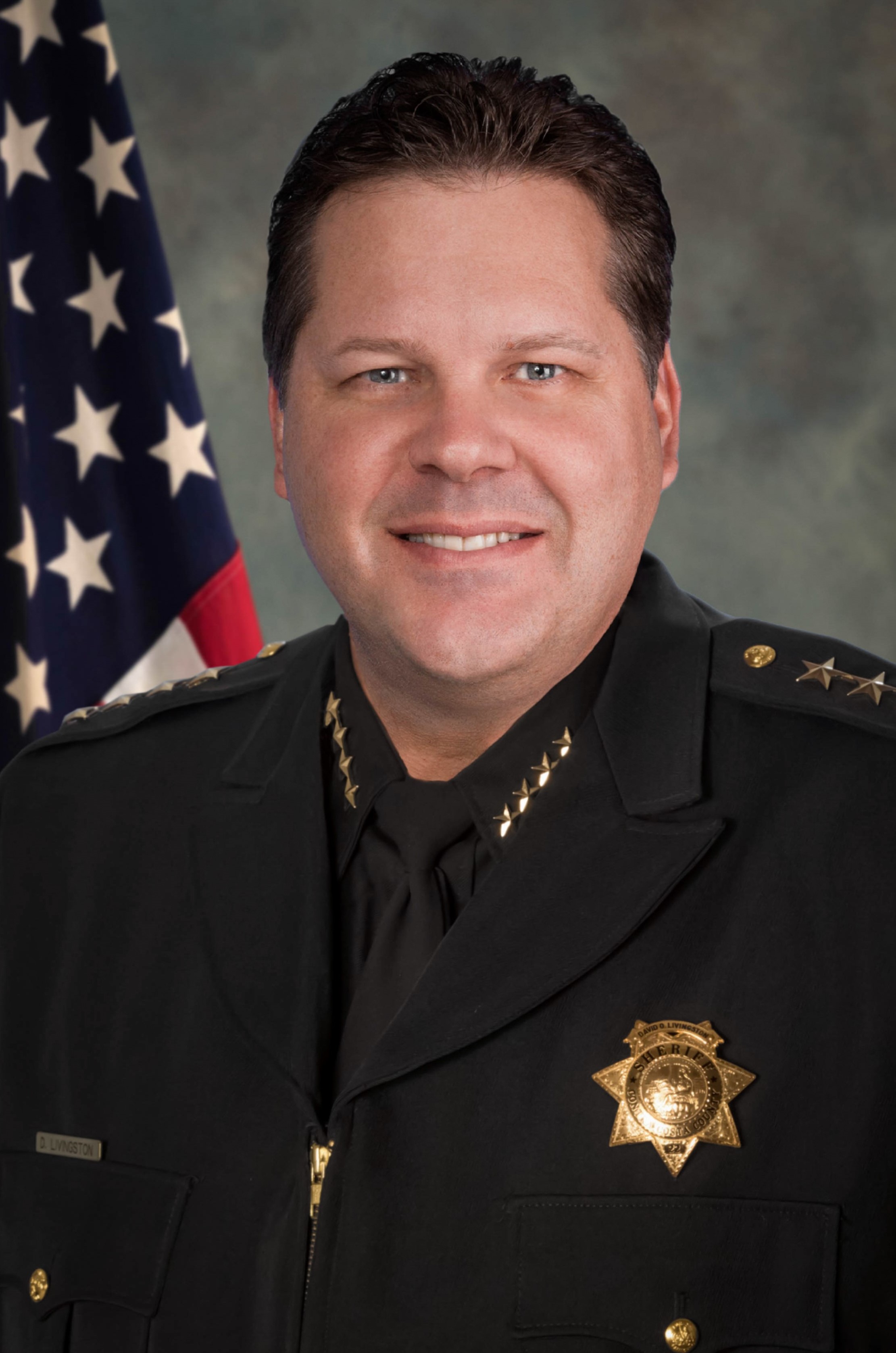
Sheriff David O. Livingston
Livingston, an elected countywide official, is up for re-election in June, but when the March 9 filing deadline rolled around no one had filed to oppose the sheriff in the upcoming June 5 primary election.
About 12 speakers asked supervisors to launch an investigation into Sheriff Livingston’s jail practices, even when two independent investigations, one that United States Senator Diane Feinstein has asked the United States Immigration and Customs Enforcement (ICE) to undertake dating back to December and another that California Attorney General Xavier Becerra is conducting, have yet to reveal their findings.
The Contra Costa Sheriff has come under fire from human rights organizations for the way he has treated male and female inmates at the North Richmond and Martinez jails. At the West County facility female inmates under ICE custody have been allegedly mistreated whereby they cannot use restroom facilities forcing them to defecate in their clothes or in plastic bags. The sheriff has also been criticized for having a contract with the U.S. Marshall’s Services and for vocally opposing interim District Attorney Diana Becton, the Board of Supervisors’ pick as DA. Becton is up for election in the June primary election against senior district attorney Paul Graves, lawyer Lawrence Steven Strauss and Concord attorney Victor A. Segovia.
Even though the sheriff is an elected official, some speakers demanded Sheriff Livingston’s immediate resignation.
“Twenty-seven women have complained of being abused under his administration. The sheriff should resign. You should at least launch an investigation of the jail,” said Melvin Willis, a Richmond City Councilman and a representative of the Alliance for Californians for Community Empowerment.
“It’s time for Sheriff Livingston to resign,” insisted Kathleen Everson of Walnut Creek. She said supervisors should conduct an independent investigation into the sheriff’s office. “It’s time to end the sheriff’s contract with ICE.”
“What’s up with you guys?” asked Linda Olivera of Community Initiatives for Visiting Immigrants in Confinement. “You need to show the initiative. This is your facility. This is a horrible sheriff.”
“I don’t think you guys are going to do a damn thing,” said Mercy Garetz of Hercules. “We’re going to where the money leads.”
“I’m waiting for the independent report from the state attorney general to come out either at the end of this month or next month before making any decisions,” said District 1 Supervisor John Gioia of Richmond.
Board chair Karen Mitchoff of Pleasant Hill acknowledged that state attorney general Becerra is conducting his investigation into the West County jail, but she also disagreed with statements made by Concord clinical psychologist Harmesh Kumar, who said the Sheriff’s Office has slashed mental health services because of county funding cutbacks. Mitchoff said the board will take up at its March 27 meeting a $3 million proposal to fund mental health services for the jails as a consent item.
Kumar is a candidate running for the District 4 seat that Mitchoff currently occupies. Also running for the District 4 supervisorial seat is Justin Wedel, 39, of Walnut Creek.
New County Administration Building Approved 2018 0320CCC BOS New Admin Bldg
After decades of despair, supervisors flashed the green light for Hensel Phelps Construction Co. to begin construction immediately on the new state-of-the-art county administrative building, Emergency Operations Center and Public Safety Building in Martinez.
The county buildings will cost $95.8 million to construct and will replace an antiquated administration building that has been in use since 1960.
The new, three-story administration building is to be constructed on vacant Pine Street property near the existing administration building at 651 Pine St. The new three-story, 72,000 square foot building will accommodate 150 county employees. The Emergency Operations Center and Public Safety Building will accommodate about 50 employees, said Chief Assistant County Administrator Eric Angstadt.
Hensel Phelps Construction Co. beat Swinerton Builders in the design-build selection process that the county conducted. Supervisors approved $110 million in construction bonds in May 23, 2017 to fund the construction of the project that is slated to be completed in April 2020.
When the new buildings are constructed, the 651 Pine St. building will be demolished and a parking garage is proposed for the site.
Supervisors Approve Funding For St. Paul’s Commons Development
A proposed 46-unit residential development, including a manager’s unit, designed for “extremely low, very low and low-income households with AIDs” got the green light for federal funding from the board of supervisors. Supervisors unanimously approved the item as a consent item.
The St. Paul’s Commons Development will be constructed on church property at 1860 Trinity Ave. in Walnut Creek under a 77-year lease.
The developer wants to borrow via the county $2.6 million of HOME funds and $232,681 of Housing Opportunities for Persons with AIDS Program funds from the U.S. Department of Housing and Urban Development. St. Paul’s is also receiving $5.6 million and $11.7 million in Federal Low-Income Housing Tax Credits from the City of Walnut Creek.
Read MoreGuest Commentary by Bryan Scott
An auto accident was reported at 4:05 pm on Tuesday, February 13, 2018, in Oakley. It was a two-car accident, with one person injured who was subsequently transported to a hospital. The accident occurred at the intersection of East Cypress Road and Bethel Island Road, in Oakley.
It took nearly 16 minutes for help to arrive (15:58 minutes).
The reason for the lengthy response time is that all resources of the East Contra Costa Fire Protection District (ECCFPD), the agency that provides emergency medical and fire services for the area, had responded to another auto accident that was reported at 3:38 pm, 27 minutes earlier.
This prior accident was in Brentwood, at the intersection of Sycamore Ave. and Brentwood Blvd. All three stations responded to the accident, and four victims were airlifted to area hospitals.
Help for the Oakley accident came from a neighboring fire district, Contra Costa County Fire Protection District (ConFire), as well as the county-contracted ambulance service provider. The two Confire stations nearest to the Oakley accident are in Antioch at 315 W. 10th Street and 196 Bluerock Drive.
According to Google Maps the stations are 10.3 and 11.2 miles away from the accident site, respectively, with normal driving time estimated at 21 and 20 minutes. Arriving in 15:58 minutes means that flashing lights and a siren take about 20% off the normal driving time.
The nearest ECCFPD fire station to the Oakley accident is located at 540 Ohara Ave. in Oakley. According to Google Maps it is just 4.2 miles from the accident scene, eight minutes normal driving time by car. With a siren and flashing lights first reponders might arrive, from the closer fire station, in six minutes and 24 seconds.
The Monthly Operational Report issued by ECCFPD doesn’t list the severity of the injuries suffered in either accident. An ECCFPD Facebook posting says that four victims of the Brentwood accident were transported to hospital by helicopters, shown in a picture the agency posted.
Consider this: The human heart beats about 70-times per-minute, and pumps about 5-7 liters of blood per-minute. It has been estimated that blood makes up 7% of a body’s weight, so for a 150-180 lbs. person there will be 4.7 – 5.5 liters of blood in the body. Those of us with larger proportions will have more.
In a severe accident a cut to a major artery by glass or a piece of metal can cause blood to be pumped from the body, and rapid death. Less-severe trauma to the body’s circulatory system would, of course, take longer to cause death. But without immediate aid to staunch the loss of blood, a traffic accident victim has only minutes to live. It doesn’t take long to lose four or five liters of blood.
State-mandated funding for ECCFPD is less than $94 per-person, while areas in Central County have funding for the same emergency medical and fire services at $449 and $370 per-person, according to the county’s Local Agency Formation Commission. This funding allocation rate was set four decades ago, before East County experienced 1,500% residential growth.
Response times throughout the ECCFPD service area exceed municipal and industry goals by a wide amount, and the 115,000 residents are in danger because of this underfunding practice.
The County’s Grand Jury has issued several reports on the situation, a government task force has studied it, and the inadequate service has been noted by consultants, the media, and on a Vasco Road billboard that was erected by concerned citizens.
Oakley City Manager Bryan Montgomery has obstructed efforts to get property tax funding shifted to ECCFPD, so that ECCFPD can do a better job of protecting Oakley’s 40,000-and–growing population.
Like many top government managers, Montgomery wants to protect his agency’s budget. This is a noble goal, but he is doing so at the expense of Oakley resident safety.
Bryan Scott is Co-Chair of East County Voters for Equal Protection, a non-partisan citizen’s action committee striving to improve funding for the ECCFPD. He can be reached at scott.bryan@comcast.net, or 925-418-4428. The group’s Facebook page is https://www.facebook.com/EastCountyVoters/.
Read More
Friday morning, March 16 at about 8:29 A.M., Contra Costa CHP was advised of a solo vehicle, solo occupant, vehicle vs. a tree collision on Highway 4 westbound at the Alhambra Road off ramp. Upon CHP and emergency personnel arrival, the driver (unknown age male from Walnut Creek) was trapped within the Honda sedan and unresponsive. The driver was pronounced deceased at the scene.
In the initial investigation, it appears that the driver was driving the 1994 Black Honda Civic Highway 4 westbound approaching the Alhambra Road off ramp at an unknown speed. At the time it was raining and the roadway was wet. For unknown reasons, the driver veered from his lane to the right and off the roadway, down the embankment towards the off ramp located below. His Honda’s left driver side impacted directly into a large tree and came to rest with the tree fully crushing into the driver seat and male. He was pronounced deceased on scene. While the vehicle was being recovered the off ramps and #1 lane were partially shut down to recover the Honda.
It is unknown if alcohol or drugs are a factor in this collision. It is still under investigation and if anyone witnessed it or the events leading up to it, please contact Contra Costa CHP in Martinez, (925) 646-4980.
Read More One of only four California cities or water agencies to receive the highly competitive water quality grant
 The City of Antioch has announced its award as only one of four California cities or water agencies to receive $10 million in state grant funding to establish a ground-breaking, first-of-its-kind, local brackish water desalination treatment facility. It will allow the City to generate its own clean, safe, quality water. Many prominent cities and water agencies competed for the highly-sought after grants from the State Department of Water Resources to fund drinking water production and other uses. Only Antioch, Santa Barbara, Camarillo and the South Coast Water District were awarded grants for construction of water treatment plants.
“Creating millions of gallons of clean, reliable, quality water will allow our community to protect our city residents and businesses from fluctuating water costs and water shortages in the long-term,” said Mayor Sean Wright.
Brackish water is salt water and fresh water mixed together and found in estuaries. The grant will help defray the total estimated cost of $62 million for the brackish water plant for which the City will continue to pursue other grant funds that could be obtained as soon as this summer. (See related articles, here and here).
“Antioch is leading statewide innovation on these clean water quality and local water control issues,” said City Manager Ron Bernal. “With so many high-profile cities and water agencies competing for these grant awards, I couldn’t be more pleased that our city’s innovation, creativity and leadership was recognized by the awards panel – making our city successful in securing Antioch’s fair share of these state funds.”
The highly competitive state grant from Prop. 1 Water Bond funds, which the voters approved in 2014, will help establish a local, water desalination facility within the city’s current water treatment plant. It will turn salty river water into six million gallons per day of clean drinking water, using a safe, secure, reverse osmosis treatment system and positioning the City as a local and regional clean water provider and statewide innovator.
“Establishing Antioch’s own local water plan allows our city to treat and store our own water locally, expanding our ability to be self-reliant, keep water costs down, and attract industries that need a reliable local water supply,” Wright added.
The clean water that is needed by industry will help attract businesses to locate in the city. While seawater reverse osmosis has a conversion rate of 35 percent to 40 percent, the conversion rate of brackish water could be more than 90 percent, with only 10 percent returning to the river. That will help maximize the use of the City’s rights to river water of as much as 16 million gallons per day.
“This is a tremendous economic development engine which allows Antioch to competitively attract and retain all manner of businesses and industries who need a reliable local water supply,” said Bernal. “Antioch is one of the few communities in the state able to offer this benefit to our residents and business stakeholders.”
Read More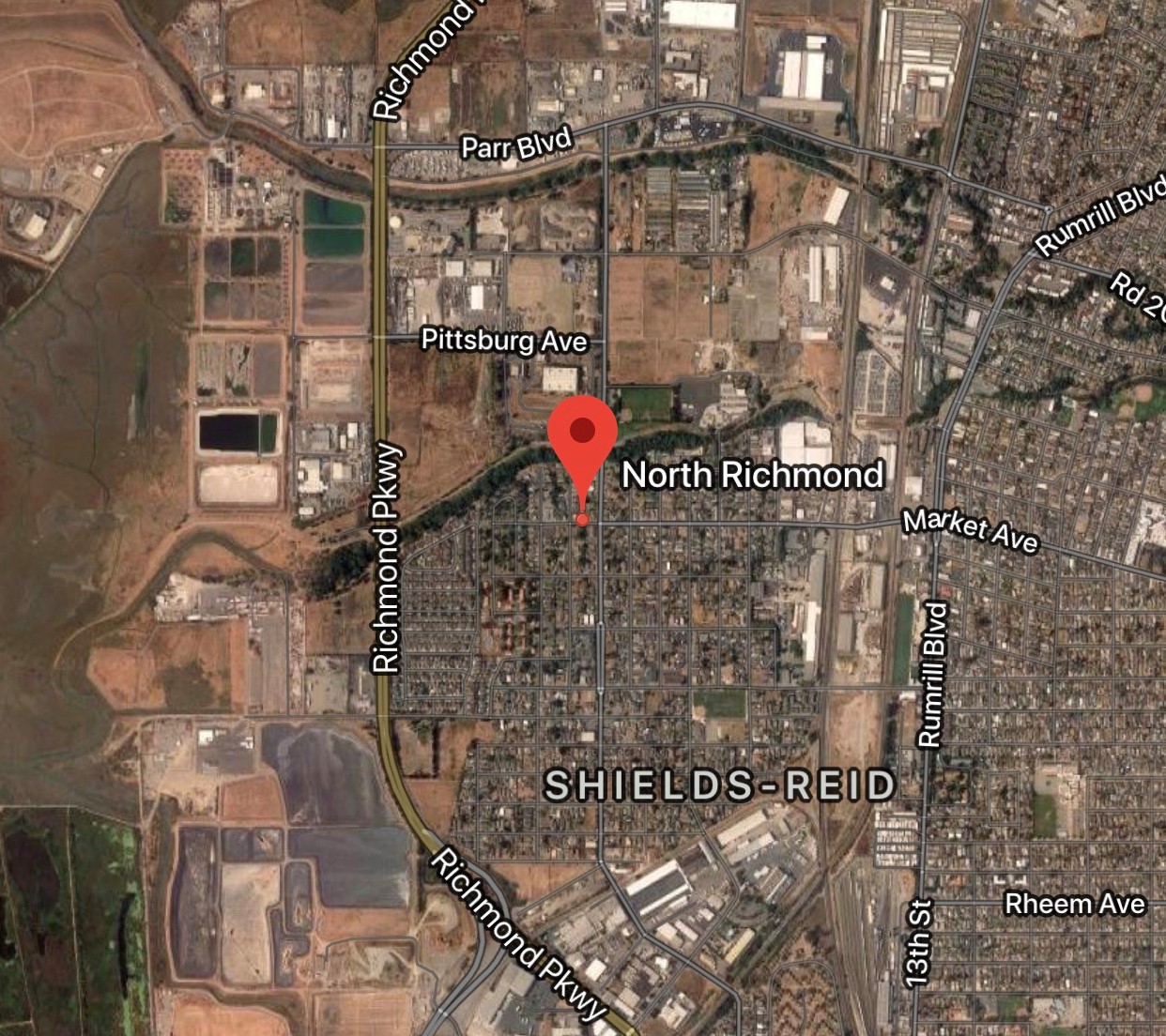
North Richmond. Courtesy of Google Maps.
Part of the Tax Cuts and Jobs Act of 2017
By Dan Borsuk
In a potential bid to receive federal Treasury Department aid for economically stagnating pockets of the county, Contra Costa County Board of Supervisors added the Somersville Towne Center mall area, Rodeo and tracts in the North Richmond area to the Federal Opportunity Zone program on Tuesday. Without hearing comments from the public, the supervisors unanimously voted to add the three census tracts to the county’s recommendation to the new Federal Opportunity Zone program.
Opportunity Zones are a new community development program established by Congress in the Tax Cuts and Jobs Act of 2017 to encourage long-term investments in low-income urban and rural communities nationwide. The program provides a tax incentive for investors to re-invest their unrealized capital gains into Opportunity Funds that are dedicated to investing into Opportunity Zones designated by the governors of every U.S. state and territory. (Read more about how the Opportunity Zones program works, as well as its history and community of supporters.)
According to their website, the Economic Innovation Group originally developed the concept in 2015 to help address the persistent poverty and uneven recovery that have left too many American communities behind. The idea has since been championed by a wide-ranging coalition of investors, entrepreneurs, community developers, economists, and other stakeholders.
Prior to the board’s action, the Contra Costa County Conservation and Development Department said the state had identified 11 tracts in the county that qualified for the Federal Opportunity Zone Program. Those tracts either have poverty rates of more than 20 percent or median incomes below 80 percent of state or metropolitan areas. Those areas include the cities of Richmond, San Pablo, Pittsburg, Concord, Antioch and the unincorporated areas of Bay Point and North Richmond.
The county had a deadline of Thursday, March 15 to submit its Opportunity Zone recommendation to the state.
However, there is the possibility the Federal Opportunity Zone Program may not kick into effect in either Contra Costa County or in the Golden State, said Amalia Cunningham of the Contra Costa County Conservation and Development Department.
“Private Investment Opportunity Zones would be eligible for lower federal capital gain tax,” Cunningham informed supervisors. “This is the only identified incentive. There is no dedicated funding for the program nor has the state announced it will participate by lowering state capital gains tax for investment in Opportunity Zones.”
District 3 Supervisor Diane Burgis of Brentwood recommended that the area around the Somersville Towne Center in Antioch be added to the county Opportunity Zone Program based on a decline in economic activity in the area.
“We will be working with the city of Antioch on this proposal to include the Somersville area in the county Opportunity Zone proposal to the state,” said Cunningham.
The recommendation to add Rodeo came from District 5 Supervisor Federal Glover of Pittsburg and District 1 Supervisor John Gioia of Richmond recommended several tracts in North Richmond.
If the federal requirements are not enough to potentially squash the program, bureaucratic oversight might kill the program. Cunningham told supervisors the county is under a tight deadline to submit an application, along with public comments.
“States have been given an abbreviated timeline from the federal government to submit their tracts. The state’s draft list was made public on March 2 and local agencies comments are due by March 15,” she said.
Supervisor Mitchoff Faces June 5 Opponent
Supervisor Karen Mitchoff of Concord will face clinical psychologist Harmesh Kumar, 59, in a June 5 election for the District 4 board seat.
Kumar, who had unsuccessfully run for the Concord City Council in 2012 and recently withdrew plans to run for governor, said he wants to serve on the board of supervisors because “I want the people to win.” He told the Contra Costa Herald the existing board of supervisors are “against the poor.” He said Mitchoff and other supervisors represent the interests of the bureaucrats, not those of the people.
“I’m looking forward to a spirited debate on the issues facing District 4,” Mitchoff briefly told the Herald about her opponent and upcoming reelection.
Mitchoff has served on the board of supervisors since January 2011.
District 1 Supervisor John Gioia of Richmond, who is also up for reelection, but will not face an opponent since no one filed papers to run against the attorney on the filing deadline, Friday, March, 9.
Supervisors endorsed on a 5-0 consent action, state Senator Mike McGuire’s (D-North Bay) Senate Bill 833 that would create a red alert emergency system to issue and coordinate alerts following an evacuation order and requires the red alert system to incorporate a variety of notification resources.
Senator McGuire authored the bill in the aftermath of the massive wildfires that killed 40 persons, destroyed 6,000 houses and charred 170,000 acres in Lake, Napa, Sonoma and Mendocino counties.
Anti-Smoking Ordinance Passes
Supervisors also unanimously approved without public comment an ordinance banning smoking in approximately 10,000 dwelling units in unincorporated Contra Costa County. The ordinance will go into effect July 1, 2019 when county health officials are expected to have completed an education program informing landlords and tenants about the anti-smoking law.
Diablo Valley College in Pleasant Hill and the Alameda County Emergency Operations Center were selected by the supervisors in a consent action item as alternative temporary county seats for Contra Costa County “in the event of war or enemy caused disaster or the imminence of such disasters.”
Allen Payton contributed to this report.
Read More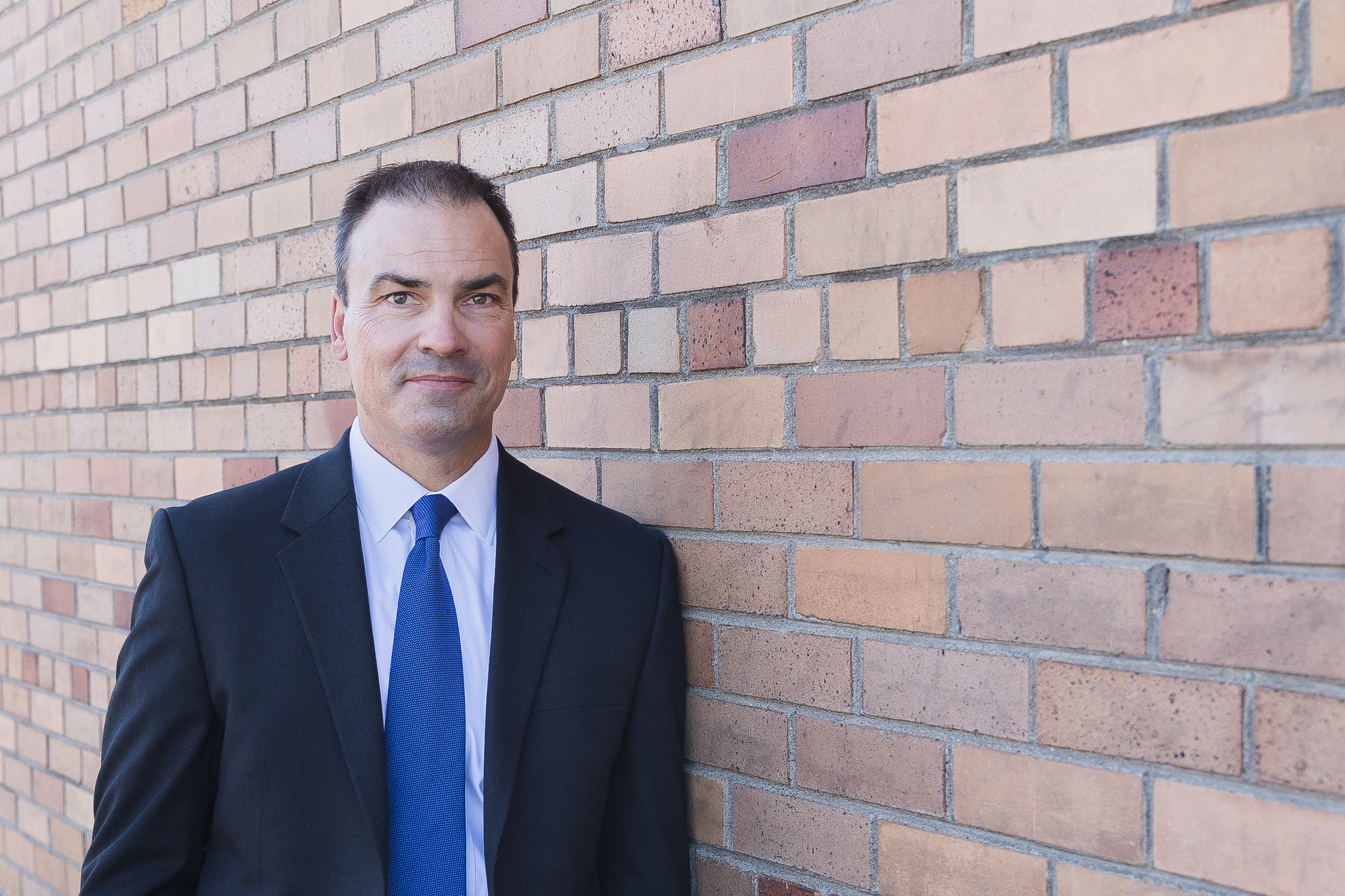
Contra Costa Senior Deputy District Attorney Paul Graves. photo courtesy of Paul Graves for DA. Photo courtesy of Paul Graves for DA
 The Contra Costa County Deputy District Attorneys’ Association endorses Paul Graves for District Attorney. Delivering the news, Association President Aron DeFerrari noted “Paul has the experience and integrity Contra Costa deserves in its next District Attorney.”
Stephanie Kang, a DAs’ Association Board Member, noted “Paul Graves is exactly the type of person who should be leading the change and reforms Contra Costa needs. Paul Graves had the courage and leadership to stand up against Mark Peterson’s misconduct and run against him even though taking a stand risked Paul’s career.”
Lauren Whalen, another Association Board Member, and lifelong Contra Costa County resident, said “Paul’s actions put Contra Costa first and we know he’ll continue to do so as District Attorney.”
Steve Bolen, an Association Board Member noted “Our prosecutors are eager for change. We embrace the idea of a fresh start and the possibilities it offers. Most importantly, we care about the safety of the residents and communities we serve. We know Paul Graves puts public safety above politics, that’s what matters to us.”
The people of Contra Costa deserve an experienced, trusted prosecutor who can provide the leadership needed to keep our communities safe. Paul Graves alone offers both that experience and integrity. He should be Contra Costa’s next District Attorney.
Read More The Contra Costa Taxpayers Association (“CoCoTax”) is pleased to announce the formation of a new East Contra Costa chapter. To celebrate, CoCoTax East will hold its inaugural public meeting on Wednesday, March 28 with a luncheon meeting at Vic Stewart’s Restaurant at 2270 Balfour Road in Brentwood.
CoCoTax promotes “good government at affordable cost” and is well known as a “tax watchdog” organization. But, according to Jack Weir, CoCoTax President, “CoCoTax is much more than a tax watchdog. Good tax receipts flow from well designed, developed and managed cities and counties. As such, CoCoTax seeks to work with residents, businesses, and local government to grow the tax base and provide for a quality lifestyle for residents through economic development, prudent zoning, and other strategic planning tools.”
The first CoCoTax East meeting will focus on Economic Development in East County and will feature three East County speakers:
Ron Reagan, is owner and President of Reagan Management Services in Brentwood and a member of the Contra Costa Airport Commission; Ron will address the issue of economic growth at and around the Byron Airport.
Gus Vina, Brentwood City Manager will discuss the economic development element of the City’s Strategic Plan.
Kevin Romick, Oakley City Councilman and member of the Contra Costa Transportation Authority board of directors, will highlight Oakley’s development progress and discuss the present and future infrastructure needs and plans in East County.
The luncheon is open to CoCoTax members and the public. People wishing to attend can register online at www.cocotax.org/event-2851592 or by contacting Denise Sheehan at denise@cocotax.org.
The cost to attend is $35; alternately, attendees can attend the luncheon for free by becoming a CoCoTax member for $37.50, a 50% discount on their first year’s membership.
For more information about CoCoTax or the luncheon, please contact Hal Bray at hal.bray@pacbell.net or 925-286-4905.
Read More
The West County Detention Facility in Richmond. Photo courtesy of CCC Sheriff.
Group claims “retaliation for public criticism of detention conditions” at West County Detention Facility.
During an investigation by the Contra Costa County Office of the Sheriff, it was discovered the San Francisco-based Community Initiatives for Visiting Immigrants in Confinement (CIVIC) volunteers repeatedly violated rules at the West County Detention Facility (WCDF) in Richmond, by providing their personal phone numbers and addresses to incarcerated persons; relaying messages to family and friends of incarcerated persons; receiving phone calls and mail from incarcerated persons; sending contraband to incarcerated persons; and depositing money into the accounts of incarcerated persons.

Photo courtesy of CIVIC.
According to the organization’s website, “CIVIC is devoted to abolishing U.S. immigration detention, while ending the isolation of people currently suffering in this profit-driven system.”
The investigation found approximately 20 CIVIC volunteers repeatedly violated the rules for an extended period.
On March 5, 2018, CIVIC’s clearance was revoked, but like other groups that lose their clearance, they can appeal. CIVIC has not invoked its right to appeal. Access for other some other organizations is currently being reviewed for possible violations.
“The Contra Costa County Office of the Sheriff welcomes and partners with numerous community-based organizations and non-governmental groups to assist incarcerated person with their rehabilitation and re-entry back to their communities when they are released,” said Assistant Sheriff Matt Schuler. “While CIVIC’s clearance was revoked, we continue to partner with numerous community and volunteer groups that provide needed services and resources to incarcerated persons.”
There are currently over 20 programs available to the incarcerated population at West County Detention Facility. Many of the programs are run by volunteers from community-based organizations.
All volunteer groups that interact with the Office of the Sheriff incarcerated population and/or Federal Immigration and Customs Enforcement (ICE) detainees must agree to the rules set forth in the Detention Facility Clearance Request. These cover: Harassment and Discrimination, Treatment of Offenders and Non-Fraternization, Code of Conduct/Ethics/Confidentiality Agreement and Custody Services Bureau Guidelines for Volunteers. Specific rules for volunteers include: must not engage in undue familiarity with inmates or family and friends of in-mates; must not contact or correspond with an inmate or their family; must not take or send messages or items on behalf of an inmate; and must not trade, barter, lend or engage in any personal transactions with any inmate.
Every volunteer must take a class that covers the guidelines and safety for civilians in the detention facility. They also sign an agreement and are warned that clearance will be revoked if they violate any of the rules.
CIVIC Denies Violations, Seeks Reinstatement
However, CIVIC – a nationwide network working to end the isolation and abuse of people in ICE detention through visitation, monitoring, and other types of support – denies the violations occurred and is calling on ICE and the Contra Costa County Sheriff’s Office to reinstate their community visitation program and free hotline at the WCDF.
“None of these actions are in violation of the facility’s policies which all CIVIC volunteers are forced to sign if they want to visit someone in ICE detention,” said Christina Fialho, an attorney and the co-founder/executive director of CIVIC. “In terminating our program, the Sheriff’s Department and ICE are not just trying to punish us, they are trying to send a message to other activists to stay silent. We will not be silenced.”
Since 2011, CIVIC has operated a visitation program and free hotline for people in ICE detention at WCDF. Last November, CIVIC published a letter from 27 women detained at WCDF that recorded abuses at the facility, including being frequently locked up for hours and being forced to use bags in their cells when they needed to use the toilet. (See related article.)
“I am very grateful to CIVIC because they were of great help and support to my immigration case. It was hell where I was detained. They kept us in a precarious situation,” expressed Nancy Mayer Mejia, who was detained for five months at WCDF and penned the letter that 26 other women then signed onto. “Thanks to the people of CIVIC, I believed in myself again. They brought hope into my life during every visit.”

Sheriff David Livingston, center, speaks with Congressman Mark DeSaulnier (to his left) and staff during a tour of the West County Detention Facility in Richmond on Monday, Nov. 27, 2017. Herald file photo.
Since November, CIVIC has continued to speak out in newspapers, on the radio, in community meetings, and at peaceful protests outside the facility. The letter from the women in detention led to calls for investigations from local representatives, including U.S. Rep. Mark DeSaulnier, who called for a federal probe into the matter.
A Sheriff’s Department investigation found that nearly all of the complaints were unfounded and unsubstantiated. Claims of being “locked down” for 23 hours a day were found to be false. The most time any ICE detainee was confined to their dormitory room was one hour and 24 minutes. The “lock downs” are commonly done for facility counts or for administrative reasons. At WCDF the detainees have keys to their rooms and free use of common bathroom facilities.
In one example, the person who complained in the article of being confined to her room for 23 hours was in fact confined for several days in a room with a full toilet and sink. She was confined in such a manner for disciplinary purposes after she assaulted another detainee.
Regarding the use of “red” biohazard bags for toilet needs, there was no evidence that any detainee was forced to use the bags in that manner. In very few cases detainees did use the bags for that purpose in violation of policy. Biohazard bag distribution is now limited to those detainees who are ill or have other medical needs. All inmates are free to use the bathrooms at any time, and even during “lock down” periods of approximately one hour, by notifying a Deputy Sheriff by using the call button in their rooms. (See related article.)
“CIVIC volunteers play an essential role in supporting people in ICE detention and their families. When we are informed about human rights abuses at the hands of the government, it is our moral and civic responsibility to speak up and share the demands of those on the inside with the public,” said Rebecca Merton, CIVIC’s National Visitation Network Coordinator and Independent Monitor and the local coordinator of the WCDF visitation program.
On February 15, ICE terminated CIVIC’s free hotline with no advance warning or subsequent explanation. CIVIC has been operating this hotline since 2011 and uses it to facilitate visits and legal representation. Shortly thereafter, on February 20, the Contra Costa County Sheriff’s Office suspended CIVIC visitation program coordinator Rebecca Merton’s visitation clearance with no clear explanation. After pressing the Sheriff’s Office for a reason, CIVIC leadership received an email on Monday from Captain Kristi Butterfield of WCDF, explaining that the Sheriff’s Office was revoking access for all CIVIC volunteers and terminating the visitation program at WCDF. The email explained that they had conducted a “thorough investigation” into CIVIC’s “emails, phone calls, radio and newspaper interviews” and found that “the organization poses a safety and security risk to the WCDF.”
“ICE and the county are trying to make us choose between our First Amendment rights and visiting our friends in ICE detention. This is not a choice that our government can legally ask us to make,” Fialho stated. “The constitution isn’t optional. It can’t be disregarded in an attempt to silence critics of the immigration detention system.”
After various local, state, and federal legislators sent inquiries to the Contra Costa Sheriff’s Office and ICE about CIVIC’s program termination, the Contra Costa Sheriff’s Department released a statement on March 8 on Facebook, stating that CIVIC volunteers had violated certain policies and procedures.
Since 2011 with the full knowledge of ICE and WCDF staff, CIVIC has been providing up to $20 of commissary money to people in detention so that they can buy food to supplement their meager meals at the facility. This is money CIVIC has raised from donations from churches and synagogues around the Bay Area. Since 2011 with the full knowledge of ICE and WCDF staff, CIVIC has been fielding phone calls and mail from people in ICE detention through the hotline extension ICE provided CIVIC and through other phone calls initiated by people in ICE detention. All regular phone calls and mail are monitored by the facility. CIVIC has never sent contraband to people in ICE detention. We have only sent religious and literary texts requested by people in ICE detention such as Catholic prayer books directly from book publishers. Since 2011 with the full knowledge of ICE and WCDF staff, CIVIC has provided people in ICE detention at WCDF and their ICE officer and immigration judge with the home addresses of the volunteers so that our volunteers can serve as sponsors to the people in ICE detention eligible for release. This is often the only way an asylum seeker can get released on parole.
Lesbia Karina Pérez Vásquez, a 21-year-old woman who fled Guatemala and was detained at WCDF, was one individual who benefited from this type of support: “When I was first picked up by ICE I was frightened and felt so alone. At WCDF I was told by other women that CIVIC came in every Friday to visit. We would all get excited that a friendly face was coming to see us,” she explained. Carmen Jimenez-Smith, a CIVIC volunteer began to visit Ms. Pérez Vásquez and worked with other CIVIC volunteers to fundraise for Ms. Pérez Vásquez’s immigration bond. She was released on February 1. Ms. Pérez Vásquez continued: “Señora Carmen placed me in her home and is continuing to host me and help me gain legal status. I’m so grateful for CIVIC.”
The policies, which all CIVIC volunteers are required to sign is essentially a contract of adhesion. The policy specifically says that volunteers should not “contact or correspond with inmate or with any member of the inmate’s family except as required by the employee’s assigned duties.” CIVIC volunteers are not employees of the facility, but even if they were, their assigned duties are to visit people and provide them with the support they need to address complaints and obtain their freedom through the immigration legal system.
“The money we provide people in ICE detention, so they can buy food serves as a major source of revenue for the facility along with the phone calls,” said Christina Mansfield, the co-founder/executive director of CIVIC. “Both commissary items and phone calls are exorbitantly priced. The money the facility obtains from the commissary and the phone calls are deposited in something called the ‘Inmate Welfare Fund.’ However, there is little accountability or transparency on how this money is spent. Up until now, the money we have been sending to people in ICE detention has served the facility just fine. But now, that we are speaking out against the system, the facility has decided that we no longer are serving them and we must be silenced.”
The visitation program ban came the day before Attorney General Jeff Sessions filed a suit against California’s sanctuary laws, including AB 103, which CIVIC helped draft and provides the California state Attorney General with the power to monitor ICE detention facilities in the state. In Sessions’ complaint, he explicitly names the WCDF as a place he does not want the state monitoring.
“Please join us in telling ICE and the Sheriff’s Department that we will not be silent,” Fialho added. “It’s time we #BreaktheICE.”
The organization will hold a community vigil on Sunday, March 11 from 11:00 A.M. to 12:00 P.M. to “Support CIVIC and Protest Inhumane Conditions at WCDF” outside the West County Detention Facility, 5555 Giant Hwy, Richmond, CA 94806.
Herald reporter Daniel Borsuk and Allen Payton contributed to this article.
Read More











The Diablo Valley College-Pleasant Hill Campus will reopen and resume all scheduled classes, student services, and activities on Friday, March 23, 2018. The San Ramon Campus will resume its regular schedule of Friday closure.
As a precaution, all classes and college activities at the Diablo Valley College (DVC)-Pleasant Hill Campus were cancelled today, March 22, 2018, due to a potentially serious threat made against the campus.
The college found graffiti threatening the use of a firearm on the DVC-Pleasant Hill Campus. The situation is under investigation and so we are unable to share any further details at this time. DVC staff and students have been notified of this decision. All classes at the Diablo Valley College-San Ramon Campus, Contra Costa College, and Los Medanos College, are continuing as scheduled.
The safety of our students, faculty and staff is our top priority. Additional information will be placed on the college website at www.dvc.edu as it becomes available and so we are unable to share any further details at this time. DVC staff and students have been notified of this decision. All classes at the Diablo Valley College-San Ramon Campus, Contra Costa College, and Los Medanos College, are continuing as scheduled.
The safety of our students, faculty and staff is our top priority. Additional information will be placed on the college website at www.dvc.edu as it becomes available.
Read MoreCredit cards and more found with the woman arrested for ID theft, Tuesday, March 20, 2018.
Woman had warrant out of Alameda County
By Jimmy Lee, Director of Public Affairs, Contra Costa County Office of the Sheriff
In the early morning hours of Tuesday, March 20, 2018, a Deputy Sheriff patrolling Discovery Bay conducted a traffic enforcement stop on the 4000 block of Regatta Drive. The Deputy contacted the female driver and determined she had a $220,000 arrest warrant for identity theft out of Alameda County.
A subsequent search of her vehicle yielded what appeared to be stolen mail, altered checks, numerous suspected stolen gift cards, a stolen laptop, and some official documents that included tax forms and IRS vouchers.
The suspect was booked into the Martinez Detention Facility on forgery and receiving stolen property charges, as well as the arrest warrant. She is identified as 41-year-old Sarah Potter of Hayward. She is being held in lieu of $260,000 bail.
Anyone with information regarding this case is asked to contact Sheriff’s Office Investigation Division at 925-313-2600. For any tips, email: tips@so.cccounty.us or call 866-846-3592 to leave an anonymous voice message.
Read More
Approve $95 million for new county administration building
By Daniel Borsuk
Community activists wanting Contra Costa County Supervisors to launch a probe into the way Sheriff-Coroner David O. Livingston operates the Martinez jail and the West County Detention Facility, the site of numerous allegations of inmate abuse, hit a brick wall on Tuesday as supervisors refused to conduct their own investigation into how the jails are operated by the sheriff.
Sheriff David O. Livingston
Livingston, an elected countywide official, is up for re-election in June, but when the March 9 filing deadline rolled around no one had filed to oppose the sheriff in the upcoming June 5 primary election.
About 12 speakers asked supervisors to launch an investigation into Sheriff Livingston’s jail practices, even when two independent investigations, one that United States Senator Diane Feinstein has asked the United States Immigration and Customs Enforcement (ICE) to undertake dating back to December and another that California Attorney General Xavier Becerra is conducting, have yet to reveal their findings.
The Contra Costa Sheriff has come under fire from human rights organizations for the way he has treated male and female inmates at the North Richmond and Martinez jails. At the West County facility female inmates under ICE custody have been allegedly mistreated whereby they cannot use restroom facilities forcing them to defecate in their clothes or in plastic bags. The sheriff has also been criticized for having a contract with the U.S. Marshall’s Services and for vocally opposing interim District Attorney Diana Becton, the Board of Supervisors’ pick as DA. Becton is up for election in the June primary election against senior district attorney Paul Graves, lawyer Lawrence Steven Strauss and Concord attorney Victor A. Segovia.
Even though the sheriff is an elected official, some speakers demanded Sheriff Livingston’s immediate resignation.
“Twenty-seven women have complained of being abused under his administration. The sheriff should resign. You should at least launch an investigation of the jail,” said Melvin Willis, a Richmond City Councilman and a representative of the Alliance for Californians for Community Empowerment.
“It’s time for Sheriff Livingston to resign,” insisted Kathleen Everson of Walnut Creek. She said supervisors should conduct an independent investigation into the sheriff’s office. “It’s time to end the sheriff’s contract with ICE.”
“What’s up with you guys?” asked Linda Olivera of Community Initiatives for Visiting Immigrants in Confinement. “You need to show the initiative. This is your facility. This is a horrible sheriff.”
“I don’t think you guys are going to do a damn thing,” said Mercy Garetz of Hercules. “We’re going to where the money leads.”
“I’m waiting for the independent report from the state attorney general to come out either at the end of this month or next month before making any decisions,” said District 1 Supervisor John Gioia of Richmond.
Board chair Karen Mitchoff of Pleasant Hill acknowledged that state attorney general Becerra is conducting his investigation into the West County jail, but she also disagreed with statements made by Concord clinical psychologist Harmesh Kumar, who said the Sheriff’s Office has slashed mental health services because of county funding cutbacks. Mitchoff said the board will take up at its March 27 meeting a $3 million proposal to fund mental health services for the jails as a consent item.
Kumar is a candidate running for the District 4 seat that Mitchoff currently occupies. Also running for the District 4 supervisorial seat is Justin Wedel, 39, of Walnut Creek.
New County Administration Building Approved 2018 0320CCC BOS New Admin Bldg
After decades of despair, supervisors flashed the green light for Hensel Phelps Construction Co. to begin construction immediately on the new state-of-the-art county administrative building, Emergency Operations Center and Public Safety Building in Martinez.
The county buildings will cost $95.8 million to construct and will replace an antiquated administration building that has been in use since 1960.
The new, three-story administration building is to be constructed on vacant Pine Street property near the existing administration building at 651 Pine St. The new three-story, 72,000 square foot building will accommodate 150 county employees. The Emergency Operations Center and Public Safety Building will accommodate about 50 employees, said Chief Assistant County Administrator Eric Angstadt.
Hensel Phelps Construction Co. beat Swinerton Builders in the design-build selection process that the county conducted. Supervisors approved $110 million in construction bonds in May 23, 2017 to fund the construction of the project that is slated to be completed in April 2020.
When the new buildings are constructed, the 651 Pine St. building will be demolished and a parking garage is proposed for the site.
Supervisors Approve Funding For St. Paul’s Commons Development
A proposed 46-unit residential development, including a manager’s unit, designed for “extremely low, very low and low-income households with AIDs” got the green light for federal funding from the board of supervisors. Supervisors unanimously approved the item as a consent item.
The St. Paul’s Commons Development will be constructed on church property at 1860 Trinity Ave. in Walnut Creek under a 77-year lease.
The developer wants to borrow via the county $2.6 million of HOME funds and $232,681 of Housing Opportunities for Persons with AIDS Program funds from the U.S. Department of Housing and Urban Development. St. Paul’s is also receiving $5.6 million and $11.7 million in Federal Low-Income Housing Tax Credits from the City of Walnut Creek.
Read MoreGuest Commentary by Bryan Scott
An auto accident was reported at 4:05 pm on Tuesday, February 13, 2018, in Oakley. It was a two-car accident, with one person injured who was subsequently transported to a hospital. The accident occurred at the intersection of East Cypress Road and Bethel Island Road, in Oakley.
It took nearly 16 minutes for help to arrive (15:58 minutes).
The reason for the lengthy response time is that all resources of the East Contra Costa Fire Protection District (ECCFPD), the agency that provides emergency medical and fire services for the area, had responded to another auto accident that was reported at 3:38 pm, 27 minutes earlier.
This prior accident was in Brentwood, at the intersection of Sycamore Ave. and Brentwood Blvd. All three stations responded to the accident, and four victims were airlifted to area hospitals.
Help for the Oakley accident came from a neighboring fire district, Contra Costa County Fire Protection District (ConFire), as well as the county-contracted ambulance service provider. The two Confire stations nearest to the Oakley accident are in Antioch at 315 W. 10th Street and 196 Bluerock Drive.
According to Google Maps the stations are 10.3 and 11.2 miles away from the accident site, respectively, with normal driving time estimated at 21 and 20 minutes. Arriving in 15:58 minutes means that flashing lights and a siren take about 20% off the normal driving time.
The nearest ECCFPD fire station to the Oakley accident is located at 540 Ohara Ave. in Oakley. According to Google Maps it is just 4.2 miles from the accident scene, eight minutes normal driving time by car. With a siren and flashing lights first reponders might arrive, from the closer fire station, in six minutes and 24 seconds.
The Monthly Operational Report issued by ECCFPD doesn’t list the severity of the injuries suffered in either accident. An ECCFPD Facebook posting says that four victims of the Brentwood accident were transported to hospital by helicopters, shown in a picture the agency posted.
Consider this: The human heart beats about 70-times per-minute, and pumps about 5-7 liters of blood per-minute. It has been estimated that blood makes up 7% of a body’s weight, so for a 150-180 lbs. person there will be 4.7 – 5.5 liters of blood in the body. Those of us with larger proportions will have more.
In a severe accident a cut to a major artery by glass or a piece of metal can cause blood to be pumped from the body, and rapid death. Less-severe trauma to the body’s circulatory system would, of course, take longer to cause death. But without immediate aid to staunch the loss of blood, a traffic accident victim has only minutes to live. It doesn’t take long to lose four or five liters of blood.
State-mandated funding for ECCFPD is less than $94 per-person, while areas in Central County have funding for the same emergency medical and fire services at $449 and $370 per-person, according to the county’s Local Agency Formation Commission. This funding allocation rate was set four decades ago, before East County experienced 1,500% residential growth.
Response times throughout the ECCFPD service area exceed municipal and industry goals by a wide amount, and the 115,000 residents are in danger because of this underfunding practice.
The County’s Grand Jury has issued several reports on the situation, a government task force has studied it, and the inadequate service has been noted by consultants, the media, and on a Vasco Road billboard that was erected by concerned citizens.
Oakley City Manager Bryan Montgomery has obstructed efforts to get property tax funding shifted to ECCFPD, so that ECCFPD can do a better job of protecting Oakley’s 40,000-and–growing population.
Like many top government managers, Montgomery wants to protect his agency’s budget. This is a noble goal, but he is doing so at the expense of Oakley resident safety.
Bryan Scott is Co-Chair of East County Voters for Equal Protection, a non-partisan citizen’s action committee striving to improve funding for the ECCFPD. He can be reached at scott.bryan@comcast.net, or 925-418-4428. The group’s Facebook page is https://www.facebook.com/EastCountyVoters/.
Read More
Friday morning, March 16 at about 8:29 A.M., Contra Costa CHP was advised of a solo vehicle, solo occupant, vehicle vs. a tree collision on Highway 4 westbound at the Alhambra Road off ramp. Upon CHP and emergency personnel arrival, the driver (unknown age male from Walnut Creek) was trapped within the Honda sedan and unresponsive. The driver was pronounced deceased at the scene.
In the initial investigation, it appears that the driver was driving the 1994 Black Honda Civic Highway 4 westbound approaching the Alhambra Road off ramp at an unknown speed. At the time it was raining and the roadway was wet. For unknown reasons, the driver veered from his lane to the right and off the roadway, down the embankment towards the off ramp located below. His Honda’s left driver side impacted directly into a large tree and came to rest with the tree fully crushing into the driver seat and male. He was pronounced deceased on scene. While the vehicle was being recovered the off ramps and #1 lane were partially shut down to recover the Honda.
It is unknown if alcohol or drugs are a factor in this collision. It is still under investigation and if anyone witnessed it or the events leading up to it, please contact Contra Costa CHP in Martinez, (925) 646-4980.
Read MoreOne of only four California cities or water agencies to receive the highly competitive water quality grant
The City of Antioch has announced its award as only one of four California cities or water agencies to receive $10 million in state grant funding to establish a ground-breaking, first-of-its-kind, local brackish water desalination treatment facility. It will allow the City to generate its own clean, safe, quality water. Many prominent cities and water agencies competed for the highly-sought after grants from the State Department of Water Resources to fund drinking water production and other uses. Only Antioch, Santa Barbara, Camarillo and the South Coast Water District were awarded grants for construction of water treatment plants.
“Creating millions of gallons of clean, reliable, quality water will allow our community to protect our city residents and businesses from fluctuating water costs and water shortages in the long-term,” said Mayor Sean Wright.
Brackish water is salt water and fresh water mixed together and found in estuaries. The grant will help defray the total estimated cost of $62 million for the brackish water plant for which the City will continue to pursue other grant funds that could be obtained as soon as this summer. (See related articles, here and here).
“Antioch is leading statewide innovation on these clean water quality and local water control issues,” said City Manager Ron Bernal. “With so many high-profile cities and water agencies competing for these grant awards, I couldn’t be more pleased that our city’s innovation, creativity and leadership was recognized by the awards panel – making our city successful in securing Antioch’s fair share of these state funds.”
The highly competitive state grant from Prop. 1 Water Bond funds, which the voters approved in 2014, will help establish a local, water desalination facility within the city’s current water treatment plant. It will turn salty river water into six million gallons per day of clean drinking water, using a safe, secure, reverse osmosis treatment system and positioning the City as a local and regional clean water provider and statewide innovator.
“Establishing Antioch’s own local water plan allows our city to treat and store our own water locally, expanding our ability to be self-reliant, keep water costs down, and attract industries that need a reliable local water supply,” Wright added.
The clean water that is needed by industry will help attract businesses to locate in the city. While seawater reverse osmosis has a conversion rate of 35 percent to 40 percent, the conversion rate of brackish water could be more than 90 percent, with only 10 percent returning to the river. That will help maximize the use of the City’s rights to river water of as much as 16 million gallons per day.
“This is a tremendous economic development engine which allows Antioch to competitively attract and retain all manner of businesses and industries who need a reliable local water supply,” said Bernal. “Antioch is one of the few communities in the state able to offer this benefit to our residents and business stakeholders.”
Read MoreNorth Richmond. Courtesy of Google Maps.
Part of the Tax Cuts and Jobs Act of 2017
By Dan Borsuk
In a potential bid to receive federal Treasury Department aid for economically stagnating pockets of the county, Contra Costa County Board of Supervisors added the Somersville Towne Center mall area, Rodeo and tracts in the North Richmond area to the Federal Opportunity Zone program on Tuesday. Without hearing comments from the public, the supervisors unanimously voted to add the three census tracts to the county’s recommendation to the new Federal Opportunity Zone program.
Opportunity Zones are a new community development program established by Congress in the Tax Cuts and Jobs Act of 2017 to encourage long-term investments in low-income urban and rural communities nationwide. The program provides a tax incentive for investors to re-invest their unrealized capital gains into Opportunity Funds that are dedicated to investing into Opportunity Zones designated by the governors of every U.S. state and territory. (Read more about how the Opportunity Zones program works, as well as its history and community of supporters.)
According to their website, the Economic Innovation Group originally developed the concept in 2015 to help address the persistent poverty and uneven recovery that have left too many American communities behind. The idea has since been championed by a wide-ranging coalition of investors, entrepreneurs, community developers, economists, and other stakeholders.
Prior to the board’s action, the Contra Costa County Conservation and Development Department said the state had identified 11 tracts in the county that qualified for the Federal Opportunity Zone Program. Those tracts either have poverty rates of more than 20 percent or median incomes below 80 percent of state or metropolitan areas. Those areas include the cities of Richmond, San Pablo, Pittsburg, Concord, Antioch and the unincorporated areas of Bay Point and North Richmond.
The county had a deadline of Thursday, March 15 to submit its Opportunity Zone recommendation to the state.
However, there is the possibility the Federal Opportunity Zone Program may not kick into effect in either Contra Costa County or in the Golden State, said Amalia Cunningham of the Contra Costa County Conservation and Development Department.
“Private Investment Opportunity Zones would be eligible for lower federal capital gain tax,” Cunningham informed supervisors. “This is the only identified incentive. There is no dedicated funding for the program nor has the state announced it will participate by lowering state capital gains tax for investment in Opportunity Zones.”
District 3 Supervisor Diane Burgis of Brentwood recommended that the area around the Somersville Towne Center in Antioch be added to the county Opportunity Zone Program based on a decline in economic activity in the area.
“We will be working with the city of Antioch on this proposal to include the Somersville area in the county Opportunity Zone proposal to the state,” said Cunningham.
The recommendation to add Rodeo came from District 5 Supervisor Federal Glover of Pittsburg and District 1 Supervisor John Gioia of Richmond recommended several tracts in North Richmond.
If the federal requirements are not enough to potentially squash the program, bureaucratic oversight might kill the program. Cunningham told supervisors the county is under a tight deadline to submit an application, along with public comments.
“States have been given an abbreviated timeline from the federal government to submit their tracts. The state’s draft list was made public on March 2 and local agencies comments are due by March 15,” she said.
Supervisor Mitchoff Faces June 5 Opponent
Supervisor Karen Mitchoff of Concord will face clinical psychologist Harmesh Kumar, 59, in a June 5 election for the District 4 board seat.
Kumar, who had unsuccessfully run for the Concord City Council in 2012 and recently withdrew plans to run for governor, said he wants to serve on the board of supervisors because “I want the people to win.” He told the Contra Costa Herald the existing board of supervisors are “against the poor.” He said Mitchoff and other supervisors represent the interests of the bureaucrats, not those of the people.
“I’m looking forward to a spirited debate on the issues facing District 4,” Mitchoff briefly told the Herald about her opponent and upcoming reelection.
Mitchoff has served on the board of supervisors since January 2011.
District 1 Supervisor John Gioia of Richmond, who is also up for reelection, but will not face an opponent since no one filed papers to run against the attorney on the filing deadline, Friday, March, 9.
Supervisors endorsed on a 5-0 consent action, state Senator Mike McGuire’s (D-North Bay) Senate Bill 833 that would create a red alert emergency system to issue and coordinate alerts following an evacuation order and requires the red alert system to incorporate a variety of notification resources.
Senator McGuire authored the bill in the aftermath of the massive wildfires that killed 40 persons, destroyed 6,000 houses and charred 170,000 acres in Lake, Napa, Sonoma and Mendocino counties.
Anti-Smoking Ordinance Passes
Supervisors also unanimously approved without public comment an ordinance banning smoking in approximately 10,000 dwelling units in unincorporated Contra Costa County. The ordinance will go into effect July 1, 2019 when county health officials are expected to have completed an education program informing landlords and tenants about the anti-smoking law.
Diablo Valley College in Pleasant Hill and the Alameda County Emergency Operations Center were selected by the supervisors in a consent action item as alternative temporary county seats for Contra Costa County “in the event of war or enemy caused disaster or the imminence of such disasters.”
Allen Payton contributed to this report.
Read MoreContra Costa Senior Deputy District Attorney Paul Graves. photo courtesy of Paul Graves for DA. Photo courtesy of Paul Graves for DA
The Contra Costa County Deputy District Attorneys’ Association endorses Paul Graves for District Attorney. Delivering the news, Association President Aron DeFerrari noted “Paul has the experience and integrity Contra Costa deserves in its next District Attorney.”
Stephanie Kang, a DAs’ Association Board Member, noted “Paul Graves is exactly the type of person who should be leading the change and reforms Contra Costa needs. Paul Graves had the courage and leadership to stand up against Mark Peterson’s misconduct and run against him even though taking a stand risked Paul’s career.”
Lauren Whalen, another Association Board Member, and lifelong Contra Costa County resident, said “Paul’s actions put Contra Costa first and we know he’ll continue to do so as District Attorney.”
Steve Bolen, an Association Board Member noted “Our prosecutors are eager for change. We embrace the idea of a fresh start and the possibilities it offers. Most importantly, we care about the safety of the residents and communities we serve. We know Paul Graves puts public safety above politics, that’s what matters to us.”
The people of Contra Costa deserve an experienced, trusted prosecutor who can provide the leadership needed to keep our communities safe. Paul Graves alone offers both that experience and integrity. He should be Contra Costa’s next District Attorney.
Read MoreThe Contra Costa Taxpayers Association (“CoCoTax”) is pleased to announce the formation of a new East Contra Costa chapter. To celebrate, CoCoTax East will hold its inaugural public meeting on Wednesday, March 28 with a luncheon meeting at Vic Stewart’s Restaurant at 2270 Balfour Road in Brentwood.
CoCoTax promotes “good government at affordable cost” and is well known as a “tax watchdog” organization. But, according to Jack Weir, CoCoTax President, “CoCoTax is much more than a tax watchdog. Good tax receipts flow from well designed, developed and managed cities and counties. As such, CoCoTax seeks to work with residents, businesses, and local government to grow the tax base and provide for a quality lifestyle for residents through economic development, prudent zoning, and other strategic planning tools.”
The first CoCoTax East meeting will focus on Economic Development in East County and will feature three East County speakers:
Ron Reagan, is owner and President of Reagan Management Services in Brentwood and a member of the Contra Costa Airport Commission; Ron will address the issue of economic growth at and around the Byron Airport.
Gus Vina, Brentwood City Manager will discuss the economic development element of the City’s Strategic Plan.
Kevin Romick, Oakley City Councilman and member of the Contra Costa Transportation Authority board of directors, will highlight Oakley’s development progress and discuss the present and future infrastructure needs and plans in East County.
The luncheon is open to CoCoTax members and the public. People wishing to attend can register online at www.cocotax.org/event-2851592 or by contacting Denise Sheehan at denise@cocotax.org.
The cost to attend is $35; alternately, attendees can attend the luncheon for free by becoming a CoCoTax member for $37.50, a 50% discount on their first year’s membership.
For more information about CoCoTax or the luncheon, please contact Hal Bray at hal.bray@pacbell.net or 925-286-4905.
Read MoreThe West County Detention Facility in Richmond. Photo courtesy of CCC Sheriff.
Group claims “retaliation for public criticism of detention conditions” at West County Detention Facility.
During an investigation by the Contra Costa County Office of the Sheriff, it was discovered the San Francisco-based Community Initiatives for Visiting Immigrants in Confinement (CIVIC) volunteers repeatedly violated rules at the West County Detention Facility (WCDF) in Richmond, by providing their personal phone numbers and addresses to incarcerated persons; relaying messages to family and friends of incarcerated persons; receiving phone calls and mail from incarcerated persons; sending contraband to incarcerated persons; and depositing money into the accounts of incarcerated persons.
Photo courtesy of CIVIC.
According to the organization’s website, “CIVIC is devoted to abolishing U.S. immigration detention, while ending the isolation of people currently suffering in this profit-driven system.”
The investigation found approximately 20 CIVIC volunteers repeatedly violated the rules for an extended period.
On March 5, 2018, CIVIC’s clearance was revoked, but like other groups that lose their clearance, they can appeal. CIVIC has not invoked its right to appeal. Access for other some other organizations is currently being reviewed for possible violations.
“The Contra Costa County Office of the Sheriff welcomes and partners with numerous community-based organizations and non-governmental groups to assist incarcerated person with their rehabilitation and re-entry back to their communities when they are released,” said Assistant Sheriff Matt Schuler. “While CIVIC’s clearance was revoked, we continue to partner with numerous community and volunteer groups that provide needed services and resources to incarcerated persons.”
There are currently over 20 programs available to the incarcerated population at West County Detention Facility. Many of the programs are run by volunteers from community-based organizations.
All volunteer groups that interact with the Office of the Sheriff incarcerated population and/or Federal Immigration and Customs Enforcement (ICE) detainees must agree to the rules set forth in the Detention Facility Clearance Request. These cover: Harassment and Discrimination, Treatment of Offenders and Non-Fraternization, Code of Conduct/Ethics/Confidentiality Agreement and Custody Services Bureau Guidelines for Volunteers. Specific rules for volunteers include: must not engage in undue familiarity with inmates or family and friends of in-mates; must not contact or correspond with an inmate or their family; must not take or send messages or items on behalf of an inmate; and must not trade, barter, lend or engage in any personal transactions with any inmate.
Every volunteer must take a class that covers the guidelines and safety for civilians in the detention facility. They also sign an agreement and are warned that clearance will be revoked if they violate any of the rules.
CIVIC Denies Violations, Seeks Reinstatement
However, CIVIC – a nationwide network working to end the isolation and abuse of people in ICE detention through visitation, monitoring, and other types of support – denies the violations occurred and is calling on ICE and the Contra Costa County Sheriff’s Office to reinstate their community visitation program and free hotline at the WCDF.
“None of these actions are in violation of the facility’s policies which all CIVIC volunteers are forced to sign if they want to visit someone in ICE detention,” said Christina Fialho, an attorney and the co-founder/executive director of CIVIC. “In terminating our program, the Sheriff’s Department and ICE are not just trying to punish us, they are trying to send a message to other activists to stay silent. We will not be silenced.”
Since 2011, CIVIC has operated a visitation program and free hotline for people in ICE detention at WCDF. Last November, CIVIC published a letter from 27 women detained at WCDF that recorded abuses at the facility, including being frequently locked up for hours and being forced to use bags in their cells when they needed to use the toilet. (See related article.)
“I am very grateful to CIVIC because they were of great help and support to my immigration case. It was hell where I was detained. They kept us in a precarious situation,” expressed Nancy Mayer Mejia, who was detained for five months at WCDF and penned the letter that 26 other women then signed onto. “Thanks to the people of CIVIC, I believed in myself again. They brought hope into my life during every visit.”
Sheriff David Livingston, center, speaks with Congressman Mark DeSaulnier (to his left) and staff during a tour of the West County Detention Facility in Richmond on Monday, Nov. 27, 2017. Herald file photo.
Since November, CIVIC has continued to speak out in newspapers, on the radio, in community meetings, and at peaceful protests outside the facility. The letter from the women in detention led to calls for investigations from local representatives, including U.S. Rep. Mark DeSaulnier, who called for a federal probe into the matter.
A Sheriff’s Department investigation found that nearly all of the complaints were unfounded and unsubstantiated. Claims of being “locked down” for 23 hours a day were found to be false. The most time any ICE detainee was confined to their dormitory room was one hour and 24 minutes. The “lock downs” are commonly done for facility counts or for administrative reasons. At WCDF the detainees have keys to their rooms and free use of common bathroom facilities.
In one example, the person who complained in the article of being confined to her room for 23 hours was in fact confined for several days in a room with a full toilet and sink. She was confined in such a manner for disciplinary purposes after she assaulted another detainee.
Regarding the use of “red” biohazard bags for toilet needs, there was no evidence that any detainee was forced to use the bags in that manner. In very few cases detainees did use the bags for that purpose in violation of policy. Biohazard bag distribution is now limited to those detainees who are ill or have other medical needs. All inmates are free to use the bathrooms at any time, and even during “lock down” periods of approximately one hour, by notifying a Deputy Sheriff by using the call button in their rooms. (See related article.)
“CIVIC volunteers play an essential role in supporting people in ICE detention and their families. When we are informed about human rights abuses at the hands of the government, it is our moral and civic responsibility to speak up and share the demands of those on the inside with the public,” said Rebecca Merton, CIVIC’s National Visitation Network Coordinator and Independent Monitor and the local coordinator of the WCDF visitation program.
On February 15, ICE terminated CIVIC’s free hotline with no advance warning or subsequent explanation. CIVIC has been operating this hotline since 2011 and uses it to facilitate visits and legal representation. Shortly thereafter, on February 20, the Contra Costa County Sheriff’s Office suspended CIVIC visitation program coordinator Rebecca Merton’s visitation clearance with no clear explanation. After pressing the Sheriff’s Office for a reason, CIVIC leadership received an email on Monday from Captain Kristi Butterfield of WCDF, explaining that the Sheriff’s Office was revoking access for all CIVIC volunteers and terminating the visitation program at WCDF. The email explained that they had conducted a “thorough investigation” into CIVIC’s “emails, phone calls, radio and newspaper interviews” and found that “the organization poses a safety and security risk to the WCDF.”
“ICE and the county are trying to make us choose between our First Amendment rights and visiting our friends in ICE detention. This is not a choice that our government can legally ask us to make,” Fialho stated. “The constitution isn’t optional. It can’t be disregarded in an attempt to silence critics of the immigration detention system.”
After various local, state, and federal legislators sent inquiries to the Contra Costa Sheriff’s Office and ICE about CIVIC’s program termination, the Contra Costa Sheriff’s Department released a statement on March 8 on Facebook, stating that CIVIC volunteers had violated certain policies and procedures.
Since 2011 with the full knowledge of ICE and WCDF staff, CIVIC has been providing up to $20 of commissary money to people in detention so that they can buy food to supplement their meager meals at the facility. This is money CIVIC has raised from donations from churches and synagogues around the Bay Area. Since 2011 with the full knowledge of ICE and WCDF staff, CIVIC has been fielding phone calls and mail from people in ICE detention through the hotline extension ICE provided CIVIC and through other phone calls initiated by people in ICE detention. All regular phone calls and mail are monitored by the facility. CIVIC has never sent contraband to people in ICE detention. We have only sent religious and literary texts requested by people in ICE detention such as Catholic prayer books directly from book publishers. Since 2011 with the full knowledge of ICE and WCDF staff, CIVIC has provided people in ICE detention at WCDF and their ICE officer and immigration judge with the home addresses of the volunteers so that our volunteers can serve as sponsors to the people in ICE detention eligible for release. This is often the only way an asylum seeker can get released on parole.
Lesbia Karina Pérez Vásquez, a 21-year-old woman who fled Guatemala and was detained at WCDF, was one individual who benefited from this type of support: “When I was first picked up by ICE I was frightened and felt so alone. At WCDF I was told by other women that CIVIC came in every Friday to visit. We would all get excited that a friendly face was coming to see us,” she explained. Carmen Jimenez-Smith, a CIVIC volunteer began to visit Ms. Pérez Vásquez and worked with other CIVIC volunteers to fundraise for Ms. Pérez Vásquez’s immigration bond. She was released on February 1. Ms. Pérez Vásquez continued: “Señora Carmen placed me in her home and is continuing to host me and help me gain legal status. I’m so grateful for CIVIC.”
The policies, which all CIVIC volunteers are required to sign is essentially a contract of adhesion. The policy specifically says that volunteers should not “contact or correspond with inmate or with any member of the inmate’s family except as required by the employee’s assigned duties.” CIVIC volunteers are not employees of the facility, but even if they were, their assigned duties are to visit people and provide them with the support they need to address complaints and obtain their freedom through the immigration legal system.
“The money we provide people in ICE detention, so they can buy food serves as a major source of revenue for the facility along with the phone calls,” said Christina Mansfield, the co-founder/executive director of CIVIC. “Both commissary items and phone calls are exorbitantly priced. The money the facility obtains from the commissary and the phone calls are deposited in something called the ‘Inmate Welfare Fund.’ However, there is little accountability or transparency on how this money is spent. Up until now, the money we have been sending to people in ICE detention has served the facility just fine. But now, that we are speaking out against the system, the facility has decided that we no longer are serving them and we must be silenced.”
The visitation program ban came the day before Attorney General Jeff Sessions filed a suit against California’s sanctuary laws, including AB 103, which CIVIC helped draft and provides the California state Attorney General with the power to monitor ICE detention facilities in the state. In Sessions’ complaint, he explicitly names the WCDF as a place he does not want the state monitoring.
“Please join us in telling ICE and the Sheriff’s Department that we will not be silent,” Fialho added. “It’s time we #BreaktheICE.”
The organization will hold a community vigil on Sunday, March 11 from 11:00 A.M. to 12:00 P.M. to “Support CIVIC and Protest Inhumane Conditions at WCDF” outside the West County Detention Facility, 5555 Giant Hwy, Richmond, CA 94806.
Herald reporter Daniel Borsuk and Allen Payton contributed to this article.
Read More