






 By Scott Alonso, Public Information Officer, Contra Costa County District Attorney
On Tuesday, March 12, 2019, District Attorney Diana Becton and staff attended an event in New York City to announce the end of the backlog of untested sexual assault kits in Contra Costa County. These results come from the Contra Costa County District Attorney’s Office participation in the Manhattan District Attorney’s Sexual Assault Kit Backlog Elimination Grant Program, a three-year grant program to test sexual assault kits.
Our Office was one of 32 grantees funded, totaling $1,841,535 to test 1,246 kits since 2015. The testing of these kits allowed for DNA evidence to be uploaded to the national DNA databank to assist in investigations and identify offenders.
“We partnered with 24 law enforcement agencies in our community to erase the backlog of sexual assault kits in Contra Costa County,” said Becton. “I want to express my gratitude for our partners working with our office to end the backlog. Testing these kits can help bring closure and justice to sexual assault victims. We are going to continue working on this issue to ensure we never have a backlog in our community again.”
To ease the burden of testing these kits, through this grant our Office collected the untested kits from participating agencies and sent the kits to Sorenson Forensics in Utah. The collaboration between Sorenson Forensics, the Contra Costa County Sheriff’s Crime Lab and our Office allowed for a more efficient process of testing these kits.
Due to state law in California, law enforcement agencies have mandated reporting timeframes to test these kits. If an agency chooses not to test, they have to substantiate their reasons to the California Department of Justice. Our Office will continue to monitor the progress of all agencies in Contra Costa County to ensure state law is followed and no kits remain untested.
Overall, the Manhattan District Attorney’s program tested 55,242 kits and resulted in 18,803 DNA profiles uploaded into the Federal Bureau of Investigation’s Combined DNA Index System (CODIS). Locally, the results here for our kits were:
- 1,246 kits DNA tested (1978 to 2016)
- 182 DNA profiles entered into CODIS
- 122 Confirmatory hits
- 51 Offender hits
- 8 Cases reopened for further review by law enforcement agencies
- Full compliance of all participating agencies
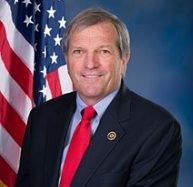
Rep. Mark DeSaulnier
Washington, DC – On the House floor today, Congressman Mark DeSaulnier (D-CA-11) managed the rule to begin consideration of H.Con.Res. 24, a straightforward Democratic resolution sponsored by Rep. Jerry Nadler (D-NY-10), expressing the sense of Congress that the report by Special Counsel Mueller should be made available to the American public and to Congress.
Highlights of Congressman DeSaulnier’s remarks are included below and video of the full speech is available here.
“When the Justice Department named Robert Mueller to Special Counsel for the Russia investigation, acting Attorney General Rod Rosenstein said, ‘A special counsel is necessary in order for the American people to have full confidence in the outcome. Our nation is grounded on the rule of law, and the public must be assured that government officials administer the law fairly.’
This resolution does not predetermine the outcome of the Mueller investigation. It simply expresses that the report of the Special Counsel should be made available to Congress and to the American people.
The public, including my constituents in Contra Costa, wants to know what happened. Nearly 9 in 10 Americans – in both parties – say the Mueller investigation should produce a full, public report on the findings.
Not only do people want to know, but they deserve to know.
To date, Mueller’s investigation has resulted in:
o 34 people and three companies being criminally charged;
o Nearly 200 charges filed;
o Seven guilty pleas;
o And one conviction following a jury trial.
o The investigation cost over $25 million, but recovered approximately $48 million in assets from tax evasion.
Eight federal and congressional intelligence and national security groups believe Russia interfered in the election. With the Central Intelligence Agency, the National Security Agency, the F.B.I., and the Office of the Director of National Intelligence concluding that Vladimir Putin personally ‘ordered an influence campaign in 2016 aimed at the U.S. presidential election’ to ‘undermine public faith in the democratic process.’
The last time our country had a Special Counsel operating under the same rules as the Mueller Probe was in 1993 to investigate the Waco siege and allegations of government wrongdoing. Prosecutors posted their final report directly on the Internet with hundreds of pages of exhibits and timelines.
The American public should receive the same transparency when the Mueller report is released.
I encourage my friends across the aisle to support the release of the Mueller report. We have commitments to support it from three House Republican Leaders including the Minority Leader, Minority Whip, and Republican Conference Chair, and I hope all of the Republican Caucus will join Democrats in this vote to ensure we share one of the most important investigations of our time within these halls and with all of America.”
DeSaulnier is also a Member of the House Committee on Oversight and Reform, which is investigating any possible criminal activity related to President Trump or his associates.
DeSaulnier represents portions of Contra Costa County.
Read More Suspect: Crystal Diane Lia of Discovery Bay
By CHP-Contra Costa
On May 4, 2018, Contra Costa CHP began an investigation of a fatal hit and run on Hwy 4 at Bixler Road in Discovery Bay. In brief summary, the deceased was located the next day just off the roadway with no real leads that were presented early on, which compounded the tragic loss of life for the family of the deceased because we were unable to provide any clear details of what really happened at that time.
Our CHP Officers began the investigation and followed many leads, including working along side our special investigations unit, but were unfortunately unsuccessful in locating the suspect or suspect vehicle.
Then in late 2018, CHP received a tip with information regarding the investigation. This led to locating the vehicle involved, and a possible suspect as well. But many more hours of hard work were put into the case to obtain solid evidence, records, interviews, warrants, etc.
Then just last Friday, March 8, 2019, all the long hours and hard work of the investigation finally produced the fruits of the Officers labor. CHP was successful in filing a criminal complaint for Vehicular Manslaughter (DUI) and Felony Hit & Run with enhancements. The judge set bail at $300,000.
The suspect was not immediately located. But later a peaceful & successful surrender was negotiated with the suspects attorney and the suspect, Crystal Diane Lia, 36yr old from Discovery Bay, surrendered to the court Monday, March 11, 2019.
If you have any information regarding this incident from May 4, 2018, or the morning of May 5 2018, and would like to come forward to provide that, please contact Contra Costa CHP in Martinez at (925) 646-4980.
Although the life that the suspect took cannot be replaced, we hope that this will begin to bring some closure to the family that lost their loved one nearly one year ago.
Read More
 By Jimmy Lee, Director of Public Affairs, Contra Costa County Office of the Sheriff
The Contra Costa District Attorney’s Office has filed formal charges against Jorge Ortega Campos in connection with the killing of Michael Bagwell in El Sobrante in January. (See related article).
On January 26, 2019, at about 12:22 PM, Deputy Sheriffs were dispatched to a report of shots fired with a man down in the intersection of Jasmine Court and Jasmine Way in El Sobrante. Deputies arrived on scene and found a man deceased at that location. He suffered from gunshot wounds. The victim was identified as 52-year-old Michael Bagwell of Richmond.
Homicide Detectives from the Office of the Sheriff identified 38-year-old Campos of Richmond/Pinole as the suspect in the killing. Detectives later that day discovered Campos was being held in the Martinez Detention Facility (MDF) on unrelated charges. Apparently, an alert resident called police when he saw Campos acting suspiciously on Mountbatten Court in Concord. That resident was able to detain him until police arrived. At the time, Campos was booked into the MDF on numerous charges including drug possession and parole violation.
Campos is still being held at MDF. His charges now include murder and carjacking in connection with the killing of Bagwell. He is being held without bail.
The investigation into this case is ongoing. Anyone with any information on this case is asked to contact the Investigation Division at (925) 313-2600. For any tips, call 866-846-3592 to leave an anonymous voice message or email: tips@so.cccounty.us.
Read More By Jimmy Lee, Director of Public Affairs, Contra Costa County Office of the Sheriff
On Wednesday, March 6, 2019, at about 11:09 PM, a Deputy Sheriff found an inmate who was unresponsive during a room check at the Martinez Detention Facility (MDF).
The Deputy immediately called for jail medical staff to respond. Life-saving measures were performed on the inmate. An ambulance and the fire department responded to MDF. The inmate was transported to Contra Costa Regional Medical Center. He was later pronounced deceased.
The identity of 65-year-old male inmate is not being released at this time.
The investigation into this death is ongoing. Per the in custody fatal incident pro-tocol, the investigation is being conducted by the Contra Costa County District Attorney’s Office and the Office of the Sheriff.
THURSDAY, 3/7/19 9:38 PM UPDATE –
The investigation into the in-custody death at the Martinez Detention Facility is continuing. The investigation is being conducted by the Contra Costa County District Attorney’s Office and the Office of the Sheriff per the in custody fatal incident protocol.
On Wednesday, March 6, 2019, at about 11:09 PM, a Deputy Sheriff found an inmate who was unresponsive during a room check at the Martinez Detention Facility (MDF). The Deputy immediately called for jail medical staff to respond. Life-saving measures were performed on the inmate. An ambulance and the fire department responded to MDF. The inmate was transported to Contra Costa Regional Medical Center. He was later pronounced deceased.
The 65-year-old male inmate is identified as Leartis Johnson of Antioch. He was originally booked into the MDF on May 16, 2018 by the BART police. His original charges included murder, assault with a deadly weapon, and robbery.
His death appears to be health related.
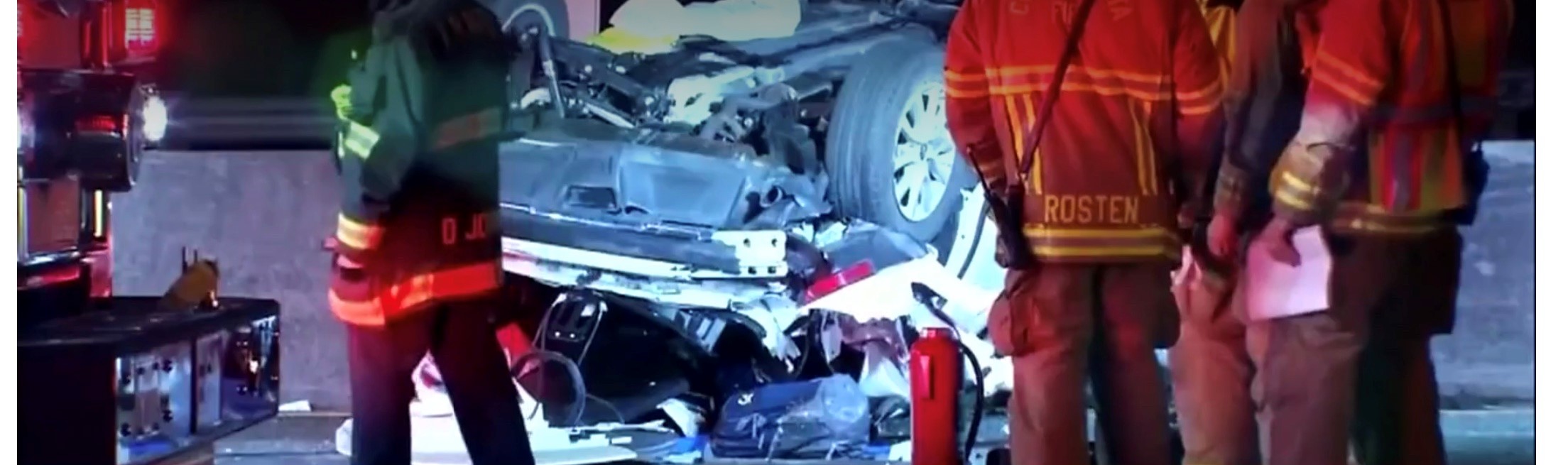
Screenshots of CBS13 Sacramento new report, Nov. 26, 2017.
By Scott Alonso, Public Information Officer, Contra Costa County District Attorney
On March 4, a Contra Costa County jury found defendant Fred Lowe of Sacramento guilty of seven felonies, including the murder of four victims from a collision caused by Lowe on Sunday, Nov. 26, 2017. After the fatal crash, Lowe fled the scene of the incident and was later found by law enforcement officers. Lowe was driving under the influence of alcohol at the time of the crash and he had five prior DUI convictions. Lowe’s blood, drawn four hours after the crash was measured at .19% and an expert testified that his blood alcohol level at the time of the crash would have been approximately .24%. (See related CBS13 Sacramento rews report)
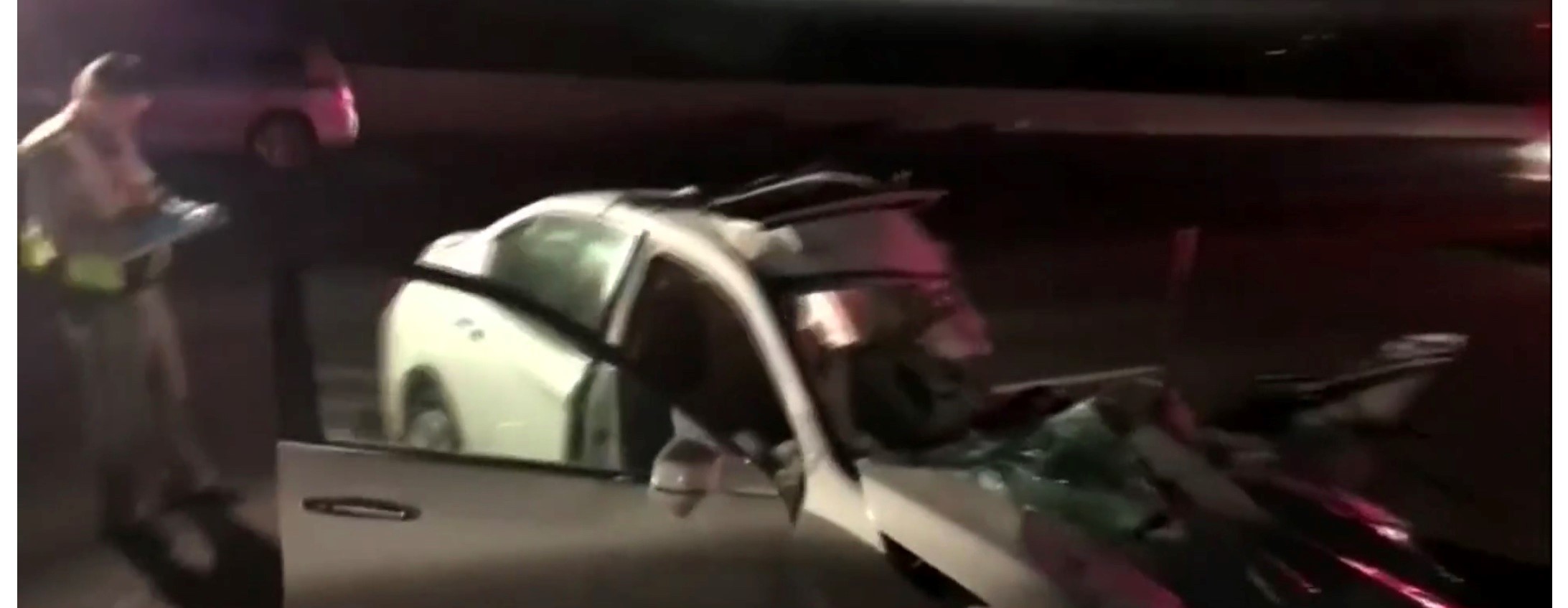 Lowe sideswiped the victim’s Nissan Rogue as he traveled at an unsafe speed east bound on Interstate-80 west of El Portal Drive in San Pablo. After the initial impact from the crash, Lowe’s vehicle forced the Nissan Rogue against the center divider at which point the Nissan Rogue went over the divider into oncoming west bound traffic, where it was hit by two westbound vehicles. Three additional people in those vehicles were treated for serious injuries.
The four deceased victims are Joseph Horn, his father Darryl, Baden Biddle and his father Troy Biddle. Joe Horn’s older brother Jared was the driver of the Nissan Rogue and was only slightly injured. The Biddle Family were relatives of the Horn’s visiting from out of state over the Thanksgiving weekend.
Lowe now faces a maximum sentence of over 125 years to life in state prison. Sentencing will occur on March 29, 2019 in front of the Honorable John W. Kennedy – Department 8 of the Contra Costa County Superior Court in Martinez. Contra Costa County Deputy District Attorney Derek Butts prosecuted the case on behalf of the People. The case originated in the Office’s Homicide Unit.
The tragic loss of life in each of these incidents underscores the very real danger to the citizens of our County when drivers choose to get behind the wheel and drive under the influence of alcohol or drugs. The District Attorney’s Office and the law enforcement agencies of Contra Costa County are committed to ensuring the safety of the public on our roadways and to the prosecution of those who drive under the influence to the fullest extent of the law.
The felony counts against Lowe for his verdict:
- Count 1, Murder
- Count 2, Murder
- Count 3, Murder
- Count 4, Murder
- Count 5, Driving Under the Influence of Alcohol Causing Injury Within 10 Years of Two Other DUI Offenses
- Enhancement 1, Great Bodily Injury
- Enhancement 2, Great Bodily Injury
- Enhancement 3, Bodily Injury to More than One Victim
- Count 6, Driving with a .08% BAC Causing Great Bodily Injury Within 10 Years of Two Other DUI Offenses
- Enhancement 1, Great Bodily Injury
- Enhancement 2, Great Bodily Injury
- Enhancement 3, Bodily Injury to More than One Victim
- Count 7, Leaving the Scene of an Accident
- Special Allegation, Prior Serious Felony (Counts 1-4)
- Special Allegation, Prior Serious or Violent Felony Prior (Counts 1-7)
Case information: People v. Fred Douglas Lowe, Docket Number 05-181540-6
Read More March 6, 2019, Martinez, CA – Contra Costa County Public Works is addressing road shoulder embankment failures due to previous years of winter storms. Some failures have occurred along Alhambra Valley Road, Bear Creek Road, Marsh Creek Road, Happy Valley Road, Carquinez Scenic Drive, among others.
Temporary measures have been implemented to keep the motoring public safe while the roads remain open to traffic. In some cases, temporary concrete barriers have been placed, along with temporary stop signs, to reduce the road to a single lane at the location of the road failure.
Public Works is actively designing a permanent fix to these road failures as well as securing funds to seek environmental clearances and construct the necessary fixes. In some cases, federal and state emergency funds are sought to recover from winter storms declared as disaster areas (as was declared in 2017).
Public Works appreciates the public’s patience as these permanent repairs are planned for and constructed. In the meantime, we will continue to monitor the effectiveness of these temporary measures and asks the public to adhere to the temporary traffic control measures.
About Contra Costa County Public Works Department:
Contra Costa County Public Works Department (CCCPWD) maintains over 660 miles of roads, 150 miles of streams, channels and other drainage and over 200 County buildings throughout Contra Costa County. CCCPWD provides services such as Parks and Recreation, Sand Bag Distribution and Flood Control throughout unincorporated areas of Contra Costa County. CCCPWD operates two airports, Buchanan Air Field in Concord and Byron Air Field in Byron. For more information about CCCPWD, please visit us here.
Read More
By Steve Padilla, Director Contra Costa County Public Works Department
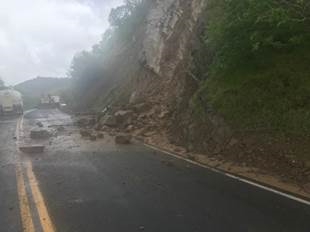
March 6, 2019, Clayton, CA – Marsh Creek Road is closed in both directions, between the Clayton City limits and Morgan Territory Road due to rock and mud slides. We anticipate re-opening the road by early afternoon. Please take alternative routes to avoid this area.
Read More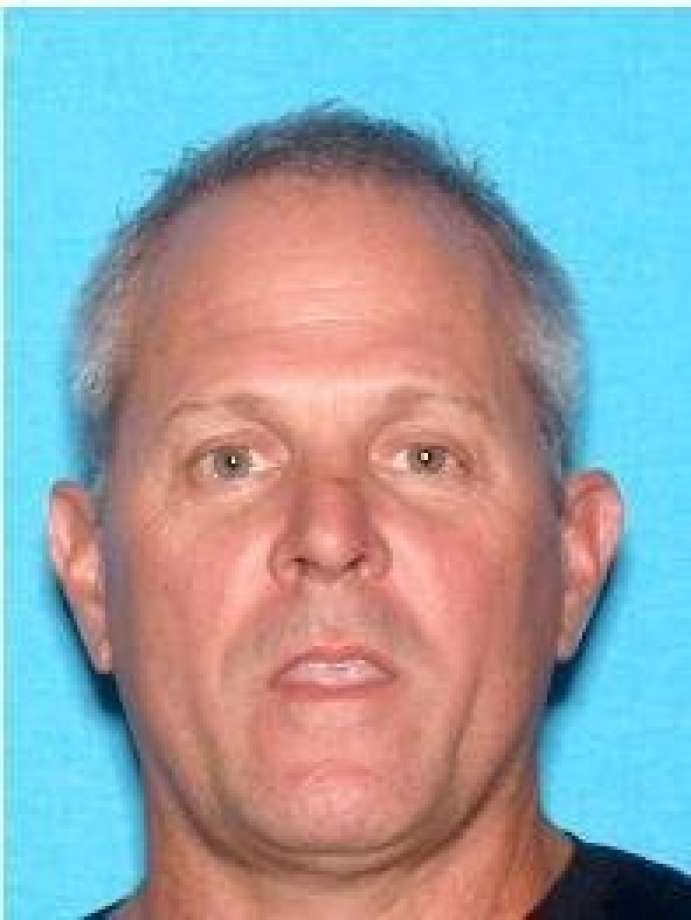
Mark Allan Sypien
By Jimmy Lee, Director of Public Affairs, Contra Costa County Office of the Sheriff
Detectives from the Contra Costa County Office of the Sheriff and the Danville Police Department this afternoon received notification from the Kane County Sheriff’s Office in Illinois that a suspect being sought in a homicide in Danville had apparently shot and killed himself at his parents’ home in St. Charles, Illinois.
Detectives were looking for 51-year-old Mark Allan Sypien of Dublin in connection with the killing of Danville resident John Moore. The shooting happened on Sunday, February 24, 2019, at about 2:25 PM. Danville officers were dispatched to the 3400 block of Fostoria Way for a report of gunshots. Officers arrived finding Moore suffering from gunshot wounds. He was pronounced deceased at the scene.
Investigators identified Sypien as the suspect in the killing. An arrest warrant for murder had been issued for him.
Detectives continue to work with their counterparts in Illinois.
Anyone with any information on this case is asked to contact the Contra Costa Sheriff’s Office Investigation Division at (925) 313-2600. For any tips, call 866-846-3592 to leave an anonymous voice message or email: tips@so.cccounty.us.
Read More










By Scott Alonso, Public Information Officer, Contra Costa County District Attorney
On Tuesday, March 12, 2019, District Attorney Diana Becton and staff attended an event in New York City to announce the end of the backlog of untested sexual assault kits in Contra Costa County. These results come from the Contra Costa County District Attorney’s Office participation in the Manhattan District Attorney’s Sexual Assault Kit Backlog Elimination Grant Program, a three-year grant program to test sexual assault kits.
Our Office was one of 32 grantees funded, totaling $1,841,535 to test 1,246 kits since 2015. The testing of these kits allowed for DNA evidence to be uploaded to the national DNA databank to assist in investigations and identify offenders.
“We partnered with 24 law enforcement agencies in our community to erase the backlog of sexual assault kits in Contra Costa County,” said Becton. “I want to express my gratitude for our partners working with our office to end the backlog. Testing these kits can help bring closure and justice to sexual assault victims. We are going to continue working on this issue to ensure we never have a backlog in our community again.”
To ease the burden of testing these kits, through this grant our Office collected the untested kits from participating agencies and sent the kits to Sorenson Forensics in Utah. The collaboration between Sorenson Forensics, the Contra Costa County Sheriff’s Crime Lab and our Office allowed for a more efficient process of testing these kits.
Due to state law in California, law enforcement agencies have mandated reporting timeframes to test these kits. If an agency chooses not to test, they have to substantiate their reasons to the California Department of Justice. Our Office will continue to monitor the progress of all agencies in Contra Costa County to ensure state law is followed and no kits remain untested.
Overall, the Manhattan District Attorney’s program tested 55,242 kits and resulted in 18,803 DNA profiles uploaded into the Federal Bureau of Investigation’s Combined DNA Index System (CODIS). Locally, the results here for our kits were:
- 1,246 kits DNA tested (1978 to 2016)
- 182 DNA profiles entered into CODIS
- 122 Confirmatory hits
- 51 Offender hits
- 8 Cases reopened for further review by law enforcement agencies
- Full compliance of all participating agencies
Rep. Mark DeSaulnier
Washington, DC – On the House floor today, Congressman Mark DeSaulnier (D-CA-11) managed the rule to begin consideration of H.Con.Res. 24, a straightforward Democratic resolution sponsored by Rep. Jerry Nadler (D-NY-10), expressing the sense of Congress that the report by Special Counsel Mueller should be made available to the American public and to Congress.
Highlights of Congressman DeSaulnier’s remarks are included below and video of the full speech is available here.
“When the Justice Department named Robert Mueller to Special Counsel for the Russia investigation, acting Attorney General Rod Rosenstein said, ‘A special counsel is necessary in order for the American people to have full confidence in the outcome. Our nation is grounded on the rule of law, and the public must be assured that government officials administer the law fairly.’
This resolution does not predetermine the outcome of the Mueller investigation. It simply expresses that the report of the Special Counsel should be made available to Congress and to the American people.
The public, including my constituents in Contra Costa, wants to know what happened. Nearly 9 in 10 Americans – in both parties – say the Mueller investigation should produce a full, public report on the findings.
Not only do people want to know, but they deserve to know.
To date, Mueller’s investigation has resulted in:
o 34 people and three companies being criminally charged;
o Nearly 200 charges filed;
o Seven guilty pleas;
o And one conviction following a jury trial.
o The investigation cost over $25 million, but recovered approximately $48 million in assets from tax evasion.
Eight federal and congressional intelligence and national security groups believe Russia interfered in the election. With the Central Intelligence Agency, the National Security Agency, the F.B.I., and the Office of the Director of National Intelligence concluding that Vladimir Putin personally ‘ordered an influence campaign in 2016 aimed at the U.S. presidential election’ to ‘undermine public faith in the democratic process.’
The last time our country had a Special Counsel operating under the same rules as the Mueller Probe was in 1993 to investigate the Waco siege and allegations of government wrongdoing. Prosecutors posted their final report directly on the Internet with hundreds of pages of exhibits and timelines.
The American public should receive the same transparency when the Mueller report is released.
I encourage my friends across the aisle to support the release of the Mueller report. We have commitments to support it from three House Republican Leaders including the Minority Leader, Minority Whip, and Republican Conference Chair, and I hope all of the Republican Caucus will join Democrats in this vote to ensure we share one of the most important investigations of our time within these halls and with all of America.”
DeSaulnier is also a Member of the House Committee on Oversight and Reform, which is investigating any possible criminal activity related to President Trump or his associates.
DeSaulnier represents portions of Contra Costa County.
Read MoreSuspect: Crystal Diane Lia of Discovery Bay
By CHP-Contra Costa
On May 4, 2018, Contra Costa CHP began an investigation of a fatal hit and run on Hwy 4 at Bixler Road in Discovery Bay. In brief summary, the deceased was located the next day just off the roadway with no real leads that were presented early on, which compounded the tragic loss of life for the family of the deceased because we were unable to provide any clear details of what really happened at that time.
Our CHP Officers began the investigation and followed many leads, including working along side our special investigations unit, but were unfortunately unsuccessful in locating the suspect or suspect vehicle.
Then in late 2018, CHP received a tip with information regarding the investigation. This led to locating the vehicle involved, and a possible suspect as well. But many more hours of hard work were put into the case to obtain solid evidence, records, interviews, warrants, etc.
Then just last Friday, March 8, 2019, all the long hours and hard work of the investigation finally produced the fruits of the Officers labor. CHP was successful in filing a criminal complaint for Vehicular Manslaughter (DUI) and Felony Hit & Run with enhancements. The judge set bail at $300,000.
The suspect was not immediately located. But later a peaceful & successful surrender was negotiated with the suspects attorney and the suspect, Crystal Diane Lia, 36yr old from Discovery Bay, surrendered to the court Monday, March 11, 2019.
If you have any information regarding this incident from May 4, 2018, or the morning of May 5 2018, and would like to come forward to provide that, please contact Contra Costa CHP in Martinez at (925) 646-4980.
Although the life that the suspect took cannot be replaced, we hope that this will begin to bring some closure to the family that lost their loved one nearly one year ago.
Read MoreBy Jimmy Lee, Director of Public Affairs, Contra Costa County Office of the Sheriff
The Contra Costa District Attorney’s Office has filed formal charges against Jorge Ortega Campos in connection with the killing of Michael Bagwell in El Sobrante in January. (See related article).
On January 26, 2019, at about 12:22 PM, Deputy Sheriffs were dispatched to a report of shots fired with a man down in the intersection of Jasmine Court and Jasmine Way in El Sobrante. Deputies arrived on scene and found a man deceased at that location. He suffered from gunshot wounds. The victim was identified as 52-year-old Michael Bagwell of Richmond.
Homicide Detectives from the Office of the Sheriff identified 38-year-old Campos of Richmond/Pinole as the suspect in the killing. Detectives later that day discovered Campos was being held in the Martinez Detention Facility (MDF) on unrelated charges. Apparently, an alert resident called police when he saw Campos acting suspiciously on Mountbatten Court in Concord. That resident was able to detain him until police arrived. At the time, Campos was booked into the MDF on numerous charges including drug possession and parole violation.
Campos is still being held at MDF. His charges now include murder and carjacking in connection with the killing of Bagwell. He is being held without bail.
The investigation into this case is ongoing. Anyone with any information on this case is asked to contact the Investigation Division at (925) 313-2600. For any tips, call 866-846-3592 to leave an anonymous voice message or email: tips@so.cccounty.us.
Read MoreBy Jimmy Lee, Director of Public Affairs, Contra Costa County Office of the Sheriff
On Wednesday, March 6, 2019, at about 11:09 PM, a Deputy Sheriff found an inmate who was unresponsive during a room check at the Martinez Detention Facility (MDF).
The Deputy immediately called for jail medical staff to respond. Life-saving measures were performed on the inmate. An ambulance and the fire department responded to MDF. The inmate was transported to Contra Costa Regional Medical Center. He was later pronounced deceased.
The identity of 65-year-old male inmate is not being released at this time.
The investigation into this death is ongoing. Per the in custody fatal incident pro-tocol, the investigation is being conducted by the Contra Costa County District Attorney’s Office and the Office of the Sheriff.
THURSDAY, 3/7/19 9:38 PM UPDATE –
The investigation into the in-custody death at the Martinez Detention Facility is continuing. The investigation is being conducted by the Contra Costa County District Attorney’s Office and the Office of the Sheriff per the in custody fatal incident protocol.
On Wednesday, March 6, 2019, at about 11:09 PM, a Deputy Sheriff found an inmate who was unresponsive during a room check at the Martinez Detention Facility (MDF). The Deputy immediately called for jail medical staff to respond. Life-saving measures were performed on the inmate. An ambulance and the fire department responded to MDF. The inmate was transported to Contra Costa Regional Medical Center. He was later pronounced deceased.
The 65-year-old male inmate is identified as Leartis Johnson of Antioch. He was originally booked into the MDF on May 16, 2018 by the BART police. His original charges included murder, assault with a deadly weapon, and robbery.
His death appears to be health related.
Screenshots of CBS13 Sacramento new report, Nov. 26, 2017.
By Scott Alonso, Public Information Officer, Contra Costa County District Attorney
On March 4, a Contra Costa County jury found defendant Fred Lowe of Sacramento guilty of seven felonies, including the murder of four victims from a collision caused by Lowe on Sunday, Nov. 26, 2017. After the fatal crash, Lowe fled the scene of the incident and was later found by law enforcement officers. Lowe was driving under the influence of alcohol at the time of the crash and he had five prior DUI convictions. Lowe’s blood, drawn four hours after the crash was measured at .19% and an expert testified that his blood alcohol level at the time of the crash would have been approximately .24%. (See related CBS13 Sacramento rews report)
Lowe sideswiped the victim’s Nissan Rogue as he traveled at an unsafe speed east bound on Interstate-80 west of El Portal Drive in San Pablo. After the initial impact from the crash, Lowe’s vehicle forced the Nissan Rogue against the center divider at which point the Nissan Rogue went over the divider into oncoming west bound traffic, where it was hit by two westbound vehicles. Three additional people in those vehicles were treated for serious injuries.
The four deceased victims are Joseph Horn, his father Darryl, Baden Biddle and his father Troy Biddle. Joe Horn’s older brother Jared was the driver of the Nissan Rogue and was only slightly injured. The Biddle Family were relatives of the Horn’s visiting from out of state over the Thanksgiving weekend.
Lowe now faces a maximum sentence of over 125 years to life in state prison. Sentencing will occur on March 29, 2019 in front of the Honorable John W. Kennedy – Department 8 of the Contra Costa County Superior Court in Martinez. Contra Costa County Deputy District Attorney Derek Butts prosecuted the case on behalf of the People. The case originated in the Office’s Homicide Unit.
The tragic loss of life in each of these incidents underscores the very real danger to the citizens of our County when drivers choose to get behind the wheel and drive under the influence of alcohol or drugs. The District Attorney’s Office and the law enforcement agencies of Contra Costa County are committed to ensuring the safety of the public on our roadways and to the prosecution of those who drive under the influence to the fullest extent of the law.
The felony counts against Lowe for his verdict:
- Count 1, Murder
- Count 2, Murder
- Count 3, Murder
- Count 4, Murder
- Count 5, Driving Under the Influence of Alcohol Causing Injury Within 10 Years of Two Other DUI Offenses
- Enhancement 1, Great Bodily Injury
- Enhancement 2, Great Bodily Injury
- Enhancement 3, Bodily Injury to More than One Victim
- Count 6, Driving with a .08% BAC Causing Great Bodily Injury Within 10 Years of Two Other DUI Offenses
- Enhancement 1, Great Bodily Injury
- Enhancement 2, Great Bodily Injury
- Enhancement 3, Bodily Injury to More than One Victim
- Count 7, Leaving the Scene of an Accident
- Special Allegation, Prior Serious Felony (Counts 1-4)
- Special Allegation, Prior Serious or Violent Felony Prior (Counts 1-7)
Case information: People v. Fred Douglas Lowe, Docket Number 05-181540-6
Read MoreMarch 6, 2019, Martinez, CA – Contra Costa County Public Works is addressing road shoulder embankment failures due to previous years of winter storms. Some failures have occurred along Alhambra Valley Road, Bear Creek Road, Marsh Creek Road, Happy Valley Road, Carquinez Scenic Drive, among others.
Temporary measures have been implemented to keep the motoring public safe while the roads remain open to traffic. In some cases, temporary concrete barriers have been placed, along with temporary stop signs, to reduce the road to a single lane at the location of the road failure.
Public Works is actively designing a permanent fix to these road failures as well as securing funds to seek environmental clearances and construct the necessary fixes. In some cases, federal and state emergency funds are sought to recover from winter storms declared as disaster areas (as was declared in 2017).
Public Works appreciates the public’s patience as these permanent repairs are planned for and constructed. In the meantime, we will continue to monitor the effectiveness of these temporary measures and asks the public to adhere to the temporary traffic control measures.
About Contra Costa County Public Works Department:
Contra Costa County Public Works Department (CCCPWD) maintains over 660 miles of roads, 150 miles of streams, channels and other drainage and over 200 County buildings throughout Contra Costa County. CCCPWD provides services such as Parks and Recreation, Sand Bag Distribution and Flood Control throughout unincorporated areas of Contra Costa County. CCCPWD operates two airports, Buchanan Air Field in Concord and Byron Air Field in Byron. For more information about CCCPWD, please visit us here.
Read More
By Steve Padilla, Director Contra Costa County Public Works Department
March 6, 2019, Clayton, CA – Marsh Creek Road is closed in both directions, between the Clayton City limits and Morgan Territory Road due to rock and mud slides. We anticipate re-opening the road by early afternoon. Please take alternative routes to avoid this area.
Read MoreMark Allan Sypien
By Jimmy Lee, Director of Public Affairs, Contra Costa County Office of the Sheriff
Detectives from the Contra Costa County Office of the Sheriff and the Danville Police Department this afternoon received notification from the Kane County Sheriff’s Office in Illinois that a suspect being sought in a homicide in Danville had apparently shot and killed himself at his parents’ home in St. Charles, Illinois.
Detectives were looking for 51-year-old Mark Allan Sypien of Dublin in connection with the killing of Danville resident John Moore. The shooting happened on Sunday, February 24, 2019, at about 2:25 PM. Danville officers were dispatched to the 3400 block of Fostoria Way for a report of gunshots. Officers arrived finding Moore suffering from gunshot wounds. He was pronounced deceased at the scene.
Investigators identified Sypien as the suspect in the killing. An arrest warrant for murder had been issued for him.
Detectives continue to work with their counterparts in Illinois.
Anyone with any information on this case is asked to contact the Contra Costa Sheriff’s Office Investigation Division at (925) 313-2600. For any tips, call 866-846-3592 to leave an anonymous voice message or email: tips@so.cccounty.us.
Read More