







Ruth Virginia Ferrell turns 100 on Jan. 12, 2020.
Ruth Virginia Ferrell will be celebrating her 100th birthday with family, this Saturday.
Born January 12, 1920 in Memphis, Tennessee, she came to California in 1948, and lives with her grandson and family in Concord.
Ruth is blessed with three children, several grandchildren, great grandchildren, and great-great grandchildren.
She’s doing very well and is very spry for her age.
Read More Part of automatic record clearance partnership
By Scott Alonso, Public Information Officer, Contra Costa District Attorney
Contra Costa County District Attorney Diana Becton and Code for America today announced that 3,264 marijuana convictions eligible for relief under Proposition 64 will be dismissed and sealed as part of their cutting-edge partnership.
“I am grateful the partnership with Code for America has given us the ability to deliver tangible results for members of our community by dismissing old marijuana convictions allowed under the law. Far too often old criminal convictions for minor drug offenses can leave a lasting mark on an individual’s life. The removal of these convictions effectively reduces barriers to licensing, education, housing and employment. It is imperative that we continue to be innovative in our approach to reforming and strengthening the criminal justice system,” said Diana Becton, District Attorney for Contra Costa County.
 “At Code for America, we believe government can work dramatically better than it does today; the criminal justice system is one of the areas in which we are most failing the American people. We must make sure that California lives up to the obligation of Proposition 64 and now AB 1793,” said Jennifer Pahlka, Founder and Executive Director, Code for America. “I’d like to thank Contra Costa District Attorney Becton for her leadership on this issue. Through our partnership, we will remove barriers to employment, housing, health and education for thousands of Californians. By reimagining existing government systems through technology and user-centered design, we can rethink incarceration, reduce recidivism and restore opportunity.”
The Contra Costa District Attorney’s office used Code for America’s Clear My Record technology, which reads bulk criminal history data from the California Department of Justice, and securely and accurately analyzes eligibility for record remediation under state law. This technology can analyze eligibility for thousands of convictions in just a few minutes, alleviating the need for DA staff to go through state criminal records one by one to evaluate eligibility, a time and labor-intensive process.
This partnership helps address wrongs caused by the failed war on drugs, felt most strongly by communities of color. Approximately 2,400 individuals will receive conviction relief through this partnership. Of those, approximately 36% are Black or African American, 45% are White, 15% are Latinx, 2% are Asian/Pacific Islander, and 2% are other or unknown.
Contra Costa is the fifth California District Attorney’s Office to announce a pilot partnership with Code for America and use Clear My Record Technology to clear marijuana-related convictions eligible under Proposition 64. The other counties include San Francisco, Sacramento, San Joaquin and Los Angeles. In total, these five pilots will help reduce or dismiss approximately 75,000 Proposition 64 eligible convictions.
Earlier this year, Code for America also launched its new Clear My Record Application and Implementation Blueprint, available at no cost and open source to all California counties. These resources allow all District Attorneys’ offices to follow the lead of DA Becton and expedite and streamline review of Prop 64 convictions.
Record Clearance for the Digital Age
Record clearance was not built for the digital age. Previously, each person seeking relief had to petition the court on their own to clear their records, but this is a time-consuming, expensive, and confusing process. Because of these barriers, the vast majority of those eligible for relief have not received it.
With the aid of Code for America’s Clear My Record technology, a DA’s office can automatically and securely evaluate eligibility for record clearance for thousands of convictions in just a few minutes.
This requires no action on the part of the individual, and minimal staff time and resources from the DA’s office — two obstacles for record clearance. Streamlining conviction data processing will also make it easier for courts to update records, ensuring that individuals can obtain relief as soon as possible.
These partnerships set the standard for the statewide implementation of Assembly Bill 1793, which tasks prosecutors with affirmatively reviewing convictions eligible for dismissal or reduction under Proposition 64. This novel approach also creates a blueprint for the future of record clearance for remedies beyond Proposition 64 — the development of policy and technology that expands, streamlines and automates the record clearance process at scale.
Code for America has been making it easier for people to remove eligible convictions from their records through Clear my Record technology since 2016.
About Code for America
Code for America believes government must work for the people, and by the people, in the digital age, starting with the people who need it most. We build digital services that enhance government capabilities, and we help others do the same across all levels of government. We organize thousands of volunteers across nearly 80 chapters nationwide who improve government in their local communities. Our goal: a 21st century government that effectively and equitably serves all Americans. Learn more at codeforamerica.org.
Read More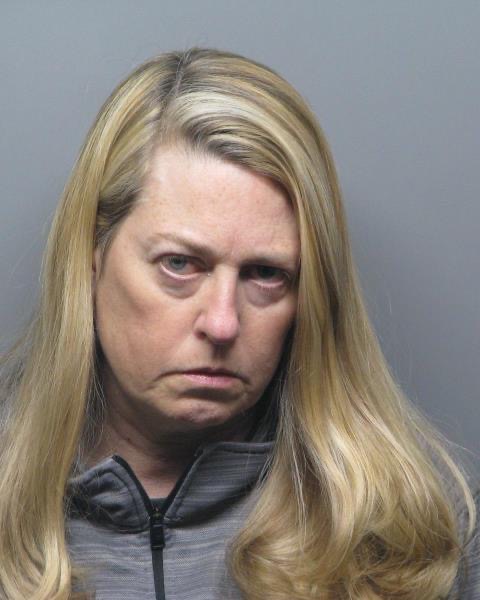
Suspect Kyle Ann Wood. Photo by CCCSheriff.
By Jimmy Lee, Director of Public Affairs, Contra Costa County Office of the Sheriff
On Wednesday, January 8, 2020, at about 6:30 PM, Detectives from the Contra Costa County Office of the Sheriff arrested 54-year-old Kyle Ann Wood at her home in Pleasant Hill.
The Lafayette Police Department, assisted by the Sheriff’s Office Investigation Division, recently began an investigation into Wood after receiving reports of alleged inappropriate and unlawful relationships between Wood and two minors. The crimes occurred between 1996-1998. The victims were students at Acalanes High School where Wood was a teacher.
Wood is currently a teacher at Miramonte High School in Orinda.
The Contra Costa District Attorney’s Office filed felony sex charges against Wood. She was booked into the Martinez Detention Facility and is being held in lieu of $150,000 bail.
The investigation is ongoing. The Lafayette Police Department is asking anyone with additional information regarding this case to contact detectives at (925) 283-3680 or (925) 299-3234 or email Sergeant T. Rossberg at tross@so.cccounty.us.
Read More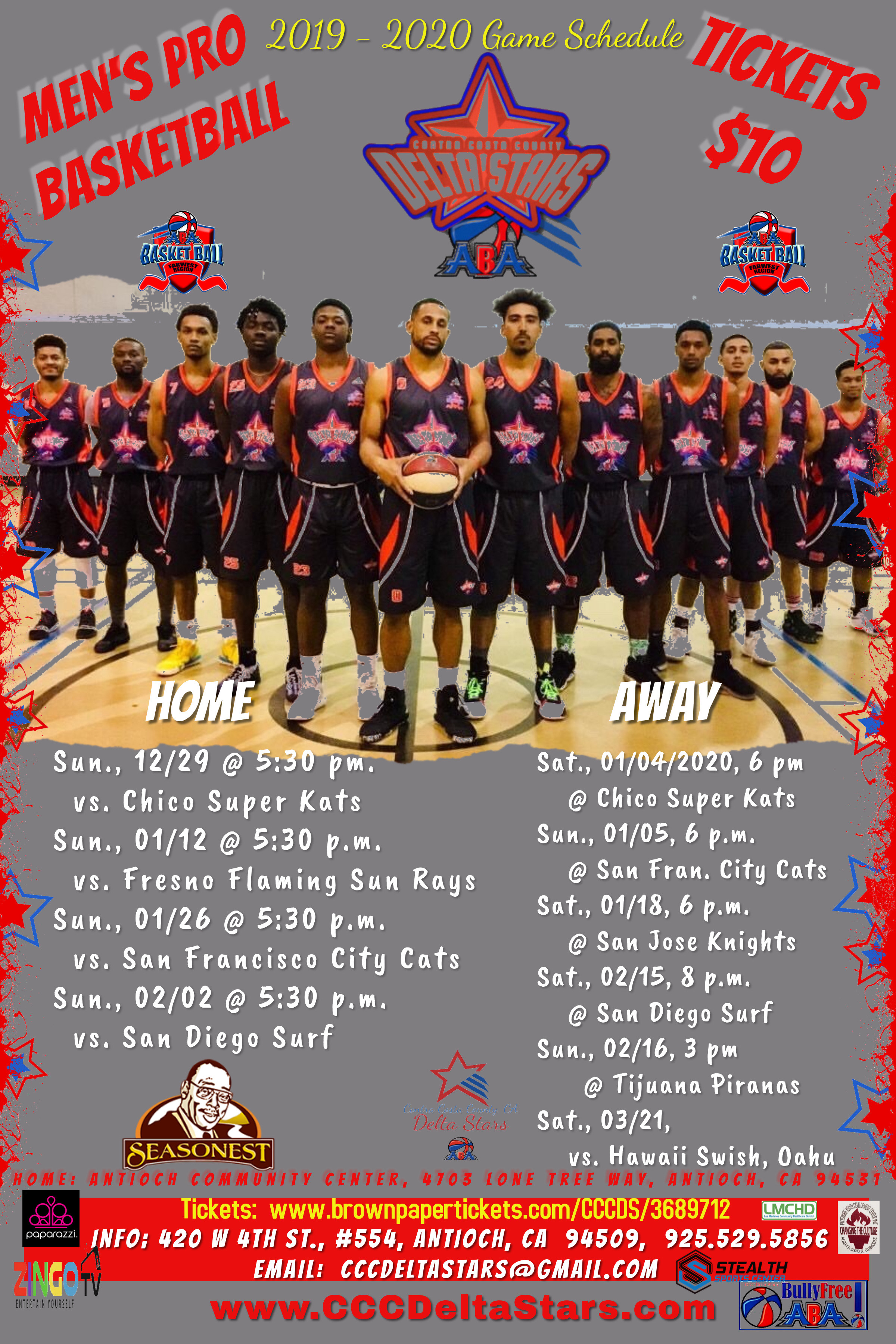
Home Games played at Antioch Community Center in Prewett Park, 4703 Lone Tree Way, Antioch. Tickets at: www.brownpapertickets.com/cccds/3689712 Learn more at www.cccdeltastars.com.
Read More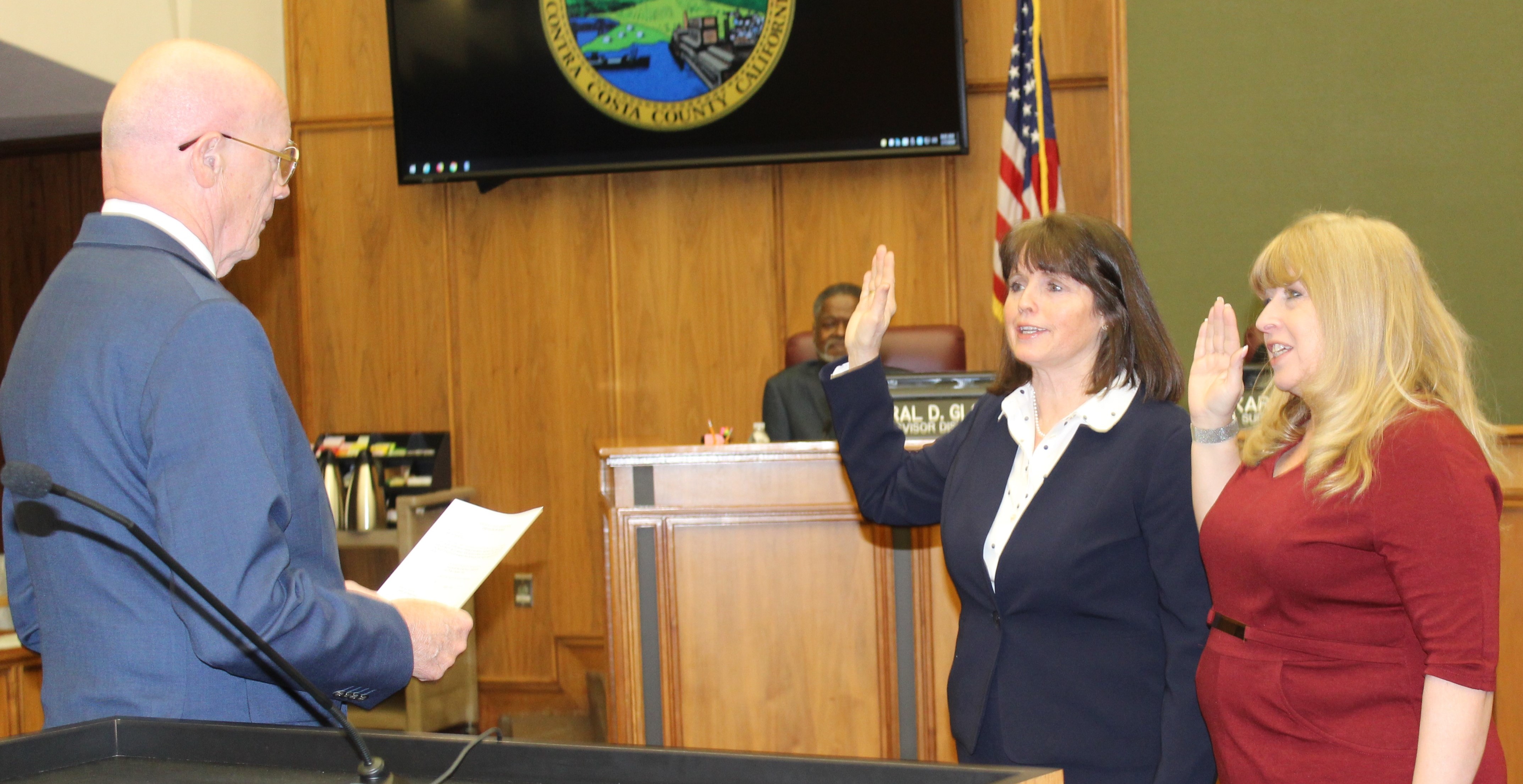
Contra Costa County Administrator David Twa, who will retire at the end of 2020, administered the oath of office to new Supervisors Chair Candace Andersen of Danville and Vice Chair Diane Burgis of Brentwood at the Board meeting on Tuesday, Jan. 7, 2020. Photo by Daniel Borusk.
Martinez, CA – The Contra Costa County Board of Supervisors held a swearing-in ceremony for Supervisor Candace Andersen as Board Chair and Supervisor Diane Burgis as Vice Chair at its January 7th, 2020 Board meeting.
District 2 Supervisor Candace Andersen who has served Contra Costa County since she was first elected in 2012, including a previous term as Board Chair in 2016, takes the leadership role from outgoing Chair, Supervisor John Gioia of District 1.
Gioia of Richmond, who was presented with a prized Hawaiian Koa wood gavel from incoming Andersen as a gift, credited the “great work of county employees” in 2019 for salvaging a year marked by power outages and catastrophic fires.
Andersen expressed her thanks to Gioia, as well as her readiness to tackle the County’s issues.
“I appreciate Supervisor Gioia’s leadership in maintaining our County’s strong fiscal position and ensuring that many who need County services receive them in a timely manner. As Chair, I intend to work with my colleagues to strengthen the County’s commitment to supporting our law enforcement to keep our communities safe, expand our work addressing homelessness and the need for more housing, and do even more to help individuals, families and communities confronting mental health issues,” she said.
Andersen, who has served as a supervisor since 2012 and previously chaired the board in 2016, said there will plenty of business items the supervisors will address in 2020. Among the issues she listed were updating the county tree and Airbnb ordinances, considering a $20 million housing grant, and the grand openings of the new county and new sheriff’s office administration buildings.
Burgis, who has served on the County’s Board of Supervisors since 2017, representing the largest geographic region of the five districts, said she will work on the 2020 census, the Delta, and public safety and fire safety issues during the year.
Andersen is completing her second term, facing no opposition in her re-election bid, while Burgis is completing her first, facing one opponent in the March Primary election. They will lead the five-member elected body that sets the direction of county government and oversees its $4.43 billion budget to serve this large and diverse East Bay County.
For more information about Contra Costa County and its Board of Supervisors, visit the County’s website at www.contracosta.ca.gov or the webpage: https://www.contracosta.ca.gov/193/Board-of-Supervisors.
Daniel Borsuk contributed to this report.
Read More
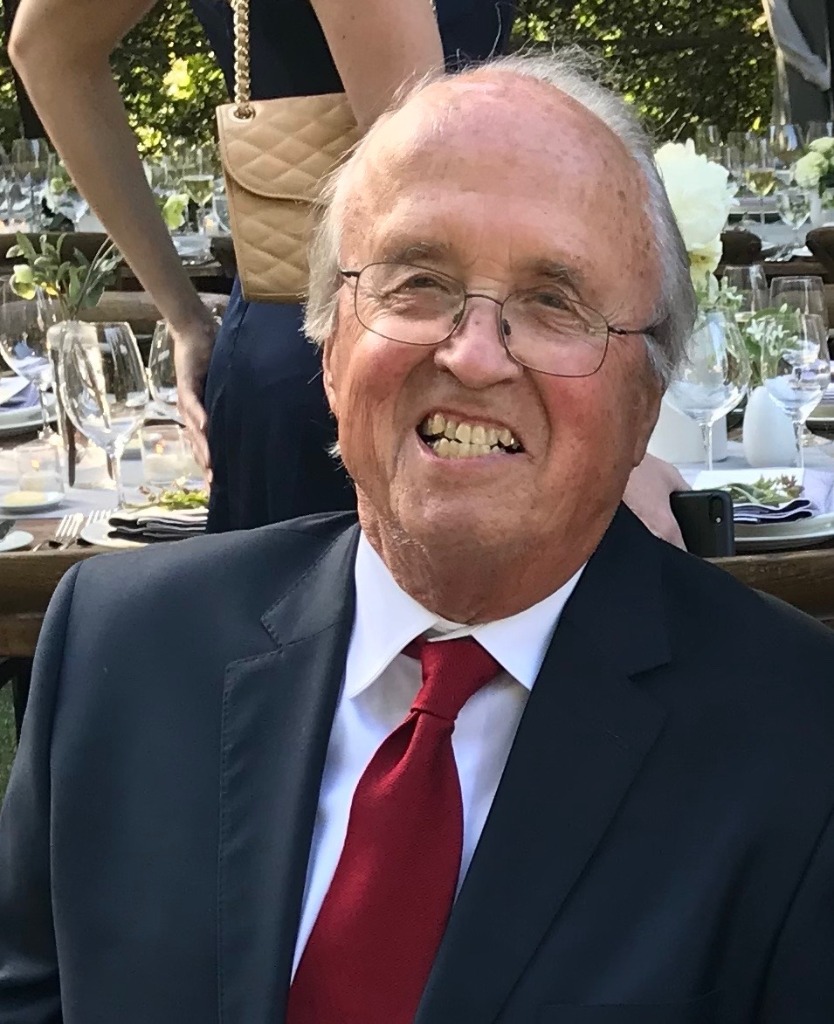
Donald Eugene Anderson
May 31, 1933 – November 24, 2019
Resident of Lafayette
Donald Eugene Anderson passed away after a brief illness on November 24, 2019. Born May 31, 1933 in Oakland, California to Thomas Shober and Lillian Anderson (née Diamond), he loved music, travel, and family. Don graduated from Oakland High School and then attended U.C. Berkeley, where he joined the Kappa Alpha fraternity. He later received his J.D. from Hastings College of the Law in San Francisco.
Don was a business litigator for over 50 years in San Francisco and Walnut Creek. Early in his career, before Public Defenders existed, Don represented inmates at Alcatraz as court appointed counsel. Ultimately Don’s litigation practice involved representation of high-profile real estate, construction, and transportation companies.
As important as his law practice was to him, his family came first. Don and his first wife Marian Anderson (née Meadowcroft) raised three children, Tom, Allan and Carol in the Orinda-Moraga area. Don made sure the kids could say “Go Bears” at an early age, and they each carried on the family tradition of attending Cal.
With Don’s second marriage to Helen in 1988, he found his best friend and soul mate. Together they travelled the world, planned epic birthday celebrations, soaked in the sun by the pool and in Cabo, and enjoyed each other’s company whether having a quiet dinner at home or over long lunches in Napa and San Francisco.
Outside of work and family, Don was committed to community service. He was engaged in politics throughout his adult life and was appointed to several administrative posts. He started by serving on various local boards in Orinda and Moraga in the late 60s and early 70s. He then moved to regional boards, serving on the Contra Costa County Planning Commission from 1974 to 1986, and the Bay Area Regional Water Quality Control Board, to which he was appointed by Governor Deukmejian in 1983. His dedication to community service continued into the 2000s, with his appointment as the public member of the RAN (Regional Access Network) Board. Don was also the chair of the Contra Costa County Republican Party from 1981 to 1984.
He was equally active with the First Presbyterian Church of Oakland, the church where his parents met in the 1920s. Over his lifetime, he served as an elder and held roles critical to continued operations of the church as the community evolved around it. Don was also a member of the Lafayette Rotary and the Oakwood Athletic Club, where he swam with the master’s program past his 85th birthday.
Above all else, Don enjoyed connecting with friends, a good laugh, and any occasion that brought family together. He relished spending time with his wife, children, and grandchildren and could be counted on to be the first on the dance floor and to burn the midnight oil telling stories. He rests more peacefully knowing Cal beat Stanford for the first time in ten years at the Big Game in 2019.
Don is survived by his wife Helen, his children Tom (Sandy), Allan (Nancy) and Carol (Drew), their mother Marian, his brother Ralph (Joanne), his step-daughter Jaclyn, his 7 grandchildren (Emily, Philip, Henry, Isaac, Kelsi, Shelby and Samantha), his nieces and nephews, many dear friends, and his devoted dog Rusty.
A memorial service will be held on January 18, 2020, at 2:00 p.m. at the First Presbyterian Church of Oakland, located at 2619 Broadway, Oakland, CA 94612. In lieu of flowers, the family requests donations be sent to the First Presbyterian Church of Oakland, care of Food Ministry.
Read More
Photo: CCC Sheriff
By Jimmy Lee, Director of Public Affairs, Contra Costa County Office of the Sheriff
On Thursday, January 2, 2020, at about 11:16 PM, the Contra Costa County Office of the Sheriff was advised about a stolen vehicle on Highway 24. The vehicle was stolen out of Alameda County.
A Lafayette Police Officer located the stolen vehicle on westbound 24 at the Wilder exit and followed it. Sheriff’s Office STARR 1 helicopter provided aerial support for the officer.
In the area of Marina Boulevard and Highway 880 in San Leandro, the officer, assisted by other agencies, attempted to conduct a traffic enforcement stop. The suspect did not yield and drove away at a high rate of speed. The officers terminated the pursuit, while STARR 1 stayed overhead monitoring the vehicle’s location. 

CHP helicopter. Photo: Wikimedia
The suspect drove to the Bay Fair BART station where he abandoned the vehicle and fled on foot along the tracks. STARR 1 and a CHP helicopter located the suspect who was trying to hide from officers. The suspect was later arrested after surrendering.
The suspect is identified as 20-year-old Joseph Willis. He was booked into the Martinez Detention Facility on charges that include felony evading, obstruction, vehicle theft, possession of stolen property, and multiple weapons violations including felon in possession of a firearm, carrying a stolen firearm and having large capacity magazines. Willis also had three outstanding out of county arrest warrants. Willis, who was also booked for a probation viola-tion, is being held without bail.
Anyone with any information on this case is asked to contact the Investigation Division at (925) 313-2600. For any tips, email: tips@so.cccounty.us or call (866) 846-3592 to leave an anonymous voice message.
Read More As of January 1st, 2020, Contra Costa Animal Services (CCAS) will be implementing a new fee structure, updating exiting fees to reflect the actual costs of services provided by the Department and to comply with new state laws. Approved by the Contra Costa County Board of Supervisors on November 19, the new fee structure amends the Department’s current fees – adjusting certain fees and creating new fees – and changes the licensing options available to County residents to better reflect the licensing needs of pet owners in Contra Costa County.
Highlights of changes incorporated in the Department’s new fee structure include:
- Shifting from a line item adoption fee structure to a flat-rate adoption fee structure, based on breed, age and sex of the animal.
- Allowing seniors (65 years or older), veterans and current service members to license their first pet for free, and each additional pet for a 50% reduced license fee.
- Increasing the cost, and decreasing the penalty, for pet licensing.
- Amending the options for pet licensing from three options (1-year, 2-year & 3-year licenses) to two (3-12 months & 12-36 months licenses).
“At its core, this updated fee structure represents a commitment to our community,” said Beth Ward, Director of Contra Costa Animal Services. “While the update will certainly bring our fees into balance with the true costs we incur, we are most excited about the benefits our patrons will enjoy, including lower overall adoption costs and allowing veterans and elders in our community to license their pets for free or at a reduced rate.”
To view the entire updated 2020 fee structure, click here. To view the existing 2019 fee structure, click here.
For more information, contact Contra Costa County Animal Services’ Media and Community Relations Manager Steve Burdo at 925-393-6836, or by email at steve.burdo@asd.cccounty.us.
Contra Costa Animal Services (CCAS) is the largest animal welfare organization in Contra Costa County. CCAS operates two shelters, in Martinez and Pinole, where we provide high-quality animal care services, shelter homeless, abandoned and lost animals, place animals in safe, caring homes, and provide education and services to enhance the lives of people and their animal companions. Additionally, our Field Services Division plays a crucial role in protecting the health and safety of all people and animals in our community through enforcement of state and laws, protecting the public from animal injury and working to prevent animal cruelty, abuse and neglect.
Read More Presented by the Diablo Regional Arts Association
January 16, 2020 / 7:30PM – 9:00PM (no intermission)
Tickets available at: https://lesherartscenter.showare.com/lettersto87
Celebrate the Legacy of the 49ers with Letters to 87 live!
Football fans will always remember “The Catch” as the moment a dynasty was born. When Dwight Clark caught the touchdown pass that sent the 49ers to their first Super Bowl in 1982, an indelible moment was etched into the history of the NFL. Later, as Clark battled ALS, he and sportswriter Matt Maiocco put out a call to friends and fans, asking them to share their memories of this moment. The letters that Clark and Maiocco received tell the story of how the man who wore number 87 brought together a city and a franchise through his sincerity, his loyalty, and his spirit for life and the game.
Join us for a special star-studded evening at the Lesher Center for the Arts presented by the Diablo Regional Arts Association where we will look back on the legacy of “The Catch” and the 49ers in the Bay Area featuring Hall of Famer Steve Young and 49ers greats Brent Jones, Eric Wright and Dwight Hicks in a panel moderated by NBC Sports’ Matt Maiocco. Your ticket includes a copy of the commemorative coffee table book, Letters to 87, featuring essays by Edward J. DeBartolo Jr., Ronnie Lott, Joe Montana, Brian Murphy, and Kelly Clark along with rare photos from Michael Zagaris, Brad Mangin, and John Storey.
Regular admission tickets to the event are $50 with proceeds going to the Golden Heart Fund, a charity that was near and dear to Dwight Clark. The Golden Heart Fund provides emotional, financial, and physical support to former 49ers players in dire need of assistance. A special VIP reception is also available for $187 and includes a ticket to the show, a book, and admission to the VIP reception featuring all panel participants plus some surprise special guests. Space is limited to the VIP reception.
The perfect gift for any football fan!
Read More










Ruth Virginia Ferrell turns 100 on Jan. 12, 2020.
Ruth Virginia Ferrell will be celebrating her 100th birthday with family, this Saturday.
Born January 12, 1920 in Memphis, Tennessee, she came to California in 1948, and lives with her grandson and family in Concord.
Ruth is blessed with three children, several grandchildren, great grandchildren, and great-great grandchildren.
She’s doing very well and is very spry for her age.
Read MorePart of automatic record clearance partnership
By Scott Alonso, Public Information Officer, Contra Costa District Attorney
Contra Costa County District Attorney Diana Becton and Code for America today announced that 3,264 marijuana convictions eligible for relief under Proposition 64 will be dismissed and sealed as part of their cutting-edge partnership.
“I am grateful the partnership with Code for America has given us the ability to deliver tangible results for members of our community by dismissing old marijuana convictions allowed under the law. Far too often old criminal convictions for minor drug offenses can leave a lasting mark on an individual’s life. The removal of these convictions effectively reduces barriers to licensing, education, housing and employment. It is imperative that we continue to be innovative in our approach to reforming and strengthening the criminal justice system,” said Diana Becton, District Attorney for Contra Costa County.
“At Code for America, we believe government can work dramatically better than it does today; the criminal justice system is one of the areas in which we are most failing the American people. We must make sure that California lives up to the obligation of Proposition 64 and now AB 1793,” said Jennifer Pahlka, Founder and Executive Director, Code for America. “I’d like to thank Contra Costa District Attorney Becton for her leadership on this issue. Through our partnership, we will remove barriers to employment, housing, health and education for thousands of Californians. By reimagining existing government systems through technology and user-centered design, we can rethink incarceration, reduce recidivism and restore opportunity.”
The Contra Costa District Attorney’s office used Code for America’s Clear My Record technology, which reads bulk criminal history data from the California Department of Justice, and securely and accurately analyzes eligibility for record remediation under state law. This technology can analyze eligibility for thousands of convictions in just a few minutes, alleviating the need for DA staff to go through state criminal records one by one to evaluate eligibility, a time and labor-intensive process.
This partnership helps address wrongs caused by the failed war on drugs, felt most strongly by communities of color. Approximately 2,400 individuals will receive conviction relief through this partnership. Of those, approximately 36% are Black or African American, 45% are White, 15% are Latinx, 2% are Asian/Pacific Islander, and 2% are other or unknown.
Contra Costa is the fifth California District Attorney’s Office to announce a pilot partnership with Code for America and use Clear My Record Technology to clear marijuana-related convictions eligible under Proposition 64. The other counties include San Francisco, Sacramento, San Joaquin and Los Angeles. In total, these five pilots will help reduce or dismiss approximately 75,000 Proposition 64 eligible convictions.
Earlier this year, Code for America also launched its new Clear My Record Application and Implementation Blueprint, available at no cost and open source to all California counties. These resources allow all District Attorneys’ offices to follow the lead of DA Becton and expedite and streamline review of Prop 64 convictions.
Record Clearance for the Digital Age
Record clearance was not built for the digital age. Previously, each person seeking relief had to petition the court on their own to clear their records, but this is a time-consuming, expensive, and confusing process. Because of these barriers, the vast majority of those eligible for relief have not received it.
With the aid of Code for America’s Clear My Record technology, a DA’s office can automatically and securely evaluate eligibility for record clearance for thousands of convictions in just a few minutes.
This requires no action on the part of the individual, and minimal staff time and resources from the DA’s office — two obstacles for record clearance. Streamlining conviction data processing will also make it easier for courts to update records, ensuring that individuals can obtain relief as soon as possible.
These partnerships set the standard for the statewide implementation of Assembly Bill 1793, which tasks prosecutors with affirmatively reviewing convictions eligible for dismissal or reduction under Proposition 64. This novel approach also creates a blueprint for the future of record clearance for remedies beyond Proposition 64 — the development of policy and technology that expands, streamlines and automates the record clearance process at scale.
Code for America has been making it easier for people to remove eligible convictions from their records through Clear my Record technology since 2016.
About Code for America
Code for America believes government must work for the people, and by the people, in the digital age, starting with the people who need it most. We build digital services that enhance government capabilities, and we help others do the same across all levels of government. We organize thousands of volunteers across nearly 80 chapters nationwide who improve government in their local communities. Our goal: a 21st century government that effectively and equitably serves all Americans. Learn more at codeforamerica.org.
Read MoreSuspect Kyle Ann Wood. Photo by CCCSheriff.
By Jimmy Lee, Director of Public Affairs, Contra Costa County Office of the Sheriff
On Wednesday, January 8, 2020, at about 6:30 PM, Detectives from the Contra Costa County Office of the Sheriff arrested 54-year-old Kyle Ann Wood at her home in Pleasant Hill.
The Lafayette Police Department, assisted by the Sheriff’s Office Investigation Division, recently began an investigation into Wood after receiving reports of alleged inappropriate and unlawful relationships between Wood and two minors. The crimes occurred between 1996-1998. The victims were students at Acalanes High School where Wood was a teacher.
Wood is currently a teacher at Miramonte High School in Orinda.
The Contra Costa District Attorney’s Office filed felony sex charges against Wood. She was booked into the Martinez Detention Facility and is being held in lieu of $150,000 bail.
The investigation is ongoing. The Lafayette Police Department is asking anyone with additional information regarding this case to contact detectives at (925) 283-3680 or (925) 299-3234 or email Sergeant T. Rossberg at tross@so.cccounty.us.
Read More
Home Games played at Antioch Community Center in Prewett Park, 4703 Lone Tree Way, Antioch. Tickets at: www.brownpapertickets.com/cccds/3689712 Learn more at www.cccdeltastars.com.
Read MoreContra Costa County Administrator David Twa, who will retire at the end of 2020, administered the oath of office to new Supervisors Chair Candace Andersen of Danville and Vice Chair Diane Burgis of Brentwood at the Board meeting on Tuesday, Jan. 7, 2020. Photo by Daniel Borusk.
Martinez, CA – The Contra Costa County Board of Supervisors held a swearing-in ceremony for Supervisor Candace Andersen as Board Chair and Supervisor Diane Burgis as Vice Chair at its January 7th, 2020 Board meeting.
District 2 Supervisor Candace Andersen who has served Contra Costa County since she was first elected in 2012, including a previous term as Board Chair in 2016, takes the leadership role from outgoing Chair, Supervisor John Gioia of District 1.
Gioia of Richmond, who was presented with a prized Hawaiian Koa wood gavel from incoming Andersen as a gift, credited the “great work of county employees” in 2019 for salvaging a year marked by power outages and catastrophic fires.
Andersen expressed her thanks to Gioia, as well as her readiness to tackle the County’s issues.
“I appreciate Supervisor Gioia’s leadership in maintaining our County’s strong fiscal position and ensuring that many who need County services receive them in a timely manner. As Chair, I intend to work with my colleagues to strengthen the County’s commitment to supporting our law enforcement to keep our communities safe, expand our work addressing homelessness and the need for more housing, and do even more to help individuals, families and communities confronting mental health issues,” she said.
Andersen, who has served as a supervisor since 2012 and previously chaired the board in 2016, said there will plenty of business items the supervisors will address in 2020. Among the issues she listed were updating the county tree and Airbnb ordinances, considering a $20 million housing grant, and the grand openings of the new county and new sheriff’s office administration buildings.
Burgis, who has served on the County’s Board of Supervisors since 2017, representing the largest geographic region of the five districts, said she will work on the 2020 census, the Delta, and public safety and fire safety issues during the year.
Andersen is completing her second term, facing no opposition in her re-election bid, while Burgis is completing her first, facing one opponent in the March Primary election. They will lead the five-member elected body that sets the direction of county government and oversees its $4.43 billion budget to serve this large and diverse East Bay County.
For more information about Contra Costa County and its Board of Supervisors, visit the County’s website at www.contracosta.ca.gov or the webpage: https://www.contracosta.ca.gov/193/Board-of-Supervisors.
Daniel Borsuk contributed to this report.
Read More
Donald Eugene Anderson
May 31, 1933 – November 24, 2019
Resident of Lafayette
Donald Eugene Anderson passed away after a brief illness on November 24, 2019. Born May 31, 1933 in Oakland, California to Thomas Shober and Lillian Anderson (née Diamond), he loved music, travel, and family. Don graduated from Oakland High School and then attended U.C. Berkeley, where he joined the Kappa Alpha fraternity. He later received his J.D. from Hastings College of the Law in San Francisco.
Don was a business litigator for over 50 years in San Francisco and Walnut Creek. Early in his career, before Public Defenders existed, Don represented inmates at Alcatraz as court appointed counsel. Ultimately Don’s litigation practice involved representation of high-profile real estate, construction, and transportation companies.
As important as his law practice was to him, his family came first. Don and his first wife Marian Anderson (née Meadowcroft) raised three children, Tom, Allan and Carol in the Orinda-Moraga area. Don made sure the kids could say “Go Bears” at an early age, and they each carried on the family tradition of attending Cal.
With Don’s second marriage to Helen in 1988, he found his best friend and soul mate. Together they travelled the world, planned epic birthday celebrations, soaked in the sun by the pool and in Cabo, and enjoyed each other’s company whether having a quiet dinner at home or over long lunches in Napa and San Francisco.
Outside of work and family, Don was committed to community service. He was engaged in politics throughout his adult life and was appointed to several administrative posts. He started by serving on various local boards in Orinda and Moraga in the late 60s and early 70s. He then moved to regional boards, serving on the Contra Costa County Planning Commission from 1974 to 1986, and the Bay Area Regional Water Quality Control Board, to which he was appointed by Governor Deukmejian in 1983. His dedication to community service continued into the 2000s, with his appointment as the public member of the RAN (Regional Access Network) Board. Don was also the chair of the Contra Costa County Republican Party from 1981 to 1984.
He was equally active with the First Presbyterian Church of Oakland, the church where his parents met in the 1920s. Over his lifetime, he served as an elder and held roles critical to continued operations of the church as the community evolved around it. Don was also a member of the Lafayette Rotary and the Oakwood Athletic Club, where he swam with the master’s program past his 85th birthday.
Above all else, Don enjoyed connecting with friends, a good laugh, and any occasion that brought family together. He relished spending time with his wife, children, and grandchildren and could be counted on to be the first on the dance floor and to burn the midnight oil telling stories. He rests more peacefully knowing Cal beat Stanford for the first time in ten years at the Big Game in 2019.
Don is survived by his wife Helen, his children Tom (Sandy), Allan (Nancy) and Carol (Drew), their mother Marian, his brother Ralph (Joanne), his step-daughter Jaclyn, his 7 grandchildren (Emily, Philip, Henry, Isaac, Kelsi, Shelby and Samantha), his nieces and nephews, many dear friends, and his devoted dog Rusty.
A memorial service will be held on January 18, 2020, at 2:00 p.m. at the First Presbyterian Church of Oakland, located at 2619 Broadway, Oakland, CA 94612. In lieu of flowers, the family requests donations be sent to the First Presbyterian Church of Oakland, care of Food Ministry.
Read MorePhoto: CCC Sheriff
By Jimmy Lee, Director of Public Affairs, Contra Costa County Office of the Sheriff
On Thursday, January 2, 2020, at about 11:16 PM, the Contra Costa County Office of the Sheriff was advised about a stolen vehicle on Highway 24. The vehicle was stolen out of Alameda County.
A Lafayette Police Officer located the stolen vehicle on westbound 24 at the Wilder exit and followed it. Sheriff’s Office STARR 1 helicopter provided aerial support for the officer.
In the area of Marina Boulevard and Highway 880 in San Leandro, the officer, assisted by other agencies, attempted to conduct a traffic enforcement stop. The suspect did not yield and drove away at a high rate of speed. The officers terminated the pursuit, while STARR 1 stayed overhead monitoring the vehicle’s location.
CHP helicopter. Photo: Wikimedia
The suspect drove to the Bay Fair BART station where he abandoned the vehicle and fled on foot along the tracks. STARR 1 and a CHP helicopter located the suspect who was trying to hide from officers. The suspect was later arrested after surrendering.
The suspect is identified as 20-year-old Joseph Willis. He was booked into the Martinez Detention Facility on charges that include felony evading, obstruction, vehicle theft, possession of stolen property, and multiple weapons violations including felon in possession of a firearm, carrying a stolen firearm and having large capacity magazines. Willis also had three outstanding out of county arrest warrants. Willis, who was also booked for a probation viola-tion, is being held without bail.
Anyone with any information on this case is asked to contact the Investigation Division at (925) 313-2600. For any tips, email: tips@so.cccounty.us or call (866) 846-3592 to leave an anonymous voice message.
Read MoreAs of January 1st, 2020, Contra Costa Animal Services (CCAS) will be implementing a new fee structure, updating exiting fees to reflect the actual costs of services provided by the Department and to comply with new state laws. Approved by the Contra Costa County Board of Supervisors on November 19, the new fee structure amends the Department’s current fees – adjusting certain fees and creating new fees – and changes the licensing options available to County residents to better reflect the licensing needs of pet owners in Contra Costa County.
Highlights of changes incorporated in the Department’s new fee structure include:
- Shifting from a line item adoption fee structure to a flat-rate adoption fee structure, based on breed, age and sex of the animal.
- Allowing seniors (65 years or older), veterans and current service members to license their first pet for free, and each additional pet for a 50% reduced license fee.
- Increasing the cost, and decreasing the penalty, for pet licensing.
- Amending the options for pet licensing from three options (1-year, 2-year & 3-year licenses) to two (3-12 months & 12-36 months licenses).
“At its core, this updated fee structure represents a commitment to our community,” said Beth Ward, Director of Contra Costa Animal Services. “While the update will certainly bring our fees into balance with the true costs we incur, we are most excited about the benefits our patrons will enjoy, including lower overall adoption costs and allowing veterans and elders in our community to license their pets for free or at a reduced rate.”
To view the entire updated 2020 fee structure, click here. To view the existing 2019 fee structure, click here.
For more information, contact Contra Costa County Animal Services’ Media and Community Relations Manager Steve Burdo at 925-393-6836, or by email at steve.burdo@asd.cccounty.us.
Contra Costa Animal Services (CCAS) is the largest animal welfare organization in Contra Costa County. CCAS operates two shelters, in Martinez and Pinole, where we provide high-quality animal care services, shelter homeless, abandoned and lost animals, place animals in safe, caring homes, and provide education and services to enhance the lives of people and their animal companions. Additionally, our Field Services Division plays a crucial role in protecting the health and safety of all people and animals in our community through enforcement of state and laws, protecting the public from animal injury and working to prevent animal cruelty, abuse and neglect.
Read MorePresented by the Diablo Regional Arts Association
January 16, 2020 / 7:30PM – 9:00PM (no intermission)
Tickets available at: https://lesherartscenter.showare.com/lettersto87
Celebrate the Legacy of the 49ers with Letters to 87 live!
Football fans will always remember “The Catch” as the moment a dynasty was born. When Dwight Clark caught the touchdown pass that sent the 49ers to their first Super Bowl in 1982, an indelible moment was etched into the history of the NFL. Later, as Clark battled ALS, he and sportswriter Matt Maiocco put out a call to friends and fans, asking them to share their memories of this moment. The letters that Clark and Maiocco received tell the story of how the man who wore number 87 brought together a city and a franchise through his sincerity, his loyalty, and his spirit for life and the game.
Join us for a special star-studded evening at the Lesher Center for the Arts presented by the Diablo Regional Arts Association where we will look back on the legacy of “The Catch” and the 49ers in the Bay Area featuring Hall of Famer Steve Young and 49ers greats Brent Jones, Eric Wright and Dwight Hicks in a panel moderated by NBC Sports’ Matt Maiocco. Your ticket includes a copy of the commemorative coffee table book, Letters to 87, featuring essays by Edward J. DeBartolo Jr., Ronnie Lott, Joe Montana, Brian Murphy, and Kelly Clark along with rare photos from Michael Zagaris, Brad Mangin, and John Storey.
Regular admission tickets to the event are $50 with proceeds going to the Golden Heart Fund, a charity that was near and dear to Dwight Clark. The Golden Heart Fund provides emotional, financial, and physical support to former 49ers players in dire need of assistance. A special VIP reception is also available for $187 and includes a ticket to the show, a book, and admission to the VIP reception featuring all panel participants plus some surprise special guests. Space is limited to the VIP reception.
The perfect gift for any football fan!
Read More