







Contra Costa County District Attorney Diana Becton (center) with the Juvenile Justice Coordinating Council. Photo by CCC.
The Contra Costa County Board of Supervisors is seeking applicants who may be interested in serving on its 19-member Juvenile Justice Coordinating Council (JJCC).
The JJCC is a multi-agency advisory body charged with creating and maintaining the County’s comprehensive Juvenile Probation Consolidated Annual Plan and coordinating county-based juvenile delinquency prevention initiatives. The state-mandated Juvenile Probation Consolidated Annual Plan is designed to improve services for Contra Costa County’s juvenile justice population by assessing existing practices and resources, identifying system needs and gaps, and prioritizing and recommending solutions.
The Juvenile Justice Coordinating Council is composed of the following 19 members:
Nine (9) ex-officio voting members:
1. Chief Probation Officer, as Chair
2. District Attorney’s Office representative
3. Public Defender’s Office representative
4. Sheriff’s Office representative
5. Board of Supervisors’ representative
6. Employment and Human Services Department representative
7. Alcohol and Other Drugs Division representative
8. Behavioral Health Division representative
9. Public Health Division representative
Ten (10) additional voting members selected and appointed by the Board of Supervisors:
10. City Police Department representative
11. County Office of Education representative
12–15. Four (4) At-Large Members, residing or working within Contra Costa County;
16–17. Two (2) Community-Based Organization representatives;
18–19. Two (2) At-Large Youth, age 14 to 21 years old, residing or working in Contra Costa County
The Board is now seeking applications for two (2) of the seats identified above:
–Two (2) Community-Based Organization representatives
The Board is now seeking applications for two (2) of the seats identified above:
–Two (2) Community-Based Organization representatives
This recruitment effort is for mid-term appointments to JJCC seats #16 and #17. The Board of Supervisors is looking to appoint individuals to these seats to complete the remainder of their two-year term that is set to expire on June 30, 2021.
The JJCC is expected to meet on a regular basis, at intervals to be established by the JJCC. Members will serve without compensation, stipends, or reimbursement of expenses. The community-based organization representatives should reflect the geographic, ethnic, and racial diversity of the County and should include those providing restorative justice, faith-based, or mentoring services, to justice-involved, homeless, or foster-care involved youth.
Applicants will be interviewed by the Board of Supervisors’ Public Protection Committee: Supervisors Candace Andersen, District II, and Federal Glover, District V. The nominations for the Juvenile Justice Coordinating Council will then be forwarded to the full Board of Supervisors for action.
Below is a timeline of the recruitment process for the two vacancies:
- September 18, 2020: Final Day of the Application Period, due by 5:00 p.m.
- September 28, 2020: Public Protection Committee Meeting Interviews
- October 6, 2020: Board of Supervisors’ Consideration of Nominees
Application forms can be obtained from the Clerk of the Board of Supervisors by calling (925) 335-1900 or by visiting the County’s webpage at http://www.contracosta.ca.gov/3418/. Completed applications should be emailed to ClerkoftheBoard@cob.cccounty.us. Applications can also be mailed to the Clerk of the Board of Supervisors, Room 106, County Administration Building, 651 Pine Street, Martinez, CA 94553.
Read More

Will offer music, videos and giveaways
The Census 2020 Caravan will make stops in Pittsburg and Antioch this Sunday to help residents complete the census questionnaire to be counted and will offer music, videos and giveaways.
The decennial census determines how many Members of Congress in the U.S. House of Representatives each state is allocated, which will occur during reapportionment next year, and determines the redrawing of all other elected office district lines, as well. In addition, the population figures from the Census determines the allocation of government funds for various programs. All of them are affected for the following 10 years.
If you’re unable to attend one of the events you can complete the survey online at U.S. Census Bureau.
Date: Sunday, August 9th, 12 p.m. to 2 p.m.
Meet at: 11 a.m. at Antioch Water Park, 4701 Lone Tree Way, Antioch
12 p.m. at Pittsburg Century Plaza Shopping Center, 4405 Somersville Road & Highway 4, Pittsburg
Officials available on site: Congressman Mark DeSaulnier, Contra Costa County Supervisors Diane Burgis and Federal D. Glover, Pittsburg Mayor Jelani Killings, Pittsburg City Council Members Holland Barrett White and Shanelle Scales-Preston, Antioch Mayor Pro Tem Joy Motts, Antioch City Council Member Lori Ogorchock, Antioch School Board Trustee Mary Rocha
Activities: Festively decorated cars, driving through hard-to-count communities to promote a complete count. The CA Census 2020 mobile truck will be on hand with music, videos and giveaways.
More information: Matthew Lardner, Matthew.Lardner@cao.cccounty.us Mona Zarrinkelk monaz@kaanunmehr.org, Velma Wilson blessedbydesgn09@gmail.com
Sponsors and partners: Contra Costa County Complete Count Committee, City of Pittsburg, City of Antioch, Kaanur Mehr, EAH Housing

Supervisors Gioia, Glover support her efforts
By Scott Alonso, Public Information Officer, Office of the District Attorney, Contra Costa County
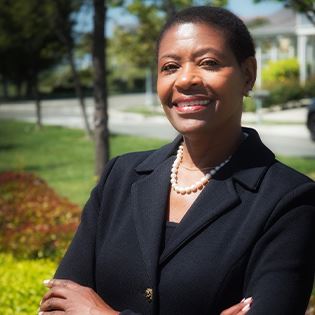
Contra Costa District Attorney Diana Becton. From CCC website.
On Tuesday, Contra Costa County District Attorney Diana Becton issued the following statement regarding the status of Contra Costa County’s Juvenile Hall and the Orin Allen Youth Rehabilitation Facility.
“These are historic times and we have an opportunity and a responsibility to re-imagine our justice system so that our youth have a greater chance to lead successful and enriching lives.
I am forming a Reimagine Youth Justice Task Force, which will include county departmental and community representatives, that will study and make recommendations on the most effective ways to invest in our justice involved youth through restorative, community-based solutions, with an initial focus on developing an effective process for closing Juvenile Hall.
Youth crime has been on a steady decline over the last twenty years, reinforcing the conclusion that moving away from youth incarceration is in the best interest of rehabilitation, public safety, and fiscal responsibility. Research has shown that youth can be better treated and rehabilitated in community contexts where they can retain ties to family, school, and their community. Programming and services which are based in the home or in the community are more successful at holding youth accountable and positively changing behavior than institutional settings.
Despite the steep decline in youth crime and consequent reduction in numbers of incarcerated youth, the money invested into the operation of youth prisons has not been reduced accordingly. Data shows that the average cost per incarcerated child in Contra Costa Juvenile Hall skyrocketing to over $473,000 per year.
The Reimagine Youth Justice Task Force will make explicit recommendations for financial investments in community-based services for youth instead of investing in youth prisons which have proven to result in worse outcomes for our children and families. Such an approach will allow for critical re-investments in basic needs such as housing, mental health services, and workforce development as well as support the creation of alternatives to incarcerating children in locked facilities.
In the meantime, we should pause and not take any actions to close the Orin Allen Youth Rehabilitation Facility until the Task Force has made its recommendations to the Contra Costa County Board of Supervisors.
This transition is urgent. The Task Force should finish its efforts by the end of this year and make evidence-based recommendations for the process to close Juvenile Hall to the Board of Supervisors in January 2021. The Task Force will present a proposed timeline and transition process for closing Juvenile Hall and will identify alternative investments for our public dollars into community-based services and programming for youth. Implementing these recommendations will create a safer community and help youth get on the right track in their lives.”
“I support District Attorney Becton’s efforts to reimagine youth justice in our County,” said District 1 Supervisor John Gioia. “We need to move away from institutionalization of young people and instead invest in community based restorative justice solutions which make us safer and are more fiscally responsible.”
“I applaud District Attorney Diana Becton’s effort to examine restorative justice alternatives to simply incarcerating our county’s youth,” District 5 Supervisor Federal Glover said. “The factors that lead young people to run afoul of the law are as varied as the youth themselves. In many cases a service-oriented approach will achieve much more in rehabilitating and helping them to become productive members of our community.”
Read More
By Scott Alonso, Public Information Officer, Office of the District Attorney, Contra Costa County
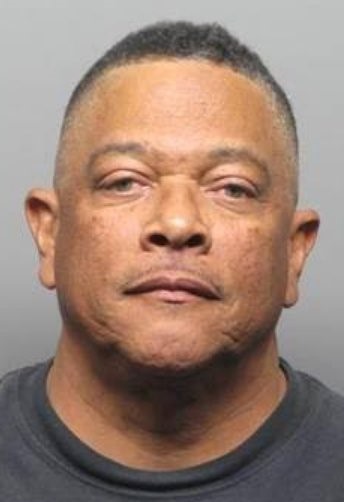
Paul Fielder.
On Wednesday July 29, 2020, Paul Fielder, a 60-year-old resident of Suisun City, California pleaded guilty to charges he sexually abused a minor under the age of 14. As a result of his guilty plea, Fielder was sentenced to 15 years in state prison and lifetime sex offender registration. Fielder was taken into custody on July 11, 2019 and has remained in custody since his arrest. The case was prosecuted by Deputy District Attorney Bryan Tierney. (See related article)
The charges are a result of an investigation by the Walnut Creek Police Department, in conjunction with the Silicon Valley Internet Crimes Against Children Task Force and Homeland Security Investigations. On July 11, 2019, Fielder was arrested by Walnut Creek Police Detectives and Federal Agents when he arrived at a location to meet a minor to engage in sex. The investigation revealed Fielder had been sexually abusing a minor for several years. A search warrant was also served at his residence in Suisun City in Solano County.
Investigators learned Fielder had previously coached youth sports in Solano County and worked for at least one high school as a campus supervisor.
The investigation was conducted by a multi-agency Internet Crimes Against Children Task Force, which is managed by the San Jose Police Department. In Contra Costa County, detectives and investigators from the Walnut Creek, Pleasant Hill, Martinez, San Ramon, Concord and Moraga Police Departments, the Contra Costa County Sheriff’s Office, United States Secret Service, Homeland Security Investigations, the Contra Costa County Probation Department, and inspectors from the Contra Costa County District Attorney’s Office participate in the task force.
Parents are encouraged to discuss online safety with their children, and can visit the website www.kidsmartz.org or our website for further information.
Case information: People v. Paul Ruben Fielder, Docket Number 05-192507-2
Read MoreHouse-passed legislation includes McNerney-sponsored provisions
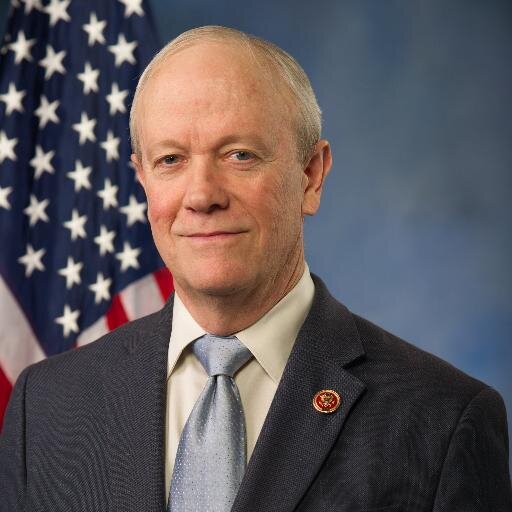
Rep. Jerry McNerney
Stockton, CA – Included in the $1.3 trillion spending package recently passed by the House of Representatives are a number of key provisions championed by Congressman Jerry McNerney (CA-09) to tackle the climate crisis in addition to addressing the stability and modernization of America’s energy and water systems.
Among the funding secured by the Congressman are several national projects, including:
- funding for the Department of Energy (DOE) to bolster their work to combat the climate crisis, including through robust investments in grid modernization and security;
- funding for continued cloud aerosol research through the DOE, which will provide useful information for our carbon reduction plans, and for continued research through the National Oceanic and Atmospheric Administration (NOAA) to study atmospheric climate intervention modeling and technologies;
- and funding to strengthen our water infrastructure and for authorized flood and storm damage reduction, navigation, and environmental restoration projects.
Congressman McNerney also secured increased funding for operation and maintenance of the Port of Stockton to help the port ensure that its shipping channel – which is also the largest flood conveyance channel to the Delta – continues to be operational for navigation purposes.
“Climate change is accelerating and poses a growing threat to our country and the world,” said Congressman McNerney. “That is why I secured funding in this bill to ensure that federal agencies work to prepare for the climate crisis, including through research into carbon reduction and water sustainability, and to address regional issues facing our community such as flooding and annual maintenance dredging at the Port of Stockton.”
Additionally, the legislation includes an amendment from the Congressman which would direct DOE’s Energy Information Administration (EIA) to gather more robust analysis and data collection from EIA’s commercial and residential surveys – specifically with regards to water consumption – and would make water consumption data for commercial buildings publicly available and broken out by principal building activity and region.
Rep. McNerney proudly serves the constituents of California’s 9th Congressional District that includes portions of San Joaquin, Contra Costa, and Sacramento Counties. For more information on Rep. McNerney’s work, follow him on Facebook and on Twitter @RepMcNerney.
Read More
Contra Costa Community College Board Ward 5 candidate Fernando Sandoval from his Facebook page on July 14, 2020 and Delores Huerta from DeloresHuerta.org.
By Doreen Moreno
Community leader Fernando Sandoval is honored to announce the endorsement of Dolores Huerta, American labor leader and civil rights activist who, with Cesar Chavez, co-founded the United Farm Workers Union. Dolores Huerta, Founder of the Dolores Huerta Foundation for Community Organizing, leads the endorsement list of elected officials, community leaders, small business owners, and college faculty, staff and students in supporting him for Trustee of the Contra Costa Community College District Board for Ward 5.
Huerta is one of the century’s most powerful and respected labor movement leader who has received numerous awards for her trailblazing leadership, including being inducted into the California Hall of Fame in 2013 and receiving the country’s highest civilian honor in the United States, the Presidential Medal of Freedom by President Barack Obama in 2012.
“Fernando Sandoval’s humble beginnings in the migrant camps of Isleton along the Sacramento River to his low-income childhood in East County to his career achievements as a technology and finance advisor to prestigious banking companies worldwide is a perfect example of the perseverance and contributions individuals from labor backgrounds provide our communities and this nation everyday,” said Dolores Huerta.
Huerta adds, “His personal upbringing gives him an understanding of both the barriers and benefits of how a quality education can open doors of opportunity to good paying jobs and the economic contributions to our families and the greater economy. Fernando’s experiences position him to be a bold leader with a vision and a strong voice for all students in the community college system to be prepared as the future workforce for reigniting our post pandemic economy.”
Sandoval added “I am deeply honored to have the endorsement of international labor leader Dolores Huerta who has given tirelessly of herself for over 60 years to advocate for worker’s rights and fair wages, for equality for women and LGBQT rights and for public policies that provide fair employment standards and access to quality health and education for our diverse communities and future leaders.”
In alignment with Huerta’s legacy, Sandoval has been continuously serving East County communities and the students in various roles, such as an advisory member of the Contra Costa Community College District’s committee on diversity, inclusion and equal employment opportunities. He also Chaired the Bond Oversight Committee for modernization of schools at Pittsburg Unified School District (PUSD). Fernando has also organized mentoring, tutoring and motivational workshops for students at Los Medanos College and high schools throughout the area. This year he was recognized for his service by receiving the 2020 Cesar Chavez Award for Exemplary Community Service by Los Medanos College.
Fernando Sandoval is a published author of his memoir, “From Tortilla Chips to Computer Chips” that highlights his upbringing in a hard-working immigrant family, his experience in the U.S. Navy and Vietnam War and his career as a finance and technology management strategy advisor to top banking institutions worldwide.

From www.arcgis.com.
For more information about Fernando Sandoval for Contra Costa Community College District Board of Trustees, Ward 5, contact fernando4collegetrustee@gmail.com. Sandoval is challenging two-term incumbent Greg Enholm for the second time. He ran in 2016 but lost with 39.75% of the vote to Enholm’s 59.82% . Ward 5 includes the communities or cities of Clyde, Bay Point, Pittsburg, Oakley, Bethel Island, Knightsen, most of Antioch and Discovery Bay, and portions of Brentwood and Concord.
Allen Payton contributed to this report.
Read More
By Josh Green, Media Specialist, U.S. Census Bureau
Festively decorated cars and bikes will roll through Concord August 6 to raise awareness about the safety and importance of the 2020 Census in those neighborhoods that still have many households that have not responded. The neighborhoods were selected because they have a high proportion of “hard-to-count” communities, which are populations that are historically undercounted in the census.
During the shelter-in-place months that everyone has endured, the caravans have been a fun, effective and socially distant way to remind people that they can still respond to the Census until September 30 using one of three methods: online at my2020census.gov, by phone at 844-330-2020, or using a paper questionnaire received in the mail.
In a week the biggest Census operation – called “Non-response Follow-up” (NRFU) – gets underway August 11. That’s when 500,000 census takers across the country fan out in thousands of neighborhoods to make sure every person gets counted. Households that self-respond do not get a visit from a census taker.
During the weeks leading up to NRFU the Census will focus on getting the self-response rate as high as possible in every part of the Bay Area.
The Census is reminding everyone that:
- It is not too late for families to get counted online, by phone, or by mail. Anyone can go to my2020census.gov to self-respond.
- Every person counts, no matter what their documentation status, nationality or location.
- Participating local city officials and nonprofit partners want to see their cities and counties get a complete and accurate account.
- Everyone should come out on their doorsteps with a mask to wave hello and support the 2020 Census!
Dear Editor:
 I am writing in response to the recent Op Ed by Jon Coupal and Ernest Dronenberg about Prop 15, the Schools and Communities Funding Act of 2020. Prop 15 will, in fact, preserve all the protections that the 1978 Prop 13 provided to homeowners. And Prop 15 will preserve those property tax protections for Homeowners, Renters, Agricultural properties, and Small Business owners. Prop 15 will only reassess large commercial properties, currently assessed at over $3 million. The rest of the country regularly reassesses commercial properties. I’m sure our county assessors are capable of this work as they did it for many years before 1978.
Mr. Coupal and Mr. Dronenberg did not mention that Prop 15 will close a loophole that presently allows commercial properties to change ownership without being reassessed at their purchase price. When we homeowners purchase property, we have no such avoidance loophole. This loophole has allowed commercial properties to go under-assessed for many years. When this loophole is closed and reassessments are in place, Prop 15 will bring an annual revenue of an estimated $350 million to Contra Costa County.
This is money, that before 1978, the county collected almost equally from homeowners and commercial properties to pay for schools, libraries, street maintenance, local parks, and first responders. Now homeowners pay 72% of these costs.
It is important to note Prop 15 supports small businesses by allowing them to write off 100% of business personal property purchases. Large commercial businesses get to write off $500,000. of these purchases annually.
Prop 15 is about everyone paying their fair share to benefit our communities and our schools. Passing Proposition 15 will help California recover from years of under-investment. Now is the time to reinvest in our future and pass Prop 15.
Sincerely,
Carol Murota
Lafayette, CA
Read MoreD.A. Becton proposes closing Juvenile Hall, Supes indicate backing Sheriff’s staffing request of 25 more deputies; discuss also closing Marsh Creek Detention Facility
County will apply for $69 million in state Homekey Program funds for homeless sites in Richmond and Pittsburg
By Daniel Borsuk
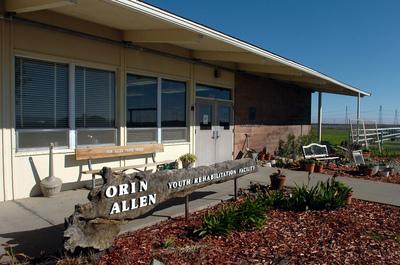
Orin Allen Youth Rehabilitation Facility. Photo from website.
The Contra Costa County Board of Supervisors voted on Tuesday against keeping open the once popular Orin Allen Rehabilitation Youth Rehabilitation Center in Byron. That signaled Sheriff David Livingston’s 2021-2022 budget request to hire 25 deputies will be approved when supervisors act on the county’s proposed $3.9 billion 2020-2021 budget on Sept. 15. The motion failed on a 2-3 vote of the board.
“Every department has taken some sort of reduction,” said County Administrator David Twa, in his presentation. “There are no additional furloughs or layoffs planned.”
In addition to closing the Orin Allen Rehabilitation Center, supervisors acted to keep closed the now shuttered Marsh Creek Detention Facility on a 4-1 vote with Chair Candace Andersen vote against the motion.
In another action, supervisors placed a half-cent sales tax proposal on the November ballot with the caveat that unless the State legislature does not pass Senate Bill 1349 in the next 17 days, the supervisors will meet at a special meeting on Friday, August 21 to pull the ballot measure from the November ballot. SB 1349 would provide the $100,000 to print the ballots for the county.
Over a wave of citizen comments opposing any increased hiring at the Sheriff’s Office, Supervisors John Gioia of Richmond and Federal Glover of Pittsburg voted to keep the 60-year old Orin Allen Rehabilitation Youth Center open for at least another year so that a newly formed Reimagine Youth Justice Task Force by Contra Costa County District Attorney Diana Becton can develop its findings. She announced the formation of the task force and her desire to close the center in a press release on Tuesday.
“We have seen a lot of success at the ranch,” said Supervisor Glover. “We should think outside of the box. Ninety-nine percent of the graduates are probably successful today.”
But newly appointed Probation Department Officer Esa Ehmen Krause recommended that Orin Allen be closed, and 15 Probation Department positions be eliminated. She also recommended that the 15 youths currently housed at the facility be transferred to juvenile hall in Martinez
Krause said the decision to close the facility in far East County is tied to a declining population, better use of the existing Tamalpais Unit in Martinez, and $10 million to bring the ranch up to code.
With the average cost per incarcerated child in Contra Costa Juvenile Hall skyrocketing to over $473,000 a year, District Attorney Beckton said in a press release, “ The Reimagine Youth Justice Task Force will make explicit recommendations for financial investment in community-based services for youth instead of investing in youth prisons which have proven to result in worse outcomes for our children and families. Such an approach will aallow for critical re-investments in basic needs such as housing, mental health services, and workforce development as well as support and creation of alternatives to incarcerating children in locked facilities.”
The formation of the Reimagine Youth Justice Task Force did not sit well with several supervisors who viewed it as political intervention on the part of the District Attorney. They felt the DA was intervening in a matter the board of supervisors should be in charge of.
DA Becton assigned her Assistant DA Venus Johnson to address the supervisors.
“I am concerned about the District Attorney’s support to close Orin Allen,” board chair Candace Andersen of Danville said.
“This is a slap in the face to probation to have this go out in a press release,” Supervisor Karen Mitchoff of Pleasant Hill said.
Throughout the 12-hour long supervisors meeting, supervisors heard from a steady stream of citizens opposed to increased funding for Sheriff Livingston’s department and heard from numerous speakers in support of keeping Orin Allen in operation.
Sheila Barnard questioned supervisors “Are you representing the best interest of our youth?”
“Do not increase funding for the sheriff,” demanded Rev. Leland Takhasi. “Look for alternatives to incarcerating our youth.”
“Because Orin Allen Ranch is an open-air environment absent of guard towers it allows the youth to change their lives, “said Walnut Creek resident Ron Brisco.
Vote 4-1 to Tentatively Place Half Cent Sales Tax Measure on November Ballot
In other action, supervisors voted 4-1 to place a half cent sales tax measure on the Nov. 3 ballot. Board Chair Andersen voted against the proposal without comment. (See related article)
The tax measure is dependent on whether the California State Legislature passes Senate Bill 1349 and Gov. Gavin Newsome signs it by August 21. If the legislation is not passed by the legislature and signed by the governor August 21, the supervisors will have to hold a special meeting on that date to withdraw the tax measure from the Nov. 3 ballot.
County Will Apply for $69 Million of State Homekey Program Funds for Homeless Sites in Richmond and Pittsburg
Supervisors also approved a resolution authorizing County Administrator Twa to apply for and accept up to $68,776,000 in Homekey Program grant funds from the California Department of Housing and Community Development to be used to buy property located at 3150 Garrity Way in Richmond and property at 2101 Loveridge Road in Pittsburg to provide supportive housing and support services to persons experience homelessness.
Pinole Animal Shelter Closed, 3 Fewer Animal Control Officers, ConFire Revenue Down
In other budget items, supervisors learned from Animal Services Director Beth Ward that the under-utilized Pinole shelter was closed as of July 20. Two full-time positions were eliminated because of the closure.
Ward also reported that the number of animals at the Martinez facility is down considerably. As of July 20, the shelter had 45 dogs and 34 cats compared to 176 dogs and 190 cats that were at the shelter on the same date in 2019.
The number of animal control officers has been cut from 13 to 10, Ward said. The length of stays for an animal has decreased 60 percent, she said.
Contra Costa County Fire Protection District Chief Louis Brouchard III said EMS Fire Transport has experienced a “significant drop in revenue since March 17, 2020” because of COVID-19.
“The fiscal year 2020-2021 recommended budget anticipated $56 million in transport revenue,” he said.
In other action, supervisors voted to authorize the County Public Works Director to execute an amendment to the sublease with the State of California Employment Development Department to extend the term through January 31, 2023 for about 6,622 square feet of office space at 4071 Port Chicago Highway, Suite 250, Concord at a monthly rate of $13,112 as requested by the Employment and Human Services Department.
Allen Payton contributed to this report.
Read More
Change affects less than 25% of Contra Costa voters; polling places will be available
By Scott Konopasek, Assistant Registrar of Voters, Contra Costa County
 For more than 560,000 vote-by-mail voters in Contra Costa County, voting will look the same as it always has. For the 160,000 voters who have not previously voted by mail, the November voting experience may be new.
To make sure these voters know they will receive a ballot in the mail and to help them successfully cast their votes, the Elections Division is reaching out with an informative direct mail piece this week. Voters who traditionally vote by mail will not receive the notification.
Voters receiving this mailing can update their signature on file by signing and returning the postage paid postcard.
According to Elections Office staff, there will also be approximately 120 polling places for those who want to vote in person. The locations have not been finalized as of yet. Even the mandatory vote-by-mail precincts will have them, which they don’t usually do.
“While very few ballots are not counted because of unmatched signatures, we want voters to update their signature we have on file, if they believe their signature has changed.” said Debi Cooper, Clerk-Recorder-Registrar. “We want to be sure every ballot can be counted.”
Because ballots are mailed to a voter’s residence address, all voters should check their registration status and address on the County’s website www.cocovote.us or on the Secretary of State’s website www.sos.ca.gov to ensure they receive their ballot. Ballots are not forwardable.
Voters who wish to follow the status of their vote can track their ballot through the process by signing up for notifications at www.wheresmyballot.sos.ca.gov.
Detailed information on the vote by mail process in Contra Costa County can be found at https://www.cocovote.us/registration-and-voting-options/how-vote-by-mail-works/.
“I voted” stickers will be included with every vote by mail ballot for this election and return postage is already paid. Voters may also return their ballots at ballot drop boxes located throughout the County.
Allen Payton contributed to this report.
Read More









Contra Costa County District Attorney Diana Becton (center) with the Juvenile Justice Coordinating Council. Photo by CCC.
The Contra Costa County Board of Supervisors is seeking applicants who may be interested in serving on its 19-member Juvenile Justice Coordinating Council (JJCC).
The JJCC is a multi-agency advisory body charged with creating and maintaining the County’s comprehensive Juvenile Probation Consolidated Annual Plan and coordinating county-based juvenile delinquency prevention initiatives. The state-mandated Juvenile Probation Consolidated Annual Plan is designed to improve services for Contra Costa County’s juvenile justice population by assessing existing practices and resources, identifying system needs and gaps, and prioritizing and recommending solutions.
The Juvenile Justice Coordinating Council is composed of the following 19 members:
Nine (9) ex-officio voting members:
1. Chief Probation Officer, as Chair
2. District Attorney’s Office representative
3. Public Defender’s Office representative
4. Sheriff’s Office representative
5. Board of Supervisors’ representative
6. Employment and Human Services Department representative
7. Alcohol and Other Drugs Division representative
8. Behavioral Health Division representative
9. Public Health Division representative
Ten (10) additional voting members selected and appointed by the Board of Supervisors:
10. City Police Department representative
11. County Office of Education representative
12–15. Four (4) At-Large Members, residing or working within Contra Costa County;
16–17. Two (2) Community-Based Organization representatives;
18–19. Two (2) At-Large Youth, age 14 to 21 years old, residing or working in Contra Costa County
The Board is now seeking applications for two (2) of the seats identified above:
–Two (2) Community-Based Organization representatives
The Board is now seeking applications for two (2) of the seats identified above:
–Two (2) Community-Based Organization representatives
This recruitment effort is for mid-term appointments to JJCC seats #16 and #17. The Board of Supervisors is looking to appoint individuals to these seats to complete the remainder of their two-year term that is set to expire on June 30, 2021.
The JJCC is expected to meet on a regular basis, at intervals to be established by the JJCC. Members will serve without compensation, stipends, or reimbursement of expenses. The community-based organization representatives should reflect the geographic, ethnic, and racial diversity of the County and should include those providing restorative justice, faith-based, or mentoring services, to justice-involved, homeless, or foster-care involved youth.
Applicants will be interviewed by the Board of Supervisors’ Public Protection Committee: Supervisors Candace Andersen, District II, and Federal Glover, District V. The nominations for the Juvenile Justice Coordinating Council will then be forwarded to the full Board of Supervisors for action.
Below is a timeline of the recruitment process for the two vacancies:
- September 18, 2020: Final Day of the Application Period, due by 5:00 p.m.
- September 28, 2020: Public Protection Committee Meeting Interviews
- October 6, 2020: Board of Supervisors’ Consideration of Nominees
Application forms can be obtained from the Clerk of the Board of Supervisors by calling (925) 335-1900 or by visiting the County’s webpage at http://www.contracosta.ca.gov/3418/. Completed applications should be emailed to ClerkoftheBoard@cob.cccounty.us. Applications can also be mailed to the Clerk of the Board of Supervisors, Room 106, County Administration Building, 651 Pine Street, Martinez, CA 94553.
Read More
Will offer music, videos and giveaways
The Census 2020 Caravan will make stops in Pittsburg and Antioch this Sunday to help residents complete the census questionnaire to be counted and will offer music, videos and giveaways.
The decennial census determines how many Members of Congress in the U.S. House of Representatives each state is allocated, which will occur during reapportionment next year, and determines the redrawing of all other elected office district lines, as well. In addition, the population figures from the Census determines the allocation of government funds for various programs. All of them are affected for the following 10 years.
If you’re unable to attend one of the events you can complete the survey online at U.S. Census Bureau.
Date: Sunday, August 9th, 12 p.m. to 2 p.m.
Meet at: 11 a.m. at Antioch Water Park, 4701 Lone Tree Way, Antioch
12 p.m. at Pittsburg Century Plaza Shopping Center, 4405 Somersville Road & Highway 4, Pittsburg
Officials available on site: Congressman Mark DeSaulnier, Contra Costa County Supervisors Diane Burgis and Federal D. Glover, Pittsburg Mayor Jelani Killings, Pittsburg City Council Members Holland Barrett White and Shanelle Scales-Preston, Antioch Mayor Pro Tem Joy Motts, Antioch City Council Member Lori Ogorchock, Antioch School Board Trustee Mary Rocha
Activities: Festively decorated cars, driving through hard-to-count communities to promote a complete count. The CA Census 2020 mobile truck will be on hand with music, videos and giveaways.
More information: Matthew Lardner, Matthew.Lardner@cao.cccounty.us Mona Zarrinkelk monaz@kaanunmehr.org, Velma Wilson blessedbydesgn09@gmail.com
Sponsors and partners: Contra Costa County Complete Count Committee, City of Pittsburg, City of Antioch, Kaanur Mehr, EAH Housing
Supervisors Gioia, Glover support her efforts
By Scott Alonso, Public Information Officer, Office of the District Attorney, Contra Costa County
Contra Costa District Attorney Diana Becton. From CCC website.
On Tuesday, Contra Costa County District Attorney Diana Becton issued the following statement regarding the status of Contra Costa County’s Juvenile Hall and the Orin Allen Youth Rehabilitation Facility.
“These are historic times and we have an opportunity and a responsibility to re-imagine our justice system so that our youth have a greater chance to lead successful and enriching lives.
I am forming a Reimagine Youth Justice Task Force, which will include county departmental and community representatives, that will study and make recommendations on the most effective ways to invest in our justice involved youth through restorative, community-based solutions, with an initial focus on developing an effective process for closing Juvenile Hall.
Youth crime has been on a steady decline over the last twenty years, reinforcing the conclusion that moving away from youth incarceration is in the best interest of rehabilitation, public safety, and fiscal responsibility. Research has shown that youth can be better treated and rehabilitated in community contexts where they can retain ties to family, school, and their community. Programming and services which are based in the home or in the community are more successful at holding youth accountable and positively changing behavior than institutional settings.
Despite the steep decline in youth crime and consequent reduction in numbers of incarcerated youth, the money invested into the operation of youth prisons has not been reduced accordingly. Data shows that the average cost per incarcerated child in Contra Costa Juvenile Hall skyrocketing to over $473,000 per year.
The Reimagine Youth Justice Task Force will make explicit recommendations for financial investments in community-based services for youth instead of investing in youth prisons which have proven to result in worse outcomes for our children and families. Such an approach will allow for critical re-investments in basic needs such as housing, mental health services, and workforce development as well as support the creation of alternatives to incarcerating children in locked facilities.
In the meantime, we should pause and not take any actions to close the Orin Allen Youth Rehabilitation Facility until the Task Force has made its recommendations to the Contra Costa County Board of Supervisors.
This transition is urgent. The Task Force should finish its efforts by the end of this year and make evidence-based recommendations for the process to close Juvenile Hall to the Board of Supervisors in January 2021. The Task Force will present a proposed timeline and transition process for closing Juvenile Hall and will identify alternative investments for our public dollars into community-based services and programming for youth. Implementing these recommendations will create a safer community and help youth get on the right track in their lives.”
“I support District Attorney Becton’s efforts to reimagine youth justice in our County,” said District 1 Supervisor John Gioia. “We need to move away from institutionalization of young people and instead invest in community based restorative justice solutions which make us safer and are more fiscally responsible.”
“I applaud District Attorney Diana Becton’s effort to examine restorative justice alternatives to simply incarcerating our county’s youth,” District 5 Supervisor Federal Glover said. “The factors that lead young people to run afoul of the law are as varied as the youth themselves. In many cases a service-oriented approach will achieve much more in rehabilitating and helping them to become productive members of our community.”
Read More
By Scott Alonso, Public Information Officer, Office of the District Attorney, Contra Costa County
Paul Fielder.
On Wednesday July 29, 2020, Paul Fielder, a 60-year-old resident of Suisun City, California pleaded guilty to charges he sexually abused a minor under the age of 14. As a result of his guilty plea, Fielder was sentenced to 15 years in state prison and lifetime sex offender registration. Fielder was taken into custody on July 11, 2019 and has remained in custody since his arrest. The case was prosecuted by Deputy District Attorney Bryan Tierney. (See related article)
The charges are a result of an investigation by the Walnut Creek Police Department, in conjunction with the Silicon Valley Internet Crimes Against Children Task Force and Homeland Security Investigations. On July 11, 2019, Fielder was arrested by Walnut Creek Police Detectives and Federal Agents when he arrived at a location to meet a minor to engage in sex. The investigation revealed Fielder had been sexually abusing a minor for several years. A search warrant was also served at his residence in Suisun City in Solano County.
Investigators learned Fielder had previously coached youth sports in Solano County and worked for at least one high school as a campus supervisor.
The investigation was conducted by a multi-agency Internet Crimes Against Children Task Force, which is managed by the San Jose Police Department. In Contra Costa County, detectives and investigators from the Walnut Creek, Pleasant Hill, Martinez, San Ramon, Concord and Moraga Police Departments, the Contra Costa County Sheriff’s Office, United States Secret Service, Homeland Security Investigations, the Contra Costa County Probation Department, and inspectors from the Contra Costa County District Attorney’s Office participate in the task force.
Parents are encouraged to discuss online safety with their children, and can visit the website www.kidsmartz.org or our website for further information.
Case information: People v. Paul Ruben Fielder, Docket Number 05-192507-2
Read MoreHouse-passed legislation includes McNerney-sponsored provisions
Rep. Jerry McNerney
Stockton, CA – Included in the $1.3 trillion spending package recently passed by the House of Representatives are a number of key provisions championed by Congressman Jerry McNerney (CA-09) to tackle the climate crisis in addition to addressing the stability and modernization of America’s energy and water systems.
Among the funding secured by the Congressman are several national projects, including:
- funding for the Department of Energy (DOE) to bolster their work to combat the climate crisis, including through robust investments in grid modernization and security;
- funding for continued cloud aerosol research through the DOE, which will provide useful information for our carbon reduction plans, and for continued research through the National Oceanic and Atmospheric Administration (NOAA) to study atmospheric climate intervention modeling and technologies;
- and funding to strengthen our water infrastructure and for authorized flood and storm damage reduction, navigation, and environmental restoration projects.
Congressman McNerney also secured increased funding for operation and maintenance of the Port of Stockton to help the port ensure that its shipping channel – which is also the largest flood conveyance channel to the Delta – continues to be operational for navigation purposes.
“Climate change is accelerating and poses a growing threat to our country and the world,” said Congressman McNerney. “That is why I secured funding in this bill to ensure that federal agencies work to prepare for the climate crisis, including through research into carbon reduction and water sustainability, and to address regional issues facing our community such as flooding and annual maintenance dredging at the Port of Stockton.”
Additionally, the legislation includes an amendment from the Congressman which would direct DOE’s Energy Information Administration (EIA) to gather more robust analysis and data collection from EIA’s commercial and residential surveys – specifically with regards to water consumption – and would make water consumption data for commercial buildings publicly available and broken out by principal building activity and region.
Rep. McNerney proudly serves the constituents of California’s 9th Congressional District that includes portions of San Joaquin, Contra Costa, and Sacramento Counties. For more information on Rep. McNerney’s work, follow him on Facebook and on Twitter @RepMcNerney.
Read MoreContra Costa Community College Board Ward 5 candidate Fernando Sandoval from his Facebook page on July 14, 2020 and Delores Huerta from DeloresHuerta.org.
By Doreen Moreno
Community leader Fernando Sandoval is honored to announce the endorsement of Dolores Huerta, American labor leader and civil rights activist who, with Cesar Chavez, co-founded the United Farm Workers Union. Dolores Huerta, Founder of the Dolores Huerta Foundation for Community Organizing, leads the endorsement list of elected officials, community leaders, small business owners, and college faculty, staff and students in supporting him for Trustee of the Contra Costa Community College District Board for Ward 5.
Huerta is one of the century’s most powerful and respected labor movement leader who has received numerous awards for her trailblazing leadership, including being inducted into the California Hall of Fame in 2013 and receiving the country’s highest civilian honor in the United States, the Presidential Medal of Freedom by President Barack Obama in 2012.
“Fernando Sandoval’s humble beginnings in the migrant camps of Isleton along the Sacramento River to his low-income childhood in East County to his career achievements as a technology and finance advisor to prestigious banking companies worldwide is a perfect example of the perseverance and contributions individuals from labor backgrounds provide our communities and this nation everyday,” said Dolores Huerta.
Huerta adds, “His personal upbringing gives him an understanding of both the barriers and benefits of how a quality education can open doors of opportunity to good paying jobs and the economic contributions to our families and the greater economy. Fernando’s experiences position him to be a bold leader with a vision and a strong voice for all students in the community college system to be prepared as the future workforce for reigniting our post pandemic economy.”
Sandoval added “I am deeply honored to have the endorsement of international labor leader Dolores Huerta who has given tirelessly of herself for over 60 years to advocate for worker’s rights and fair wages, for equality for women and LGBQT rights and for public policies that provide fair employment standards and access to quality health and education for our diverse communities and future leaders.”
In alignment with Huerta’s legacy, Sandoval has been continuously serving East County communities and the students in various roles, such as an advisory member of the Contra Costa Community College District’s committee on diversity, inclusion and equal employment opportunities. He also Chaired the Bond Oversight Committee for modernization of schools at Pittsburg Unified School District (PUSD). Fernando has also organized mentoring, tutoring and motivational workshops for students at Los Medanos College and high schools throughout the area. This year he was recognized for his service by receiving the 2020 Cesar Chavez Award for Exemplary Community Service by Los Medanos College.
Fernando Sandoval is a published author of his memoir, “From Tortilla Chips to Computer Chips” that highlights his upbringing in a hard-working immigrant family, his experience in the U.S. Navy and Vietnam War and his career as a finance and technology management strategy advisor to top banking institutions worldwide.
From www.arcgis.com.
For more information about Fernando Sandoval for Contra Costa Community College District Board of Trustees, Ward 5, contact fernando4collegetrustee@gmail.com. Sandoval is challenging two-term incumbent Greg Enholm for the second time. He ran in 2016 but lost with 39.75% of the vote to Enholm’s 59.82% . Ward 5 includes the communities or cities of Clyde, Bay Point, Pittsburg, Oakley, Bethel Island, Knightsen, most of Antioch and Discovery Bay, and portions of Brentwood and Concord.
Allen Payton contributed to this report.
Read More
By Josh Green, Media Specialist, U.S. Census Bureau
Festively decorated cars and bikes will roll through Concord August 6 to raise awareness about the safety and importance of the 2020 Census in those neighborhoods that still have many households that have not responded. The neighborhoods were selected because they have a high proportion of “hard-to-count” communities, which are populations that are historically undercounted in the census.
During the shelter-in-place months that everyone has endured, the caravans have been a fun, effective and socially distant way to remind people that they can still respond to the Census until September 30 using one of three methods: online at my2020census.gov, by phone at 844-330-2020, or using a paper questionnaire received in the mail.
In a week the biggest Census operation – called “Non-response Follow-up” (NRFU) – gets underway August 11. That’s when 500,000 census takers across the country fan out in thousands of neighborhoods to make sure every person gets counted. Households that self-respond do not get a visit from a census taker.
During the weeks leading up to NRFU the Census will focus on getting the self-response rate as high as possible in every part of the Bay Area.
The Census is reminding everyone that:
- It is not too late for families to get counted online, by phone, or by mail. Anyone can go to my2020census.gov to self-respond.
- Every person counts, no matter what their documentation status, nationality or location.
- Participating local city officials and nonprofit partners want to see their cities and counties get a complete and accurate account.
- Everyone should come out on their doorsteps with a mask to wave hello and support the 2020 Census!
Dear Editor:
I am writing in response to the recent Op Ed by Jon Coupal and Ernest Dronenberg about Prop 15, the Schools and Communities Funding Act of 2020. Prop 15 will, in fact, preserve all the protections that the 1978 Prop 13 provided to homeowners. And Prop 15 will preserve those property tax protections for Homeowners, Renters, Agricultural properties, and Small Business owners. Prop 15 will only reassess large commercial properties, currently assessed at over $3 million. The rest of the country regularly reassesses commercial properties. I’m sure our county assessors are capable of this work as they did it for many years before 1978.
Mr. Coupal and Mr. Dronenberg did not mention that Prop 15 will close a loophole that presently allows commercial properties to change ownership without being reassessed at their purchase price. When we homeowners purchase property, we have no such avoidance loophole. This loophole has allowed commercial properties to go under-assessed for many years. When this loophole is closed and reassessments are in place, Prop 15 will bring an annual revenue of an estimated $350 million to Contra Costa County.
This is money, that before 1978, the county collected almost equally from homeowners and commercial properties to pay for schools, libraries, street maintenance, local parks, and first responders. Now homeowners pay 72% of these costs.
It is important to note Prop 15 supports small businesses by allowing them to write off 100% of business personal property purchases. Large commercial businesses get to write off $500,000. of these purchases annually.
Prop 15 is about everyone paying their fair share to benefit our communities and our schools. Passing Proposition 15 will help California recover from years of under-investment. Now is the time to reinvest in our future and pass Prop 15.
Sincerely,
Carol Murota
Lafayette, CA
Read MoreD.A. Becton proposes closing Juvenile Hall, Supes indicate backing Sheriff’s staffing request of 25 more deputies; discuss also closing Marsh Creek Detention Facility
County will apply for $69 million in state Homekey Program funds for homeless sites in Richmond and Pittsburg
By Daniel Borsuk
Orin Allen Youth Rehabilitation Facility. Photo from website.
The Contra Costa County Board of Supervisors voted on Tuesday against keeping open the once popular Orin Allen Rehabilitation Youth Rehabilitation Center in Byron. That signaled Sheriff David Livingston’s 2021-2022 budget request to hire 25 deputies will be approved when supervisors act on the county’s proposed $3.9 billion 2020-2021 budget on Sept. 15. The motion failed on a 2-3 vote of the board.
“Every department has taken some sort of reduction,” said County Administrator David Twa, in his presentation. “There are no additional furloughs or layoffs planned.”
In addition to closing the Orin Allen Rehabilitation Center, supervisors acted to keep closed the now shuttered Marsh Creek Detention Facility on a 4-1 vote with Chair Candace Andersen vote against the motion.
In another action, supervisors placed a half-cent sales tax proposal on the November ballot with the caveat that unless the State legislature does not pass Senate Bill 1349 in the next 17 days, the supervisors will meet at a special meeting on Friday, August 21 to pull the ballot measure from the November ballot. SB 1349 would provide the $100,000 to print the ballots for the county.
Over a wave of citizen comments opposing any increased hiring at the Sheriff’s Office, Supervisors John Gioia of Richmond and Federal Glover of Pittsburg voted to keep the 60-year old Orin Allen Rehabilitation Youth Center open for at least another year so that a newly formed Reimagine Youth Justice Task Force by Contra Costa County District Attorney Diana Becton can develop its findings. She announced the formation of the task force and her desire to close the center in a press release on Tuesday.
“We have seen a lot of success at the ranch,” said Supervisor Glover. “We should think outside of the box. Ninety-nine percent of the graduates are probably successful today.”
But newly appointed Probation Department Officer Esa Ehmen Krause recommended that Orin Allen be closed, and 15 Probation Department positions be eliminated. She also recommended that the 15 youths currently housed at the facility be transferred to juvenile hall in Martinez
Krause said the decision to close the facility in far East County is tied to a declining population, better use of the existing Tamalpais Unit in Martinez, and $10 million to bring the ranch up to code.
With the average cost per incarcerated child in Contra Costa Juvenile Hall skyrocketing to over $473,000 a year, District Attorney Beckton said in a press release, “ The Reimagine Youth Justice Task Force will make explicit recommendations for financial investment in community-based services for youth instead of investing in youth prisons which have proven to result in worse outcomes for our children and families. Such an approach will aallow for critical re-investments in basic needs such as housing, mental health services, and workforce development as well as support and creation of alternatives to incarcerating children in locked facilities.”
The formation of the Reimagine Youth Justice Task Force did not sit well with several supervisors who viewed it as political intervention on the part of the District Attorney. They felt the DA was intervening in a matter the board of supervisors should be in charge of.
DA Becton assigned her Assistant DA Venus Johnson to address the supervisors.
“I am concerned about the District Attorney’s support to close Orin Allen,” board chair Candace Andersen of Danville said.
“This is a slap in the face to probation to have this go out in a press release,” Supervisor Karen Mitchoff of Pleasant Hill said.
Throughout the 12-hour long supervisors meeting, supervisors heard from a steady stream of citizens opposed to increased funding for Sheriff Livingston’s department and heard from numerous speakers in support of keeping Orin Allen in operation.
Sheila Barnard questioned supervisors “Are you representing the best interest of our youth?”
“Do not increase funding for the sheriff,” demanded Rev. Leland Takhasi. “Look for alternatives to incarcerating our youth.”
“Because Orin Allen Ranch is an open-air environment absent of guard towers it allows the youth to change their lives, “said Walnut Creek resident Ron Brisco.
Vote 4-1 to Tentatively Place Half Cent Sales Tax Measure on November Ballot
In other action, supervisors voted 4-1 to place a half cent sales tax measure on the Nov. 3 ballot. Board Chair Andersen voted against the proposal without comment. (See related article)
The tax measure is dependent on whether the California State Legislature passes Senate Bill 1349 and Gov. Gavin Newsome signs it by August 21. If the legislation is not passed by the legislature and signed by the governor August 21, the supervisors will have to hold a special meeting on that date to withdraw the tax measure from the Nov. 3 ballot.
County Will Apply for $69 Million of State Homekey Program Funds for Homeless Sites in Richmond and Pittsburg
Supervisors also approved a resolution authorizing County Administrator Twa to apply for and accept up to $68,776,000 in Homekey Program grant funds from the California Department of Housing and Community Development to be used to buy property located at 3150 Garrity Way in Richmond and property at 2101 Loveridge Road in Pittsburg to provide supportive housing and support services to persons experience homelessness.
Pinole Animal Shelter Closed, 3 Fewer Animal Control Officers, ConFire Revenue Down
In other budget items, supervisors learned from Animal Services Director Beth Ward that the under-utilized Pinole shelter was closed as of July 20. Two full-time positions were eliminated because of the closure.
Ward also reported that the number of animals at the Martinez facility is down considerably. As of July 20, the shelter had 45 dogs and 34 cats compared to 176 dogs and 190 cats that were at the shelter on the same date in 2019.
The number of animal control officers has been cut from 13 to 10, Ward said. The length of stays for an animal has decreased 60 percent, she said.
Contra Costa County Fire Protection District Chief Louis Brouchard III said EMS Fire Transport has experienced a “significant drop in revenue since March 17, 2020” because of COVID-19.
“The fiscal year 2020-2021 recommended budget anticipated $56 million in transport revenue,” he said.
In other action, supervisors voted to authorize the County Public Works Director to execute an amendment to the sublease with the State of California Employment Development Department to extend the term through January 31, 2023 for about 6,622 square feet of office space at 4071 Port Chicago Highway, Suite 250, Concord at a monthly rate of $13,112 as requested by the Employment and Human Services Department.
Allen Payton contributed to this report.
Read More
Change affects less than 25% of Contra Costa voters; polling places will be available
By Scott Konopasek, Assistant Registrar of Voters, Contra Costa County
For more than 560,000 vote-by-mail voters in Contra Costa County, voting will look the same as it always has. For the 160,000 voters who have not previously voted by mail, the November voting experience may be new.
To make sure these voters know they will receive a ballot in the mail and to help them successfully cast their votes, the Elections Division is reaching out with an informative direct mail piece this week. Voters who traditionally vote by mail will not receive the notification.
Voters receiving this mailing can update their signature on file by signing and returning the postage paid postcard.
According to Elections Office staff, there will also be approximately 120 polling places for those who want to vote in person. The locations have not been finalized as of yet. Even the mandatory vote-by-mail precincts will have them, which they don’t usually do.
“While very few ballots are not counted because of unmatched signatures, we want voters to update their signature we have on file, if they believe their signature has changed.” said Debi Cooper, Clerk-Recorder-Registrar. “We want to be sure every ballot can be counted.”
Because ballots are mailed to a voter’s residence address, all voters should check their registration status and address on the County’s website www.cocovote.us or on the Secretary of State’s website www.sos.ca.gov to ensure they receive their ballot. Ballots are not forwardable.
Voters who wish to follow the status of their vote can track their ballot through the process by signing up for notifications at www.wheresmyballot.sos.ca.gov.
Detailed information on the vote by mail process in Contra Costa County can be found at https://www.cocovote.us/registration-and-voting-options/how-vote-by-mail-works/.
“I voted” stickers will be included with every vote by mail ballot for this election and return postage is already paid. Voters may also return their ballots at ballot drop boxes located throughout the County.
Allen Payton contributed to this report.
Read More